










 /
5.0
Rating
/
5.0
Rating

 /
4.9
Rating
/
4.9
Rating









 Lets Talk Ai


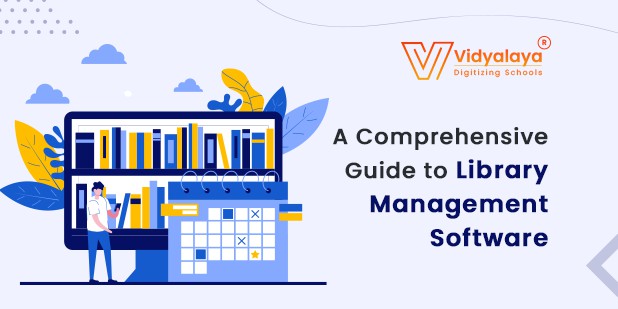
“The library is the heart of the school, it’s the hub!”- Ron Black.
So true! Libraries are one of the most happening places of any educational institute, where books share knowledge, and students grow with the new doors of education. Even though library operations can be counted on fingers, they are not as easy as they seem. Library operations like cataloguing, stock keeping, lending, and borrowing of books require lots of resources, and all these processes are time-consuming. The manual method of library management is tedious and doesn’t offer efficient outcomes. To overcome the flaws of the manual method, software for library management has been introduced, which has seen a boom since its launch.
How is the library managed manually, and what are the problems with it?
A lot of planning, decision-making, and hands-on day-to-day transactions are required to carry out the library operations in manual mode. There is always a huge budget assigned for library management, which is delegated to a hierarchy of people working there. This system also needs to comply with the governmental regulations specific to infrastructure, space, and systems. The entire team needs to work hand-in-hand to accomplish the complex operations.
But this manual method brings several problems, like:
- Lengthy acquisition and circulation
- Tedious bookkeeping and cataloguing
- Time-consuming serial control
- Complex fee management process
- Difficulty in updating the card index
- Monotonous clerical tasks
- Frustration with locating books
These led to an automated and tailor-made library management system software that can rule out these issues and provide efficiency in the processes.
What is library management software?
A library management software is a software tool that manages all functions of a library, like cataloguing, record keeping, borrowing and lending books, system upgrade, locating the books, and offering various reports. This software is capable of bringing efficiencies in processes like indexing, overdue notifications, book reservations, and others that will complete the library cycle. You can even manage multiple libraries using the same software. Normally, this software integrates barcodes to import the data of all the books in bulk, which helps in the book issue and return process by using a barcode scanner.
- Prominent uses of automated library management software.
- Minimise the intensive manual labour.
- Maintaining, accessing, and storing user information digitally at a faster speed.
- Users can independently check book availability and other details.
- Since availability is accessible to users, borrowing books is a simple process.
Also, Check out – Advantages of Library Management System
Key Features of School Library Management Software
Reasons to Implement a Library Management System
Explain the features of library management software.
Here are some main features of library management software. While choosing an appropriate software for library management, it is important to consider book collection, daily transaction size, type of library, budget, staff size, and the system’s compatibility with other systems:
1. User Management:
The library management software manages user information in an advanced way. It offers an easy platform where user information can be added, edited, saved, and deleted as needed. One can also define the types of users, like staff, students, teachers, and others.
2. In-depth Catalogue Management:
The collection of books is now automatically handled by the software, where books can be categorized based on author, title, subject, and other details. A unique barcode is assigned to each book for identifying the book, which is scanned with a barcode scanner, and relevant data is retrieved.
3. Availability of the book online:
No need to wait in queues to just ask whether a particular book is available or not, or to shoo away the blues when your favourite book is not available. Instead, check the system online yourself when it is going to be available and claim it.
4. Book Lending and Borrowing Process is So Simple:
Librarians can now issue, return, and reserve books easily through the library management software. Even penalties can be collected through automated calculations from teachers and students.
5. Access from Anywhere:
The library management system can be accessed from anywhere as all data and applications are stored on cloud storage. So, dependency on on-premises servers is eliminated and offers freedom of access from any location.
6. Notifications and Alerts:
The library management software also enables users to be reminded about their due dates, fines overdue, book in advance details, return date, etc.
What are the core modules of the library management system?
Library management software is made up of several modules, but some basic modules are important and considered must-haves.
1. Login Module: Create multiple users and define their roles as per their needs. While creating the login, user restrictions and permissions are considered.
2. Purchase Management: Purchasing books and indexing them are major transactions that are verified by several levels. The library management system should automate both these functionalities and should contribute to budget maintenance and expense management.
3. Online Public Access Catalogue: It is an inventory store where users can check the available books. From this intuitive interface, users need to select and ask for the desired book.
4. Reporting: Library management software can create various reports for the efficient management of libraries. These reports are rapidly fetched and presented in a standard or customized manner.
Libraries are considered a gateway to an endless supply of knowledge, which is one of the must-have amenities of any educational institute. Ditching the manual method and opting for a comprehensive library management software has always been beneficial to accomplish library operations smoothly. Through this kind of software, one can reduce the workload, bring efficiency, save time for both students and staff, and have several other benefits. Vidyalaya, a leading educational software development organization, facilitates educational institutes with its most-accredited software for library management. Get in touch with us for our proprietary product, and let’s together build this journey enriched with knowledge and books!