










 /
5.0
Rating
/
5.0
Rating

 /
4.9
Rating
/
4.9
Rating









 Lets Talk Ai


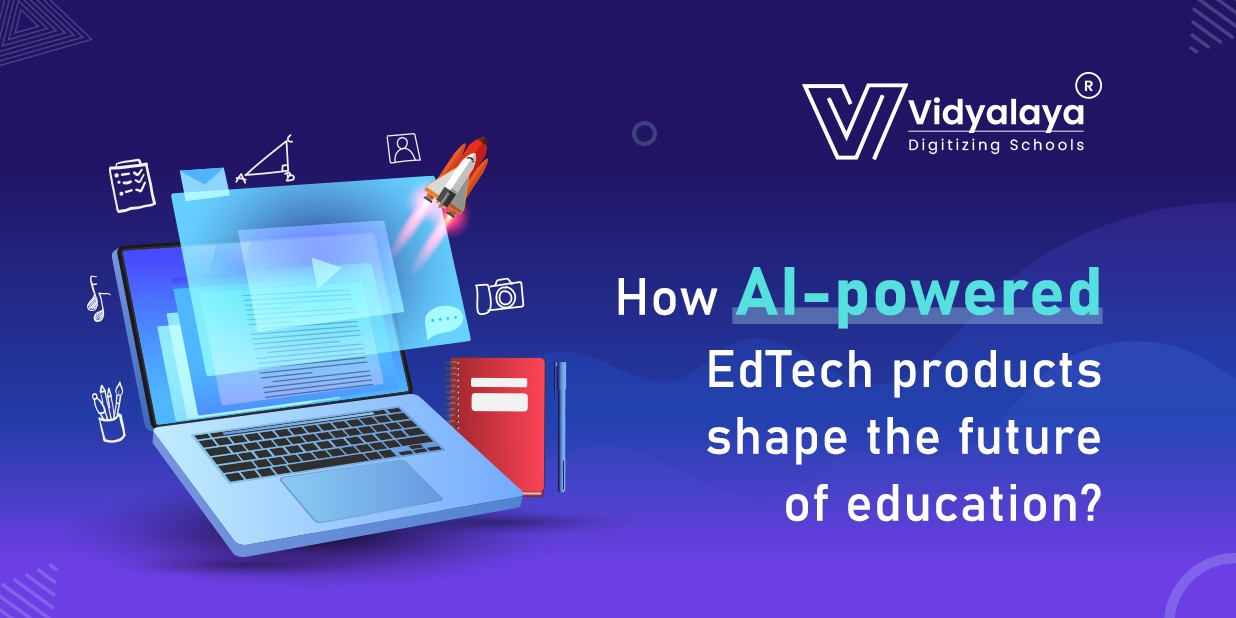
Education and learning lay the foundation of our lives. Yet, millions still lack access to quality education. To include them in the wave of revolution, artificial intelligence can play a key role. Artificial intelligence revolutionizes teaching and learning methods to make them more accessible for all. It also generates customized learning resources considering the learner’s strengths and weaknesses. So, AI-powered EdTech products are high in demand. According to market surveys, AI-integrated products like school management software, admission management systems, and student information systems are fetching the limelight and helping educational experts in various ways. Let us discuss how AI can leave a remarkable impact on the education field and how it shapes the future by bringing new trends in this blog!
Role of AI in Education
The utilization of artificial intelligence has redefined the education sector with a new identity and perspective. It has opened doors for wide opportunities for learners, teachers, and educational institutes. With the increasing prevalence, artificial intelligence is improving learning experiences and related outcomes. Some advanced AI-integrated EdTech software products like School ERP process the collected data, analyse it, and help in the decision-making process.

If you follow the market figures, there is a surge in the inclusion of AI in the education market across the world. The growth rate is expected to rise with a robust Compound Annual Growth Rate (CAGR) of 35.10% from 2024 to 2033. In 2020, the World Economic Forum categorized eight key elements to enhance educational quality.
While we have been used to the digitalization of education for a long period, we are familiar with large language models that are stirring up the sector. However, AI inclusion is a benefit for all and will continue to rule in the future. Even the SAMR model illustrates the AI empowerment in the following ways:
- Substitution
- Augmentation
- Modification
- Redefinition
AI in Education: Challenges:-
AI in education faces several challenges as a newbie in the education sector. As the sector adapts to AI better, the scope of AI implementation will continue to widen. It avails of the opportunities that are difficult for those who can’t access the AI-integrated platforms. Still, some of the major challenges are difficult to handle:
Lack of Basic Infrastructure:
Not all educational institutes are equipped with the basic technological infrastructure. Additionally, the unavailability of advanced electrical equipment, poor or no knowledge about hardware, inconsistent internet, and high data costs are some of the reasons behind the ineffective materialization of AI in the education sector.
Scarcity of Trained Educators:
Today’s teachers may have teaching potential, but the same may not be equipped to handle an AI-integrated School management system. Teachers with poor knowledge of technology and poor tech-savviness can impede the exploration process of AI-powered tools.
Privacy and Ethical Considerations:
The use of AI in education has one of the major challenges, and it is data privacy and ethical considerations. Privacy breaches and poor data security can significantly impact the implementation of AI in the education sector.
Glimpses of the Future with AI in Education:-
Despite the challenges and concerns, the use of AI in the education sector is exciting. EdTech experts are trying to overcome the challenges with the advancement of technology. AI will continue to assist everyone in the sector while stepping into the future with AI. Here are some glimpses of the future of AI in the education sector:
1. Personalization at its best:
Personalization plays a key role in eLearning success. It can be achieved by adopting the best School ERP for streamlining the school operations. The software offers an easy and tailored learning experience, which amplifies the learning outcomes. It is expected to see more personalized education that can meet the diverse requirements of students of varied backgrounds, intellectual capabilities, and social conditions.
2. Extended Support to Teachers:
AI will continue to overcome the universal problem of teacher shortage by optimizing educational outcomes. Integrating AI into education in the form of top-notch school management software will streamline administrative tasks, reducing the burden on teachers. This can result in giving more time to teachers for fruitful student engagement. AI-powered school management software can automate routine tasks, focus on human-centric teaching, and help create an environment where educators can progress and create a richer learning experience. The point to note here is that AI integration is not to replace the teacher’s role but to impart the information only.
3. Refining Assessment and Analytics:
Assessment is another important aspect where AI can change the workflow effectively. AI-powered assessments offer fruitful insights that can help in identifying educational trends and evaluating non-standardized tests. An intelligently designed Student Information System can help to assess the student’s weaknesses and strengths and help to find the solutions. Institutes can expedite the assessment process, provide timely feedback, and provide focused engagement. An AI-powered Student Information System can analyse the student’s real-time performance and help teachers to design targeted instructional strategies.
4. High-level Data security:
Facilitating high-level data security is one of the crucial trends we are expecting in 2025. As data security has gained the utmost significance, AI app development companies will blend this into product development. With the increased human-machine interaction, leading providers will ensure that products like the Student Information System will safeguard student data.
Ending Thoughts!
You must have come across various content about the inclusion of AI in the education sector and realized that this technology will be a game-changer in the future. Vidyalaya always stands ahead of time in terms of innovation and thus integrates artificial intelligence in all leading products, like school software. Our AI-powered products will keep you ahead of others and will facilitate stakeholders to streamline their daily activities.
Our School ERP offers personalized learning experiences in smarter and more sophisticated ways. With the potential to revolutionize education, AI-integrated EdTech products are ethical, user-friendly, and yield positive outcomes for teachers and students by overcoming challenges. Check out our other blogs to understand how we can help you empower learners and educators.