










 /
5.0
Rating
/
5.0
Rating

 /
4.9
Rating
/
4.9
Rating










 Lets Talk Ai


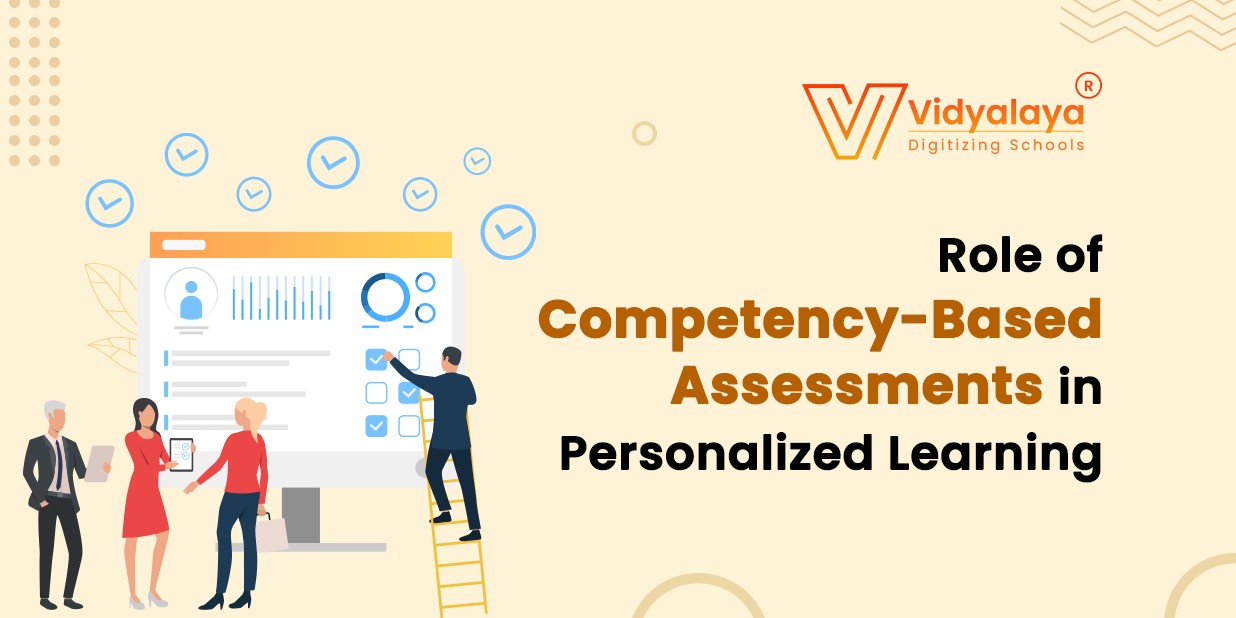
In a world that is increasingly adopting personalized learning, Competency-Based Assessments are becoming a necessity. They focus on real understanding rather than memorization. With the incorporation of digital technologies and data analysis, Competency-Based Assessments Software and Systems are facilitating a transition from outdated models to more student-focused methodologies. We offer a digital assessment platform to measure individual learning paths in an effective manner and connect outcomes with the actual skill demands of the real world. Here’s how these evaluation systems are making schools better suited to every student’s performance and speed.
Important Features and Functions of Effective Competency-Based Assessment Systems:-
To realize the worth of Competency-Based Assessments in the present day, it’s worth noting how they came into being. Initially, uniform assessments with an emphasis on grades and test scores existed. Subsequently, as the need for insightful evaluation arose, Competency-Based Assessment Tools evolved to gauge a student’s proficiency in particular skills or concepts. Today, competency based learning software further supports this approach by helping schools manage and track competency development effectively.
These systems now encompass:
- Real-time performance monitoring
- Custom skill-level assessments
- Personalized feedback and learning routes
Feature |
Description |
| Personalized Learning Paths | Custom assessments based on student strengths and weaknesses |
| Skill Mastery Tracking | Ensures foundational concepts are well understood before progression |
| Real-Time Feedback | Teachers can act immediately on student performance data |
| Seamless Integration | Syncs with ERP or LMS platforms |
| Better Student Engagement | Learners feel more involved with clear skill goals |
Overall Advantages of Using Competency-Based Assessments:-
Adopting a Competency-Based Assessment Tool in a school has multiple advantages in the short and long term:
- Improved understanding of student progress
- More participation from learners
- Prioritize mastery over memorization
Because instructors are able to monitor performance patterns over time, they can tailor interventions and support students better, leading to much better outcomes.
Difficulties of Adopting and How to Implement It Successfully:-
Though it has several benefits, it might be difficult to implement a Competency-Based Assessment System:
- Resistance to alter conventional practices
- Implementation and training costs
- Challenge in formulating outcome-based rubrics
To counter these challenges, institutions can:
- Run pilot programs and training sessions
- Involve all stakeholders in the process
- Select adaptive and intuitive Competency-Based Assessments Software
The system can also be advantageous to smaller colleges and schools with adequate vendor support and step-by-step implementation.
What’s Next?
The education of the future is in the form of more responsive and personalized systems. As AI and data analytics grow, Competency-Based Assessments will be even more accurate and effective. They are designing tomorrow’s classrooms to be more:
- Student-centered
- Transparent
- Effective
Conclusion:
Competency-based assessments are the foundation of contemporary individualized learning. Their rational yet adaptable architecture facilitates effective monitoring of achievement. As technology transforms, embracing strong Competency-Based Assessments Software is not only a step in the right direction—it’s a leap towards wiser and student-centric education.
We realize here at Vidyalaya School Software the an increasing demand for adaptive, results-driven assessment systems. Our Competency-Based Assessment module is built to empower teachers, motivate students, and make learning measurable and meaningful. Partner with Vidyalaya to introduce the future of education to your classrooms today. Our assessment management software also helps schools streamline assessment processes and manage student performance effectively.