










 /
5.0
Rating
/
5.0
Rating

 /
4.9
Rating
/
4.9
Rating









 Lets Talk Ai


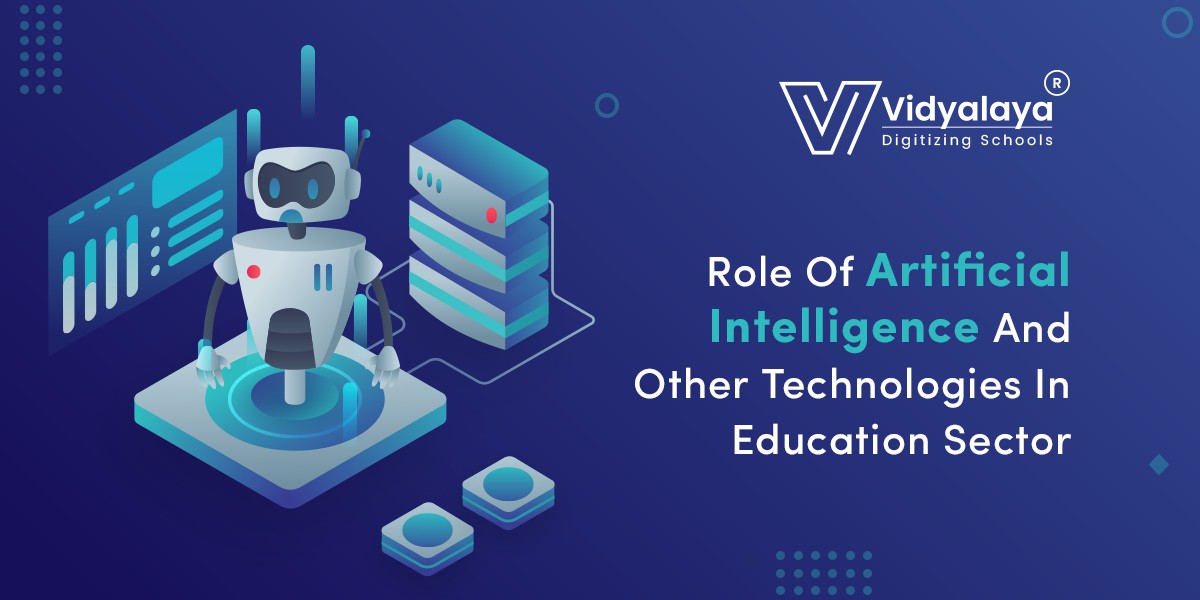
In the education sector, there is always something new to learn and explore. We have seen several transitions from manual to today’s data-driven era that are making learning more relatable and engaging. In 2026, the rise of artificial intelligence has transformed several sectors, and the education sector is no exception. Education has become more student-centric, sophisticated, personalized, and widespread. EdTech software products like School Management Software are at the forefront of this revolution. Apart from this, there are some emerging technologies that are highly contributing to the evolution. Here we will delve into the emerging trends and some predictions for what’s next in store for students, teachers, and school admins!
Artificial Intelligence (AI):
The inevitable incorporation of artificial intelligence and Machine learning is set to transform the education sector, and the change has already started. Blending AI in leading products like School ERP is the need of the time. It will adapt the teaching to the pace of learning to promote personalized learning. It can help educators to make futuristic decisions through the built-in capacity of analysing enormous data. AI-integrated School ERP can help education institutes offer more personalized learning experiences, predict learners’ performances, and identify gaps. It will reduce the burden on teachers through intelligent tutoring systems.
How AI will impact education in 2026?
The impact of AI in education is massive and will continue to be in 2026. Here are the possible use cases of AI in education that we are expected to see in this year:
- Creation of personalized video learning experiences
- Provision of AI tutors and learning assistants
- Simplification of difficult topics, lessons through educational games and simulations
- Use of language learning programs for communication and writing skill development.
- Promote universal access to education for disabled students.
- Automation of administrative tasks, grading, and instant feedback
- Analyse student performance for early intervention.
If statistics are to be believed, 80% of Indian students believe that AI can bridge the education gap and that personalized learning will help them to learn better. Also, the AI market is expected to reach $7.8 billion by 2025. These figures are sufficient to show the future potential growth in the sector. The education sector expects some inputs from artificial intelligence in workflows like library management, admission leads management, invigilation, and grading. You can also check out our detailed blog on how AI can transform education in the coming years.
Virtual And Augmented Reality (VR & AR):
Virtual and Augmented Reality together offer tremendous potential to revolutionize the educational landscape. Learning management software based on AR and VR will help learners to understand complex topics, theories, and subjects by providing immersive and engaging learning experiences. Both technologies enable students to visualize abstract concepts, practice vocational skills, and rule out accessibility barriers. Advanced learning management software is equipped with realistic simulations of scenarios that are difficult to grasp or expensive to replicate in real life. Both technologies can redefine the organization of field trips, experimentation, and device testing areas of education in the coming few years.
Internet of Things (IoT):
When we talk about the change in education, one cannot deny the impact of the internet, and the Internet of Things, or IoT, comes at the showstopper stage. Almost all education app development is based on technology. The benefits of IoT-integrated school ERP are no doubt precise and have an impact on the change in education. Integration of IoT devices like tablets, laptops, and whiteboards improves real-time communication and helps students with collaborative learning. With the help of devices, teachers will create personalized lesson plans and tailored learning experiences. Experts will develop feature-rich school ERP systems to increase student engagement, better learning outcomes, focus on teaching and learning, and offer smart campus operations.
Gamification and Interactive Learning:
Gamification of learning is not a new concept, but is expected to expand in the coming years. Learning management software will integrate gamification to make learning informative and exciting. One can see new additions in elements like points, badges, and levels to keep the competitive factor alive and more challenging. Chapters or subjects that are not able to gamify today are expected to convert in the future using more innovative technology. Additionally, advanced learning management software fosters critical thinking skills using interactive learning. Educational institutes will use this technology to improve student engagement and retention, and boost academic progress.
Blockchain Technology:
Blockchain technology is already hovering over several other sectors, including finance and banking, insurance, manufacturing, etc. No wonder it influences the education sector with out-of-the-world features and benefits. In today’s data-driven education, technology can be blended into school management software to enhance workflows like record keeping, e-transcripts, decentralization of the institution, financing education, and copyright protection of digital assets. It will help in automating the course progression and learning path of the students with the help of smart contracts. Blockchain technology integrated school management software is expected to progress in digital examination, lowering the cost of education, personalized lessons, transfer of course credits, etc.
Cloud technology:
Cloud technology has reinvented the storage system in the software development field. Now reap the benefits of the technology in the education sector as well. Now, almost all school ERP systems are based on cloud technology for centralized storage. With this, students can access study material from anywhere. By 2027, cloud computing is expected to become a key driver for providing flexibility, scalability, innovation, and data analytics. Through a centralized database, multi-campus school management is expected to be more hassle-free in the coming years.
Looking into the Future!
The future of education is bright and filled with plenty of opportunities. As we move forward, the never-ending research and innovation will continue to facilitate the sector with exceptional inventions that will nurture the aim of learning. Vidyalaya stands out as a leading choice for today’s and tomorrow’s educational institutes, with its sheer commitment to incorporating emerging trends in its EdTech products. We have just scratched the surface in this blog about what our school management software will do in the coming years. Our other products are equally impressive in meeting futuristic needs. Believe us, we are ready to blend the latest innovation into our products to make your journey smoother and more engaging! Call us for more details!