










 /
5.0
Rating
/
5.0
Rating

 /
4.9
Rating
/
4.9
Rating









 Lets Talk Ai


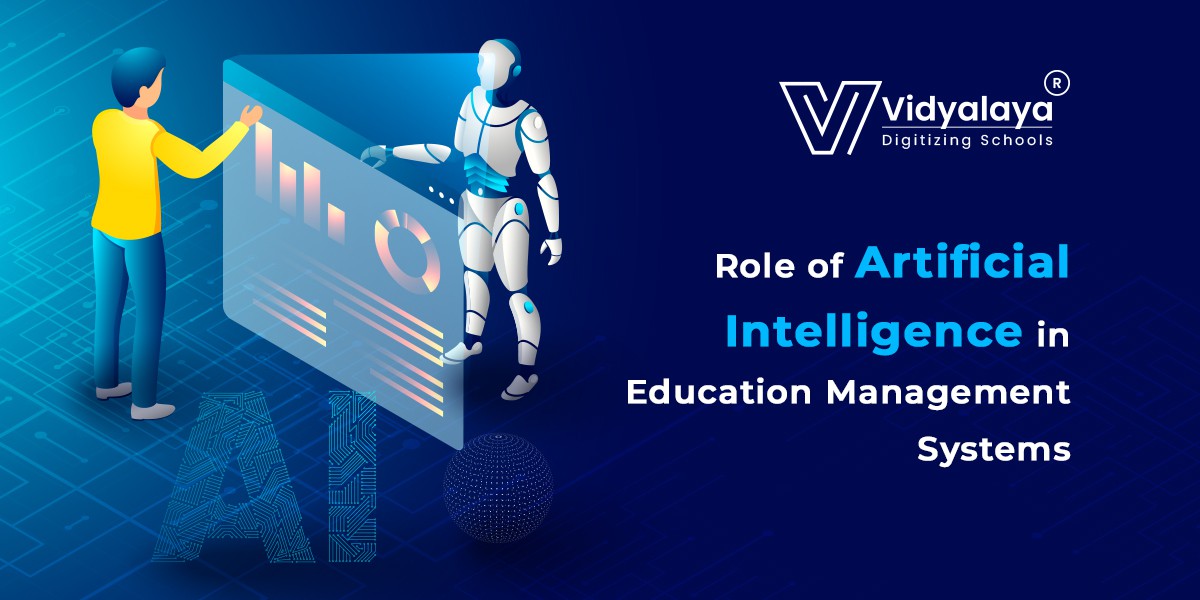
Are you familiar with tools like ChatGPT, chatbots, and intelligent tutoring systems? Yes, these AI-powered tools are buzzing nowadays. If you are familiar with the evolution happening in the education sector, then you will not deny that the invasion of AI in education is completely transforming the system. Integrated artificial intelligence reshapes the traditional one-size-fits-all approach and introduces personalized learning. Prominent benefits after this inclusion are so tempting that an all-time peak is seen in the AI integration in EdTech products like School ERPs and LMS (Learning Management System).
We all know that learning is and will be a foundational part of our lives. But with the advancement of time and technology, we can overcome the flaws of traditional learning and give new perspectives to the entire education system. Let’s learn how Artificial Intelligence will transform the education systems today and tomorrow!
AI in Education Statistics:
- According to a recent survey conducted by Forbes Advisor in October 2023, more than 50% of teachers responded that they believe that AI can have a positive impact on the entire learning system.
- Almost 60% of them use some form of AI in their classroom activities. They make use of AI tools to improve and streamline daily teaching responsibilities.
- The survey also reveals that they use an AI-integrated education management system for automated grading and feedback workflows.
How can AI bring a revolutionary change to the traditional education system?
Artificial Intelligence in education refers to the use and implementation of AI tools and techniques to improve the learning and teaching processes. This futuristic technology uses computers and stimulates human intelligence. It empowers them to understand, analyze, and respond accordingly in the educational context. AI integration in education has several applications:
1. Personalized Learning:
Personalized learning caters to student’s individual needs and designs learning paths based on interests and abilities, considering the pace of individual students.
Adaptive Learning:
Advanced Learning Management System implements adaptive learning to craft personalized learning experiences for students. Feature-rich system identifies students’ strengths and weaknesses and designs content and instructions accordingly. Depending upon the student’s perception of the course, the system may suggest additional practice or advanced content.
Smart Recommendations:
As every student has different interests, abilities, and preferences, an AI-powered Learning Management System can provide personalized recommendations using data analytics and algorithms. It identifies the student’s behaviour and helps with the course recommendations.
2. Intelligent Tutoring Systems:
Intelligent Tutoring Systems help students enhance their learning and offer personalized feedback. It offers a better interactive and adaptive learning experience by breaking the barriers of conventional learning systems.
Virtual Tours:
With the help of AI tools and techniques, a school management system simulates a peer-to-peer instructional experience. It will help teachers to adapt their instructions in real time and provide content using different media like video, text, and audio. Through different student engagement activities, teachers can present new information and guide students.
3. Assessment & Grading:
Manual assessment and grading yield lots of errors and can ruin a student’s career. To address this, schools can implement automated grading systems or can ask vendors to add modules in their Learning management system for the same. The system will evaluate student performance and allocate grades. This system can implement various forms of assessments, such as multiple-choice questions, descriptive assessments, mathematical problems, etc.
No more bias in Assessments:
Educational institutes can brighten their impression by eliminating biased possibilities in the assessments. AI can help you ensure that the assessment and evaluation process is fair. Implement the following strategies to eliminate biases:
- Using diverse assessment methods such as discussions, projects, and seminars to evaluate individual skills and performance.
- Set multiple factors for evaluations to minimize individual biases and for fair reviews.
- Conduct awareness sessions and training for teachers to make them aware of the potential risks of biases and their impact on assessments.
Efficient Feedback Generation:
With an AI-powered education management system, teachers can provide constructive feedback to students. In advanced systems, teachers can also provide audio or video feedback, which is more personalized and faster than conventional forms. They also enable teachers to create rubrics to provide specific feedback.
4. Administrative Improvements:
Don’t think that AI is only for teachers and students. It also contributes to the administrative workflows and makes them more efficient and productive. With the help of technology, automation, and efficient workflow management, one can save time, reduce costs, and improve efficiency.
Administrative Workflow Management:
One of the simplest ways to streamline administrative workflows is by using an education management system. The centralized database stores all data in one place, which makes it easy for administrators to access and manage it.
Efficient Resource Allocation:
School administrators need not have the overhead for efficient resource allocation. AI-integrated school management systems use data analytics tools to measure the usage and effectiveness of the resources. This will help them to identify the gaps and make efficient decisions about resource allocation. Also, using strategic scheduling strategies suggested by the system, school administrators can make better scheduling for classes, activities, and facilities.
Student Support Services:
One of the major advantages of using AI-powered EdTech tools is that schools can provide personalized and efficient support to students. Based on data collected on academic performance, learning pace, behaviour, and preferences, school management can identify potential risks and provide customized interventions and recommendations.
Some Glimpses of the Future of the Education Industry!
No wonder AI will greatly contribute to the education sector in the coming years with its futuristic features. Here are some innovations that you may see in recent years inside or outside the campus serving this noble sector:
A. AI Tutors and Assistants:
- AI-driven tutors will be available 24*7, providing tailor-made and peer-to-peer support throughout their academic journey.
- A Learning Management System will help learners to learn at their own pace, which will make the entire journey more effective and accessible.
B. AI-powered Counseling:
- AI helps in the counselling sector and offers well-informed decisions using data analytics and students’ individual preferences.
- It can give valuable insights and career recommendations based on the student’s preferences, interests, behavioural activities, and performance.
C. Virtual Classrooms
- With the perfect blend of technology and personalization, virtual classrooms are going to set new benchmarks in the education sector.
- It will break physical constraints and enhance personalized content.
Final Thoughts!
AI is there and will be in the future to revolutionize the education system, empower stakeholders, and enhance the learning experience. By integrating AI into education, creating a more inclusive, adaptive, and inviting learning environment seems to be easier. By incorporating AI in EdTech products like school management software or school ERP, we can address each student’s needs better. We have seen how AI can change the instructional substance in truly clever ways. Is it exciting?
Vidyalaya is a well-established organization in the EdTech sector with almost 22+ years of superior dominance. Our wide range of products is already providing users with the latest features to improve their excellence and productivity. We also lead to how AI-integrated platforms like Learning Management Software for learning encounters are more personalized and intelligent. It can also enable creators to create instructional apps that are more user-friendly and engaging. Overcoming the challenges, EdTech software development companies like Vidyalaya are ready to change the way of learning. So, let’s collaborate and dive into a new ocean of technology and education!