









 /
5.0
Rating
/
5.0
Rating

 /
4.9
Rating
/
4.9
Rating









 Lets Talk Ai


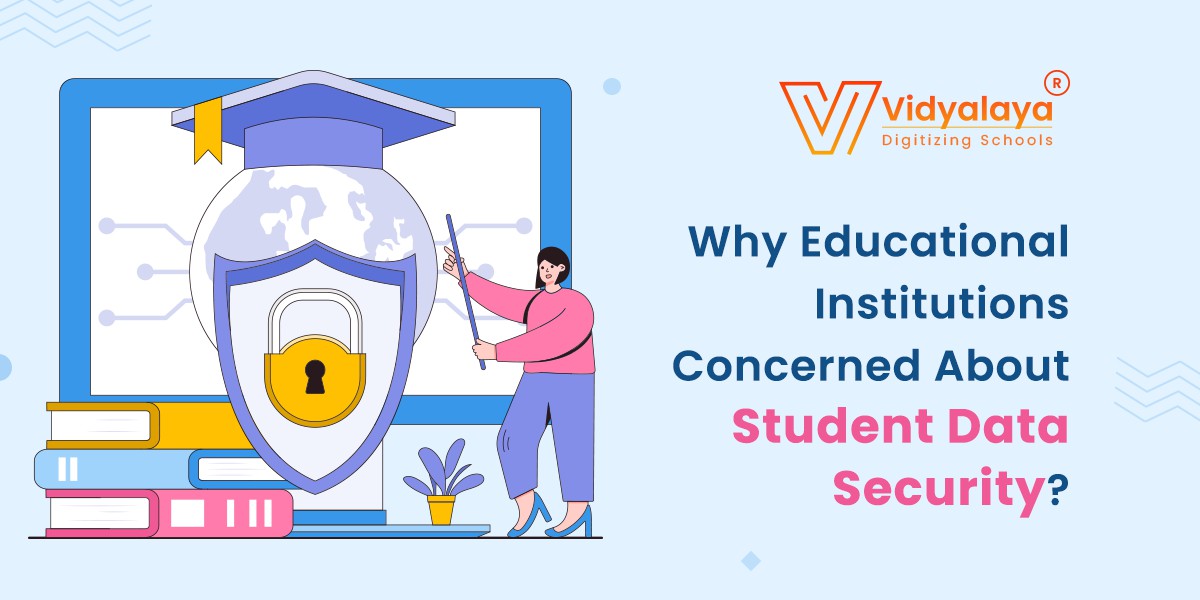
While talking about school management system, one factor hits the discussion prominently, and it is student data security. One may ask, “Why is it so important to have security for student data?. While operating these systems, teenagers and parents keep entering personal data. If these systems are not equipped with proper security practices, there are higher chances of security breaches and data leakage. Systems with poor security embedment are no less than social media sites, where data security is highly compromised. There is a difference between social sites and educational management systems. Thus, paying attention to student data security becomes a paramount important factor. If you have heard the term secure student information system, you are on the right path to equipping yourself/ institute with better security practices.
Why should educational institutes be concerned about student data security?
Among the stakeholders of a student information management system, educational institutes need to bear the responsibility for student data security. Educational institutes adopt the technological way of handling student data, so the information is stored in the school’s database.
Here are the various reasons that highlight why educational institutions should pay more attention to student data security:
1. Chances of External Attacks:
There has been an increased number of vulnerable data attacks these days. So, every institute needs to improve its security practices to fight against these attacks. Various users operate the student information system; a single random click can cause you to open your system to vulnerabilities. Hacks like sending look-alike authentic attachments, unknown emails, or links can breach your security and can invite external hackers to access your systems. So, educational institutes need to conduct vulnerability assessments on their networks regularly and should encourage their users to handle the system securely.
2. Maintaining Trust and Reputation:
It becomes a tragic moment when your educational system gets hacked, and your reputation goes in vain. So, educational institutes should keep themselves ready to combat data violation incidents. They should prioritize maintaining trust and reliability among students, parents, and teachers. For this, sound security practices like safeguarding sensitive information, embedding advanced security tools, and maintaining a security check schedule can be implemented. A breach-free atmosphere can improve a school’s reputation as well as enrollment. Having a secure student information management system can be a bridge between parents and the school community.
3. Protecting Student Privacy:
Protecting student privacy becomes a pivotal concern for any educational institution. A Student information system with enriched data security features can assure the safety of personal information such as student health parameters, photographs, attendance records, and demographic information. The system implements best security practices like data encryption and anonymization to store sensitive data and protect the identity of students. Thoughtful moves like these can prevent identity theft and abuse of crucial information and can protect student privacy at its best.
4. Compliance with Data Protection Regulations:
Have you heard about the General Data Protection Regulation (GDPR)? If yes, you must have known that these practices are implemented these days rigorously, seeing the threats to student data in the educational sector. Institutes must obey these policies to avoid legal issues and financial punishments. A secure student information system always adheres to these guidelines with robust security features. It implements certain practices like consent management, secure data transfer protocols, and data retention policies to achieve compliance with GDPR guidelines.
What are the various ways to Protect Student Data Privacy?
After reading the above concerns, one might get worried. But there are solutions too! Here are some effective ways to protect student data privacy:
1. Examine the data privacy policies:
Educational management systems may embed third-party apps to offer wider functionalities. It becomes necessary to include data privacy policies specifying how they treat students’ data. For example, the student information management system stores students’ biometric information and should be armed with relevant security policies to adhere to the school’s ethical and safety guidelines.
2. Encryption:
Encryption is considered one of the best data security practices today. The SA student information system should encrypt sensitive information like passwords, financial records, and personal information, and provide extra security. As some information is available in audio or email format, it can be taken under encryption, too.
3. Maintain the System:
It is not the case that once you install an educational management system, you don’t have to look at it again. It will give you the desired level of functionality when you maintain it. Practices like updating the system time regularly and removing unnecessary files on a regular basis may help you to achieve efficiency levels. Unnecessary files may contain malware or backdoors by hackers that may harm your systems.
4. Do not remain Logged In:
Many times, users of the student management system keep themselves logged in to avoid re-logging into systems. But this can breach your security and should be avoided. The systems are password-protected, so every user should log in and out properly to ensure no one has free access to the system.
Practices to Educate Students about Data Privacy:
Students use educational systems more often for various reasons, like admissions, submitting assignments, paying fees, checking report cards, etc. While doing these activities, they may share information knowingly or unknowingly. So, it is very important to educate students about data security practices to stay safe.
Here are some of them:
- Students should access the educational systems from the recent versions of mobile devices and apps.
- Do not fall for unknown websites or random clicks.
- Keep your password strong as per system requirements. Incorporate multi-factor authentication, and double-check privacy settings while setting passwords.
- Never reveal passwords to anyone and keep changing them on a frequent basis.
- Make responsible use of social media. Never share personal or sensitive information on social sites.
- Avoid charging your devices in public places or charging stations.
- Keep your devices and apps updated to make optimized use.
Adoption of technology in the education sector has not remained a luxury, and terms like security systems, data security, and data privacy have become common to us. Data or information security has reached its peak value today as we are progressing in a data-driven era. The education management systems rarely ask for permissions,and youngsters are not in a decisive state to grant or deny these permissions. So, it becomes the responsibility of the systems themselves to embed proper security practices and facilitate student data security.
Vidyalaya, a global name in the education software industry, is well-known for its top-notch EdTech products. Understanding the significance of student data, Vidyalaya facilitates institutes with a student information system. The system fulfills all prerequisites and offers high-end security to student data. Vulnerabilities in education systems are increasing to access pivotal information, and one of the best ways to deal with it is to have a highly secure student management system. So, what are you waiting for? Visit us or drop an inquiry mail to have ultimately secured educational systems for your campus.