










 /
5.0
Rating
/
5.0
Rating

 /
4.9
Rating
/
4.9
Rating









 Lets Talk Ai


As the entire world is living in the digital era, the increasing use of technology in our day-to-day life is obvious. All the processes that were carried out manually are now transformed into automated. Now, the school administration has also understood the benefits of implementing the school ERP system and thus they are now looking for more advanced ways for school management.
What is a virtual classroom?
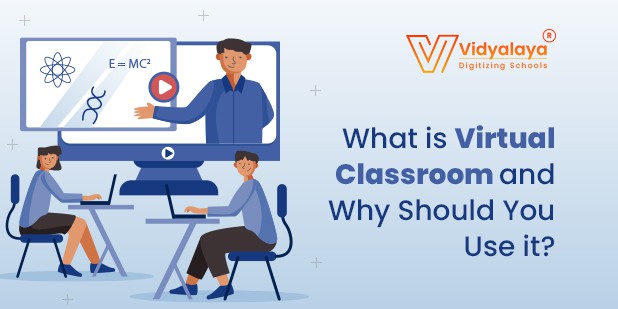
Classroom management is one of the important modules of any school management ERP. This is the center point of any schooling system. Classrooms, teachers, students, and academics make the learning process functional. With the change in time, the traditional classroom-led learning method is replicated by virtual classrooms.
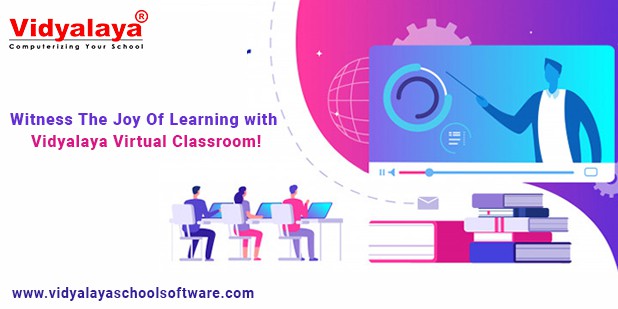
The virtual classroom is a digital platform where students and teachers are interconnected with each other using the internet. Teachers conduct online live lectures, and students with the same platform can join the lectures with the help of digital gadgets like smartphones, laptops, and tablets at their convenience.
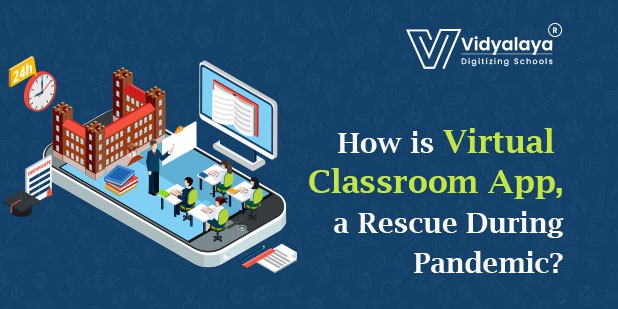
As we are suffering from the Covid-19 pandemic, new norms have been introduced. Like other industries, the education industry also looking for new options to keep it functional. And, virtual classroom software came as a boon for the industry. Retaining the vital element of human connection, the software enables teachers to connect with their students in real-time. Students can ask their queries and connect with their friends and teachers as they do in a regular classroom but in the online form.
What are the features of a virtual classroom?
Virtual classrooms are integrated with specific features for their online instruction. They try to replicate the same learning experience as the traditional classroom-led method and in addition provide a modern touch to the entire process.
Video Conferencing:
This feature will establish the best communication between teacher and students providing a seamless learning experience.
Digital Whiteboards:
Replica of blackboards, digital whiteboards are the medium for illustrating the diagrams and figures in real-time.
Video recording:
To avail of the benefits of the technology, the video conferencing feature of virtual classrooms enables the students to save the live lecturers.
Participation controls:
Teachers can restrict the students’ behavior through digital controls like mute. Students can also participate in the discussion without disturbing others by raising their hands digitally.
Screen sharing:
This is the best feature that teachers can use to show on the screen the actual working of a concept. Stored videos or any hand-written notes can be explained along with the live explanation.
Why should we use a Virtual classroom?
Online classroom or virtual classroom is popular among millennials and they enjoy being part of it. Here are some of the key reasons to make virtual classrooms part of the school:
Increased Engagement:
Online classrooms offer active learning and open discussions. Students are better engaged in the online classrooms as they enjoy the latest features like a digital whiteboard, screen sharing, video playback, and others. To have the live touch of interaction, an online classroom enables students to participate in live quizzes, debates, etc.
Effective Data management:
Teachers need to take manual attendance as they can easily track the number of participants per session. Also, a lot of data is shared throughout the session. Students can also access the chat logs for raising queries or accessing previous discussions.
Instant Feedback:
Gone are the days when students ask queries after the lecture is over and go outside the classroom. As the online classroom software enables students to take active participation in online learning, teachers can give instant feedback to students. This instant action and reaction help students and teachers to improve their performance. Also, in online learning, the teacher evaluates the student’s performance by taking an online exam, and the result is declared at the end of the exam instantly.
Connect from anywhere:
The key benefit of remote learning is students can attend the class from any corner of the world, just they need a smart device and a reliable internet connection. The online classroom software will enable students to break the location boundaries and participate in the learning process.
Scalable:
As in the bricks-and-mortar way of learning, teachers cannot be everywhere at once. But this flaw is eliminated in the virtual classes. The teacher can teach students irrespective of their numbers, at the same time without sacrificing their quality of instruction. This can be beneficial for the school management in terms of cost-cutting.
Now, the entire world is going through a bad patch of Covid-19, the disease has changed the world at many levels. This time many school managements adopted the virtual classroom technology for adjusting to the new norms, but looking at the benefits, it is expected to continue the adoption and this will be a normal thing in the future, not a luxury. And, students will continue to learn the education in a more engaging and interactive way.