










 /
5.0
Rating
/
5.0
Rating

 /
4.9
Rating
/
4.9
Rating









 Lets Talk Ai


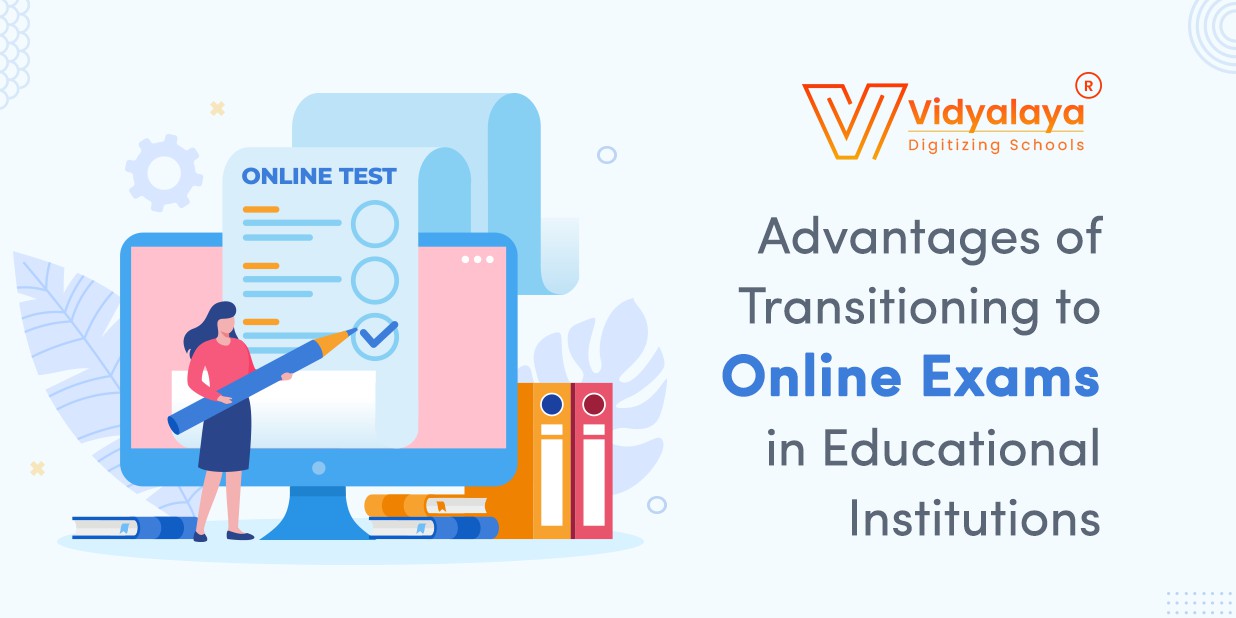
Online exams are not new. Various educational institutes used to conduct exams in online mode and deliver accurate and faster results. But the need for customized software and awareness deterred educational institutions from implementing it as a norm. Then the COVID-19 outbreak burst across the world and led educational institutes to think of an alternative to conventional classroom-led exams to continue the educational flow. During these challenging circumstances, online exams survived them and came in front of a sustainable and powerful option. Even after the situation became normal, educational institutes are preferring the digitized way. Influential advantages are causes of this revolutionary transition. If you still lag in joining the race, learn those advantages to make a paradigm shift!
What is an Online Exam?
An online examination is conducted using computers, and specialized software has been developed. This online examination software deals with student assessment and provides a platform to help institutes administer online exams in a more organized manner for students. In this method, students are not required to assemble in a room and solve question papers within a specified time. Teachers also do not need to roam around for invigilation and collect the answer sheets after the time is up. The automatic evaluation of the answer sheets and report card generation surely speeds up the process by reducing the burden on the teachers.
Why are online exams beneficial for modern educational institutes?
Online exams bring several revolutionary changes in the entire examination process, like proctored exams, different sets of question papers for each student, less overhead for teachers and moderators, quick report card generation, and others.
Learn these and other reasons that illustrate why this transition to online exams is beneficial for today’s educational institutes:
1. No need for Infrastructure:
In the conventional exam process, educational institutes need to have proper seating arrangements for students. Based on the number of candidates, classroom arrangements need to be made. This can cost heavily and can affect the normal routine for other students. On the contrary, the online examination system cuts down the necessity of infrastructural requirements by allowing the students to appear from any location with just a computer and an internet connection. They can even attend the exam from their home with no fear of cheating, as these exams are totally proctored. Educational institutes can mandate the use of webcams and microphones for proper invigilation.
2. Cost-Efficient Solution:
Online examination software provides a digital way of conducting exams and proves to be a cost-efficient solution in many ways. As entire paper usage is reduced to zero or nominal, educational institutions can save a good amount of stationery and printing. Being monitored automatically, institutions need to spend money on moderators and teachers. Also, students can save their efforts and money on commuting as they can attend their exams from anywhere.
3. Less Overhead for Teachers:
Setting up an exam and accomplishing the entire process until the report card distribution is not less than an overhead. Teachers need to stretch themselves to set up question paper models, questions, answers, seating arrangements, and others. They also need to spend a lot of time evaluating the papers one by one and then preparing report cards.
All these hassles are saved once educational institutes adopt the online examination system. The system automatically creates the question papers based on the teacher’s preferences, like MCQs, descriptive, with different sets of questions. It also evaluates the answer sheets faster than manual methods and can deliver quicker results. Students can check their results on a website instead of coming to school. In-built predictive analysis also estimates the weak and strong areas of students and can suggest improvements. All these processes are handled by the system itself, so there is less overhead for teachers during the exams.
4. Speed up the Process:
The online exam process leaves the manual process far behind in the speed aspect. In the online mode, every single process, like question paper generation, answer sheet evaluation, report card generation, and distribution, is carried out at super speed, and that too with accuracy. In manual exams, a lot of time is wasted in evaluation, and students need to wait for the same. Here, waiting time is reduced,d and students can get immediate results/ results within 2-3 days.
5. More Secure Option:
We all read the news of paper leaks during the examination time. This can hinder student performance and morale. But with online examination software, this is well-addressed as students are given separate login credentials, and different sets of papers are prepared. With SSL, all data and applications are protected against any vulnerabilities. Also, the unbiased, fair assessments in this approach ensure a better assessment process. This approach rules out the possibilities of result manipulation and ensures reliability.
6. Eco-Friendly Solution:
When the online examination system is implemented, the education institute makes this transition from manual to online. This shift brings affirmative changes in terms of environmental effects. Less usage of resources like paper, ink, and fuel gives better protection to the environment. The paperless approach improves productivity and significantly less carbon footprint.
We all have gone through traditional pen-paper-based examination systems and are aware of the flaws in them. Today’s fast-paced generation doesn’t need to suffer those flaws,s as EdTech companies like Vidyalaya are ready to serve custom-made online examination software. There are pros and cons to every type of examination system, and educational institutes have to evaluate the best approach to meet their expectations. Knowing the brighter side of the product, which is perfect for the current data-oriented environment, educational institutes will be eager to adopt this method. Vidyalaya will make the transition from paper to digital very smooth and bring efficiency to the entire examination process. Prefer online exam format over the conventional pen-paper and give a capable alternative that gives 100% efficient and accurate results that determine your students’ future!