









 /
5.0
Rating
/
5.0
Rating

 /
4.9
Rating
/
4.9
Rating









 Lets Talk Ai


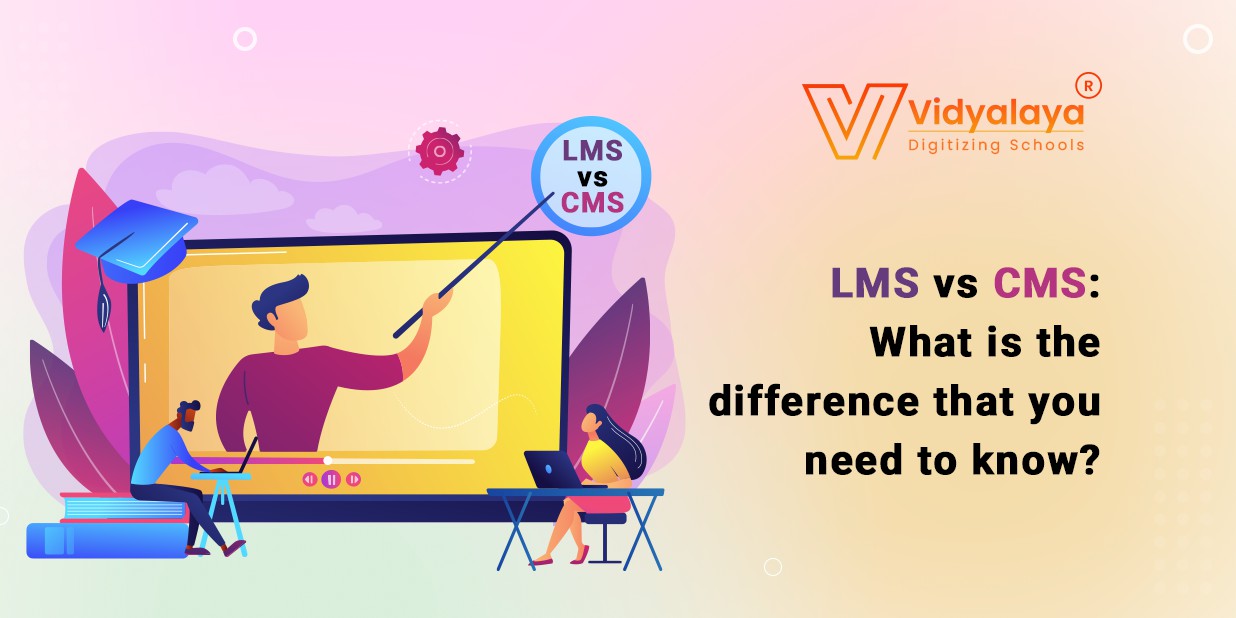
New information technology and tools have been introduced in the education sector and are now an integral part of the business. In this sector, the biggest challenge is how to categorize the enormous amount of data and pick up the useful data for future use. To address this issue, two major EdTech products have been developed and widely adopted by the industry: Student Information System (SIS) and Learning Management System (LMS). Although both systems deal with a different set of problems, the core entity remains the same- Students. Combined, both systems are ready to serve the education sector with their features. We will thoroughly go through both of these products in this blog!
Understanding the Student Information System!
A Student Information System, commonly known as the SIS System, deals with student information and related administrative processes. This is a centrally located platform where stakeholders can access all student-related information. It collects students’ information throughout the education lifecycle and improves workflow efficiency. With this organized data, educational institutes can streamline core processes like admission, attendance, grading, and reporting. Some key features of the SIS system are:
1. Admission and Enrolment:
The academic lifecycle starts with the admission process, and thus, the student information system stores detailed data about the student. Through the system, institutes can organize administrative processes like admission, enrollment, registration, attendance, and underlying sub-processes like tracking applications, managing admission criteria, completing enrollment, etc.
2. Student Data Management:
Student Management System Software stores and manages student data like personal details, academic records, contact information, and attendance details. Maintaining comprehensive data in one place makes it easy for users to access it faster and keep it organized.
3. Course Management:
The SIS system helps in managing course design, timetable design, student allocation, etc. It helps administrators to make futuristic decisions about the courses based on real-time data about the students’ interests, preferences, and ongoing trends.
Understanding the Learning Management System!
An LMS is a platform that facilitates educational institutions to streamline, design, and develop academic courses and study material. It is a one-stop solution where teachers upload the study material, and students access it, submit assignments, track their progress, and get feedback from the teacher. This online learning portal acts as a common platform that administers, delivers, and manages educational courses and study material. This is also helpful for the teachers to interact with their students, upload course content, conduct discussions, track progress, and more. Some features of the Learning Management Software:
1. Course Management:
An LMS System empowers teachers to design, develop, and manage various courses and their curriculum. The system also helps in the documentation and delivery of these courses by promoting e-learning.
2. Tracking Progress:
Students can submit the assignments online through the LMS software, and the same applies to the other exams too. As everything is digitally present in the software, it is easy for the teachers and parents to track the student’s progress and provide help whenever needed.
3. Content Management:
A good learning management system enables all course-related content to be uploaded under a common platform. It also facilitates teachers to create and share content in various media forms, like text, graphics, images, audio, video, etc. All the content is stored in centralized storage and is easily distributable using cloud-based technology.
Understanding the AI Learning Management System!
The LMS features above course management, tracking progress, content management describe what a traditional LMS does. An AI Learning Management System does all of that too, but adds one more layer: it uses artificial intelligence to personalize the learning experience for each student automatically, instead of leaving pacing and content selection entirely to the teacher.
Where a standard LMS delivers content the same way to every student, an AI Learning Management System analyzes each student’s quiz scores, time spent per topic, and engagement patterns to adjust what they see next recommending extra practice for a struggling topic, or advancing a student who has already mastered the material. It also gives teachers predictive insights, flagging students who may be falling behind before it shows up in their grades.
In short: if a Learning Management System is the platform, an AI Learning Management System is that same platform made adaptive using student data to personalize learning at a scale no teacher could manage manually.
Difference between Student Information System and Learning Management System:-
Hope you have learnt the basics of both an SIS system and an LMS. Let’s explore the differences between the two:
Factor |
SIS System |
LMS |
| Purpose | A SIS System helps educational institutes to manage their academic and administrative aspects relevant to students. | An LMS enables teachers to design and manage all study material and improve relationships through an e-learning platform. |
| Users | A Student Information System serves a broader range of users, including school administrators, teachers, staff, and students. | A Learning management system serves teachers and students in the teaching and learning process. |
| Integration | A Student management system can be integrated with finance, HR, and admissions. This system can be integrated with education ERP systems for comprehensive and smooth operations. | Learning management software can be integrated with other educational tools and systems, such as video conferencing, student response systems, content repositories, etc. |
| Scope | A SIS system manages examinations, assessments, and academic progress. | An LMS System deals with the authorship of course study material and course design. |
| Features | A SIS system also deals with rewards, scholarships, graduations, grades, certifications, etc. | An LMS deals with curriculum and certifications for every student in the class. |
Wrapping up!
You may be fascinated to see what is happening in today’s education system. But this change is not quick; it has taken decades to invent tools for the change and adopt them. LMS Systems and other products are helping education institutes to expand exponentially. Although both systems serve distinct purposes, they record similar data to help stakeholders manage daily operations. Vidyalaya School Software’s products are competent, and I hope you have understood the difference between the two.
Vidyalaya’s student management system manages all academic and administrative operations, keeping the student information at the centre. Our learning management system will act as an online classroom that can help teachers and students in e-learning. Let both systems work hand in hand so that educational institutes lead to growth and success pathways. Want to learn more? Contact us by mail or by phone!