










 /
5.0
Rating
/
5.0
Rating

 /
4.9
Rating
/
4.9
Rating









 Lets Talk Ai


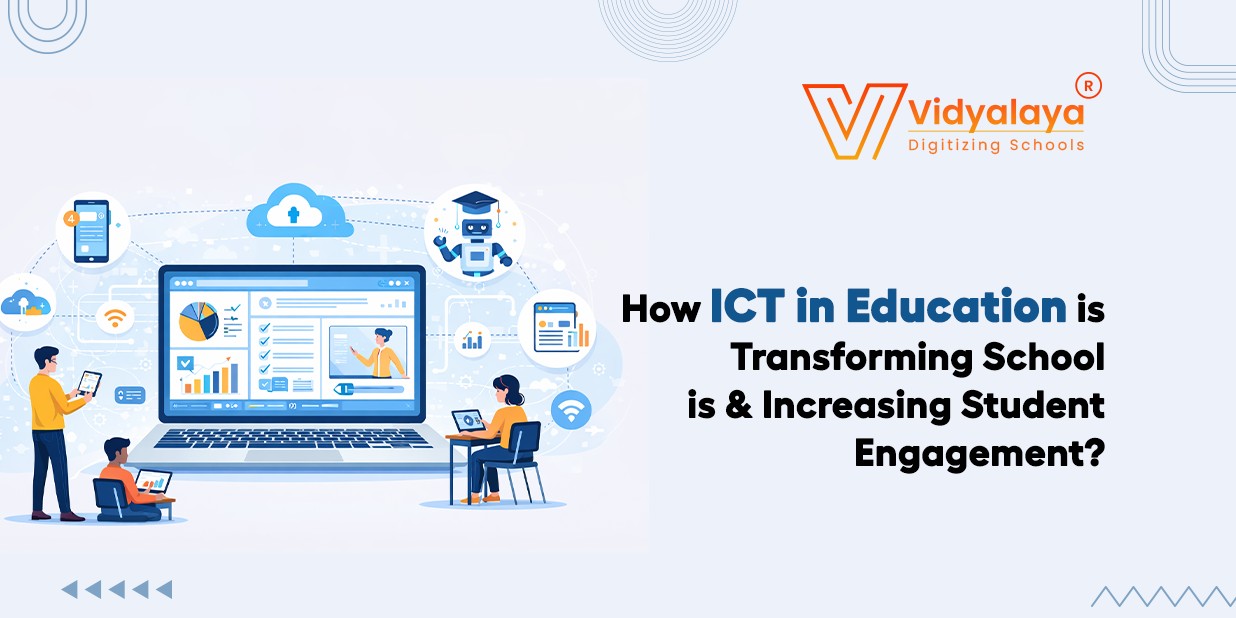
Go back to 2010 and ask a school principal what ICT meant inside their building. Nine times out of ten, the answer involved a computer lab at the end of a corridor — maybe twenty desktops, booked in advance, used primarily for typing practice and the occasional research project. If a classroom had its own machine, that was considered progressive. The idea that Information and Communication Technology could reshape how a student experiences learning, rather than just digitise a few admin tasks, was something people talked about at conferences. It was not something most schools were doing.
That gap — between the conversation and the reality — has genuinely closed. Not in every school, and not painlessly. But in the institutions that have committed seriously to ICT in education over the past several years, something has shifted that earlier wave of ed-tech spending rarely produced: real, sustained improvements in student engagement. Not marginally better quiz scores. Actual changes in how present, motivated, and involved students are when they are in a learning environment.
Why does this wave feel different from the ones before it? Three reasons, mostly. The tools themselves have matured well past novelty. The data infrastructure sitting behind those tools — the Student Information System, in particular — has become capable enough to support decisions in real time rather than in retrospect.
Shift That Nobody Really Announced:
There was no memo. No policy launch. No single moment when someone declared that ICT in education would now mean something fundamentally different. It crept up, the way most real institutional change does — gradually for a while, then all at once.
Three things changed. Not sequentially. Roughly at the same time, reinforcing each other.
First, interactive learning tools stopped being classroom novelties and became the primary medium of instruction. Interactive flat panels, collaborative digital workspaces, real-time simulation environments, gamified assessment platforms — in schools that have committed to these properly, they are not supplementary anymore. A student in 2026 working through a physics simulation that responds to their inputs, adjusts the scenario based on their decisions, and gives them immediate feedback on what went wrong is having a categorically different learning experience from a student copying a labelled diagram into a notebook. Both students might be studying the same concept. The depth of engagement is not remotely comparable.
Second, blended learning methods quietly became standard practice in schools that were paying attention. Live sessions for discussion, debate, and the social texture of learning together. Digital environments for practice, personalised pacing, and the kind of low-stakes repetition that builds fluency in a skill.
Third — and this one gets underappreciated in most conversations about school technology — the data layer got serious. A Student Information System that once held little more than names, addresses, and term-time attendance records now sits at the operational and pedagogical centre of a school. It connects to assessment platforms. It tracks engagement signals. It feeds dashboards that teachers and administrators use.
The Student Information System — The Piece That Nobody Talks About Enough
Write about ICT in education, and the temptation is to focus on the visible stuff. The interactive panels. The apps. The simulation software that makes a Year 9 chemistry lesson feel like it did in 2015. Those are the things that photograph well for school prospectuses and impress visitors on open days.
But the component that determines whether the whole ecosystem holds together is one that most students never directly interact with at all. The Student Information Software is, for want of a better word, the connective tissue. It is what makes sure that the attendance record, the assessment result, the assignment submission, the note from a counsellor, and the message sent to a parent are all part of the same coherent picture of a student — rather than isolated data points sitting in separate systems that nobody ever correlates.
Without it, here is what happens. The interactive tools in the classroom produce engagement data that goes nowhere. The e-learning solutions generate progress information that teachers never see in a usable form. The blended learning model runs along without any institutional visibility into whether it is working for individual students. Each part of the system does its job. None of them talks to each other.
Six Things That Separate Real ICT Implementation from Expensive Window-Dressing:
Not all ICT investments produce the same results. Some schools spend heavily and see genuine transformation. Others spend equally heavily and, a few years later, have little to show for it beyond newer hardware. The difference, almost always, comes down to the same set of factors.
A properly configured Student Information System:
Not a database of names and addresses with an attendance module bolted on. A live, connected hub that links academic records, engagement data, assessment results, and communication history into one actionable picture — updated continuously, not quarterly.
Interactive learning tools embedded in pedagogy:
Technology is selected because it serves a specific teaching goal, not because it arrived in a sales brochure. The tool should follow the instructional strategy. When it is the other way around — when teachers are shaping their lessons around what the tool can do — something has gone wrong in the procurement process.
E-learning solutions that integrate:
Platforms that feed progress data back into the school’s existing infrastructure, rather than creating yet another separate login and another silo of information that most teachers quietly stop checking after the first term.
Blended learning methods:
Parent-facing tools:
Automated updates are sent to families only when there’s a meaningful change rather than routine reports dispatched on a fixed schedule, regardless of whether there’s anything significant to share.
Teacher training that sticks:
Not a half-day onboarding before the platform goes live. Sustained, practical professional development that gives teachers genuine confidence with the tools over time. Because a dashboard full of student data helps nobody if the teacher staring at it has no idea what they are supposed to do next.
Conclusion:
The evolution of ICT in education is no longer about adopting new tools; it’s about creating a connected, intelligent ecosystem that actively improves how schools function and how students learn. In 2026, institutions that are seeing real gains in student engagement are those that have moved beyond isolated technologies and embraced integrated systems where interactive learning, blended methods, and a powerful Student Information System work together seamlessly. This unified approach not only enhances classroom experiences but also enables schools to make faster, data-driven decisions that directly impact student success and operational efficiency.
At Vidyalaya School Software, we help schools turn this vision into reality with a comprehensive, all-in-one school management solution designed for modern educational needs. From streamlining administration to improving communication and tracking student performance in real time. Our platform empowers institutions to achieve measurable results. Contact us today for a free demo and see how we can transform your school into a smarter, more engaging learning environment.