










 /
5.0
Rating
/
5.0
Rating

 /
4.9
Rating
/
4.9
Rating









 Lets Talk Ai


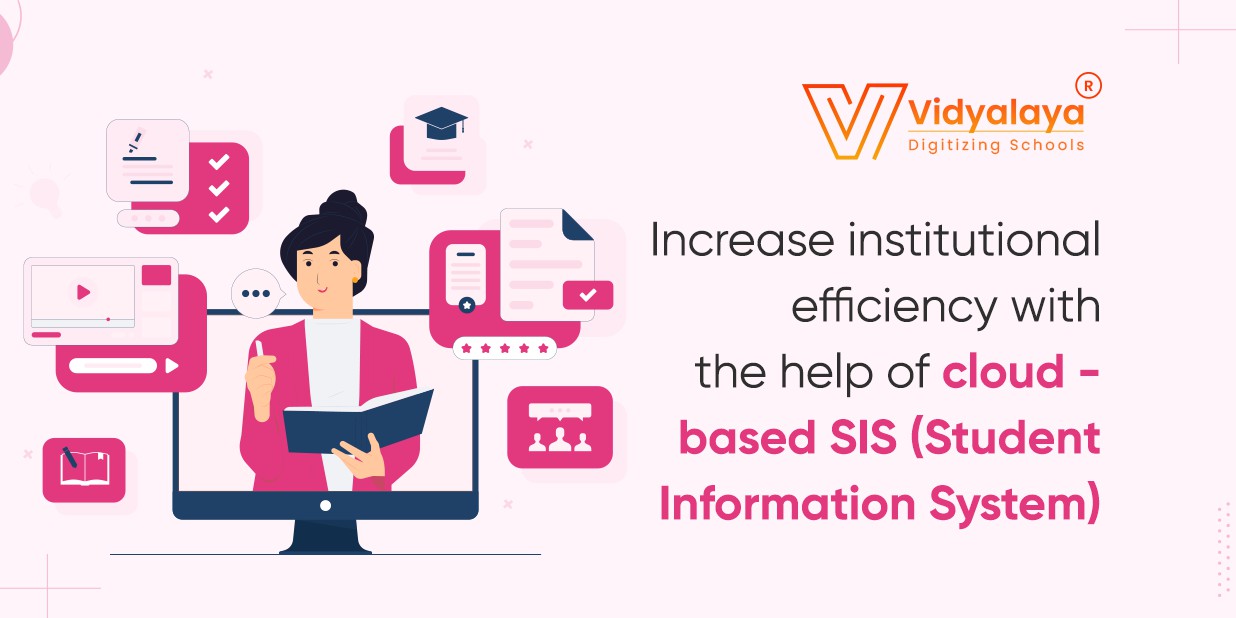
Who would have thought that student data would become so important and add a new feature to educational ERP systems? But yes, the fuel benefits of data have taken every single aspect of the process to the next level to get more of it. Student data, which was left negligible for so many years, has gained peak centre of attraction,n and the entire school ERPs are running around it. Leading software providers identify this importance and launch a product that is completely student-centric. This exceptional product is the Student Information System or SIS.
According to a recent market survey, the market of SIS systems is expected to experience accelerated change. With the salient features, the system is entirely blissful for today’s educational systems. It streamlines the student information and makes it accessible to all authorized stakeholders. Further, to keep the security of this data intact, providers develop this system in two modes: on-premise and cloud-based. Depending on the budgetary and business requirements, educational institutes can prefer one of these. As the name reveals, the cloud-based Student Information System is superior to its on-premise counterparts in many aspects.
What is the Student Information System?
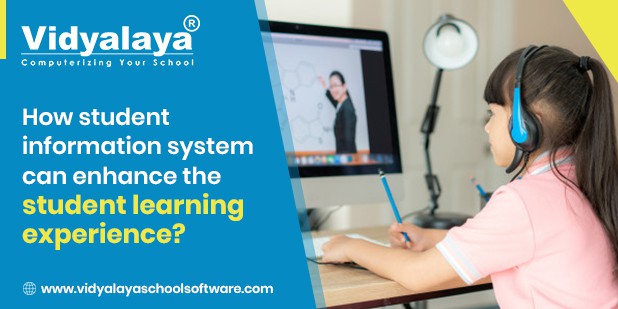
A Student Information Software integrates all stakeholders- students, parents, and school administration and enables the institute to digitize and manage student information. It provides a single dashboard from where you can get everything related to student information and can track student progress. Also referred to as the IS System, helps to compare student performance with the help of various parameters.
It helps all stakeholders as it is enriched with various features like:
- Student details in a single view
- Student data maintenance
- Student Behaviour Records
- Cloud platform
- Student Attendance Records
- Health records
- Fees Records
- Parent Management
- Assessment Management
- Alumni and Fundraising
How does a cloud-based Student Information System improve Institutional Efficiency?
Having a cloud-based Student Information System is like an asset that multiplies the outcomes. It revolutionizes an institution’s operational effectiveness with its prime features.
Learn how to accomplish it wonderfully and seamlessly
1. Improve Student Performance:
Educational institutes always strive for excellence in many aspects, and among all, student performance is the crucial factor. The institute’s reputation increases with the student performance. So, institutes adopt limitless efforts to improve student outcomes and are not limited to student retention only. The student information software can provide high-quality education, along with cultural and academic improvement along with:
- Provide various modes of operations- mobile, web, and standalone to operate and administer the tasks.
- Establish and improve communication between different stakeholders and ensure information sharing.
- Implement innovative strategies for getting new perspectives on learning and developing new teaching methodologies.
- Bringing personalization into the learning process to cater to individual needs.
2. Improve Operational Efficiency:
Educational institutes adopt the technological-based approach to improve operational efficiencies. However, educational institutes can streamline basic and advanced processes with the help of cloud technology and ensure consistency. Learn how a loud-integrated Student Information System improves operational efficiencies:
- Eliminate the complex IT procedures and cut down the cost of hardware maintenance.
- Optimizes functional operations like admissions, academics, financial aid, and others.
- Improves data accuracy and information storage for better transactions.
3. Improves Scalability:
Educational institutes can scale rapidly when student information is stored on the cloud. Teachers can smoothly access this data without any hassle and can make better decisions, eventually landing in beneficial for students. This fast access helps teachers to reduce the time spent making decisions. Also, the organized manner of data storage and representation helps educational institutes improve their overall functioning. As decisions are made at a faster pace, the growth anticipated is also at a faster pace. All thanks to the cloud-based Student Information System!
4. Ensured Data Security:
This is the area where the on-premise Student Information system lacks. When compared to cloud-based systems, on-premise systems may offer irregular updates and misleading information. Also, storing data locally in one place makes it prone to vulnerability. All these flaws are ruled over by the cloud-based SIS System. It encrypts the data with SSL and keeps the connection between server and client secure. It integrates several security practices like complex passwords, role-based access, and access privileges, and maintains the security of the data.
5. Makes your Institution Exemplary:
There are thousands of institutes in the town, but how can you make your institute stand out from the rest? The simple answer to this is to adopt modern technology and upgrade yourself! Using a cloud-based Student Information system, institutes can save millions on account of time and resource investment in hardware upgrades. Instead, teachers can easily access the student information within a few clicks and can invest their saved time in improving the teaching methodologies. They can check each student’s performance and can suggest improvements in weak areas. This will help to improve student-teacher relations and can yield good results.
6. User-friendly Application:
Educational institutes are insisting on an SIS system so that they can optimize their entire workflow, but may have a dilemma between cloud-based and on-premise. According to the latest survey, educational institutes mostly prefer cloud-based systems as on-premise systems force them to juggle between modules and don’t provide a clear picture of students’ progress. On the contrary, cloud-based systems provide a unified platform for different sections and collect the data in one place. This makes it easy for stakeholders to access and view it through intuitive interfaces. Also, the in-built features like chatbots and messengers enable stakeholders to establish communication instantly. The Cloud-based Student Information Software also provides a personalization feature to enable users to customize their interfaces according to their preferences and necessities.
Using a technology-oriented approach in the education sector has become a necessity rather than a luxury. Governments are also adopting new education policies for a better future with this approach. So, institutes have no choice but to go with the wind and implement educational management systems. Going further, highlighting the student data significance, institutions are insisting on systems for student data management, educational data management, and school information management to improve efficiency levels. Adding the layer of cloud integration to this, they can ensure the security of applications and data, and can provide a robust environment to the stakeholders. Vidyalaya embraces this approach and helps in improving students’ performance and, apparently, the growth of your institutes with our top-notch Student Information System!