










 /
5.0
Rating
/
5.0
Rating

 /
4.9
Rating
/
4.9
Rating









 Lets Talk Ai


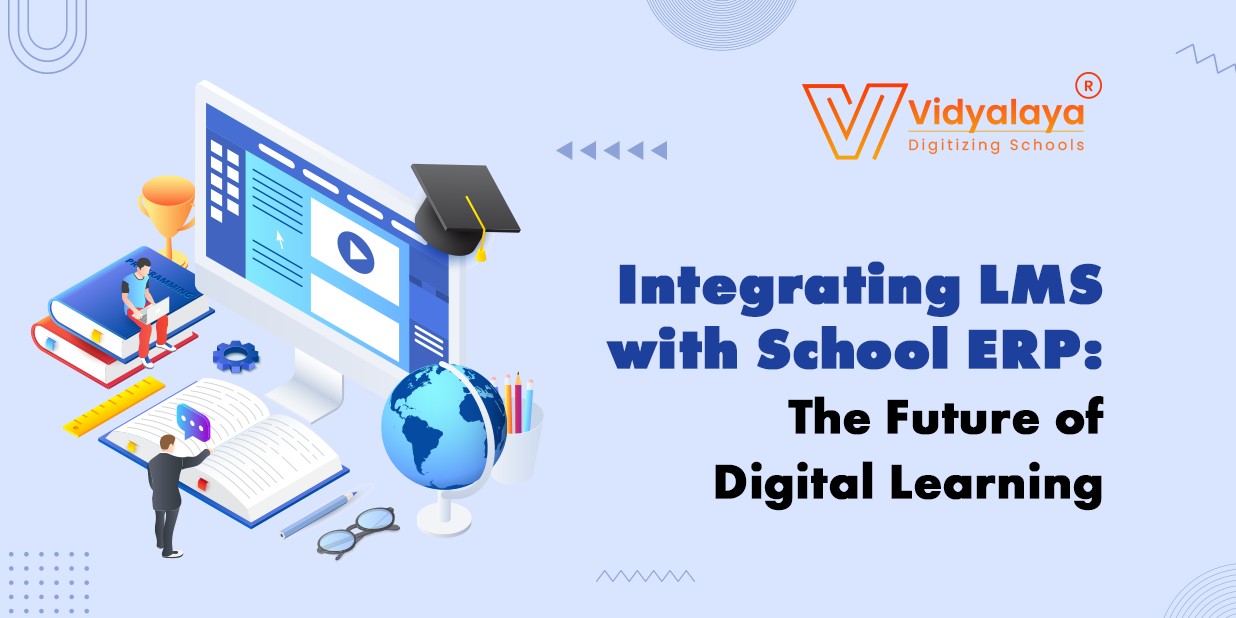
I’ve been in and around education technology for a while, and one thing is clear: schools today don’t just use technology; they live in it. Teachers, students, parents, and administrators all rely on digital systems to keep things running. Somewhere in that busy mix sit two powerful tools: the Learning Management System (LMS) and the school ERP platform.
Both are valuable on their own, but when you connect with them, that’s when things start clicking. LMS and ERP integration are slowly becoming the quiet heroes of modern education. It’s not flashy, but it changes how a school breathes and functions day to day.
The School ERP software takes care of everything in the background—admissions, attendance, payroll, accounting, transport, and reports. You could say it’s the invisible skeleton that holds the school together.
When a school links the two, things that used to require multiple logins suddenly flow smoothly. Attendance taken in the LMS pops up in the ERP instantly. A teacher enters grades once, and they appear in every report. Parents see the same information without waiting for a printed sheet.
That’s the heart of LMS with School ERP software—no more silos, no more double work.
Why It’s Catching On?
After 2020, everyone discovered how chaotic remote learning could be. Teachers had ten tabs open, students missed notifications, and administrators were trying to pull data from three different systems. Eventually, most schools realised: running disconnected platforms is like teaching with half the chalk missing.
So, integration began to spread. It isn’t only large international schools adopting it; even small institutions with limited budgets now see the value. By merging systems, they save hours every week. The popularity of digital learning tools also plays a role—interactive lessons, video platforms, online testing—all these fit more naturally when the LMS and ERP are speaking the same language.
And honestly, teachers appreciate anything that cuts down on admin work. A few minutes saved here and there often turn into an extra hour to plan lessons or help students one-on-one.
Why It Really Matters?
Let’s face it: education isn’t just about grades. It’s about creating systems that allow teachers to teach and students to learn without being buried in paperwork. That’s where integration truly shines.
- One Source of Truth: When everything is connected, data becomes cleaner. A student’s profile, results, and attendance update automatically. It reduces errors and makes report cards almost effortless.
- Time Back for Teaching: Every teacher knows the pain of duplicate entries. With integrated software, you log data once and you’re done. That’s a quiet kind of magic.
- Clear Communication: Parents appreciate transparency. They can check progress, payments, or notices anytime. That open line of communication builds trust.
- Informed Decisions: Administrators finally have reliable numbers. Whether it’s budgeting, staffing, or analyzing academic performance, the combined dashboard tells the real story.
- Ready for What’s Next: The future of education is moving fast—AI-based grading, predictive analytics, personalized content. None of that works well without solid, connected data. Integration sets the foundation.
The Bigger Picture:
When you zoom out, LMS and ERP integration isn’t just about efficiency; it’s about mindset. It signals that a school is ready for digital maturity. Technology stops being an afterthought and becomes part of the school’s DNA.
Imagine this: a student submits homework through the Learning Management Software, the marks automatically flow into the ERP, parents get a quick notification, and the administration can instantly generate progress reports. There’s no chasing paperwork, no waiting for updates. Everything simply… works.
In my view, that’s the real promise of digital learning—systems working quietly so teachers and students can focus on what matters.
The integration also encourages collaboration between departments. IT teams, teachers, and finance staff finally look at the same screen instead of arguing over which spreadsheet is correct. It’s a small cultural shift but a powerful one.
Looking Ahead:
The next wave of digital learning tools will rely heavily on these integrated setups. We’re talking about AI tutors that adapt to a student’s pace, smart attendance tracking, and even early-warning systems for students who might be falling behind. All of these depend on unified, accurate data—something only a combined LMS-ERP environment can provide.
Schools that start now are already ahead of the curve. They’ll be able to plug in new technologies effortlessly because the backbone is strong. It’s like building a road before the traffic arrives—you’re ready when it is.
Where an AI Learning Management System Fits In
Here’s the piece I think most schools miss: once your LMS and ERP are talking to each other, you’ve basically built the data pipeline an AI Learning Management System needs to actually work. An AI LMS doesn’t run on guesswork it needs real attendance records, real grades, real engagement patterns flowing in continuously, which is exactly what LMS-ERP integration produces.
So the “AI tutors that adapt to a student’s pace” I mentioned above? That’s an AI Learning Management System in action reading the unified data your integrated systems are already generating and using it to personalize what each student sees next, instead of treating every student the same. Schools integrating their LMS and ERP now aren’t just cleaning up admin work, they’re quietly building the foundation an AI Learning Management System will need the moment they’re ready to switch it on.
Wrapping Up:
Integrating an LMS with a School ERP is no longer a luxury—it’s becoming essential for schools that want to operate efficiently, enhance teaching quality, and provide a seamless experience for students and parents. At Vidyalaya School Software, we understand the unique challenges schools face, and our platform is designed to unify every aspect of school management under one roof.
By adopting an integrated solution, schools save time, reduce errors, improve communication, and gain actionable insights that drive smarter decisions. Whether it’s automating attendance, streamlining grading, or providing parents with instant updates, Vidyalaya School Software empowers educators to focus on what truly matters—teaching and learning.
In today’s fast-evolving digital landscape, the schools that embrace integrated systems are not just keeping up—they’re setting the pace. Let us help your school take that next step toward efficiency, transparency, and digital maturity.
Get ahead of the curve—streamline your school operations, empower your staff, and enhance the learning experience for every student. Book a demo today and see how Vidyalaya can transform your school.