










 /
5.0
Rating
/
5.0
Rating

 /
4.9
Rating
/
4.9
Rating









 Lets Talk Ai


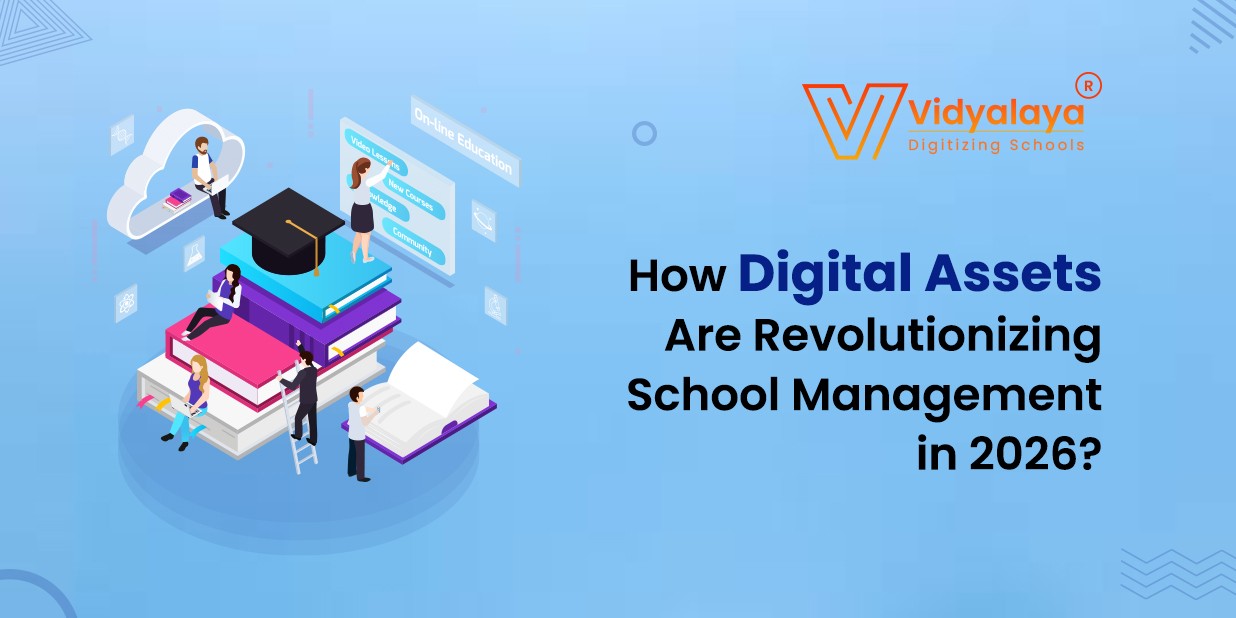
School management in 2026 is not about dramatic transformations—it’s about smarter, faster, and more connected operations. Schools today operate in an environment where efficiency, accuracy, and real-time access to information are no longer optional. From administrative offices to classrooms, decision-making has become quicker, communication more streamlined, and manual dependencies significantly reduced. This shift is largely driven by digital assets working quietly in the background, enabling schools to function with greater clarity and control.
The transition to digital did not happen overnight. Schools gradually adopted digital records, online communication tools, and smart classroom technologies, eventually integrating them into a unified ecosystem. Solutions like Vidyalaya School Software play a key role in this transformation by helping institutions manage academics, administration, and communication from a single, centralized platform. At the core of this evolution is the Digital Asset Management System, which allows schools to efficiently organize, store, and access educational content, student information, teaching resources, and administrative documents. Digital assets today go beyond basic software—they include cloud-based platforms, interactive learning tools, and smart classroom solutions. For instance, Smart Interactive Boards and Interactive Whiteboards have evolved into dynamic teaching hubs where lessons are created, updated, and delivered seamlessly.
Growing Popularity and Importance of Digital School Management Services:
There’s a clear reason why digital management services have become an essential part of modern schools. Educational institutions have always been busy environments, but today’s expectations are significantly higher. Parents expect timely updates and transparent communication; teachers need tools that enhance productivity rather than slow them down, and administrators look for systems that minimize errors while improving operational control.
Digital management services gained widespread adoption because they simplified everyday processes through effective management of digital assets. Tools such as Smart Interactive Boards enable teachers to deliver lessons more efficiently without frequent interruptions, while Smart Board online teaching has become a standard practice rather than a special solution—especially for revision sessions and blended learning models. Once schools experienced the efficiency and flexibility that come from properly managing digital assets, returning to traditional, fragmented systems was no longer a practical option.
Why do Digital Assets Matter in School Management?
Digital assets matter because they change how people feel at work. That’s not something dashboards show, but it’s real. When systems are clear, stress drops. When information is easy to find, fewer arguments happen.
An Interactive Whiteboard helps teachers keep students engaged, which surprisingly affects management too. Calm classrooms are easier to run. From an administrative side, digital tools create consistency. Same process. Same data. Fewer “this is how we used to do it” debates.
Streamlining Administrative Operations with Digital Tools:
Administration was once slow—not because teams lacked effort, but because legacy systems created bottlenecks. In 2026, organizations across industries rely on centralized digital platforms to streamline operations. Records are maintained digitally, reports are generated instantly, and inconsistencies are flagged early. This level of operational visibility is enabled through Enterprise Digital Asset Management, which ensures that critical data, documents, and resources are structured, accessible, and consistently updated across the organization.
This shift has significantly improved decision-making at the management level. Leaders no longer rely on assumptions; they analyze real-time insights, recognize patterns, and address potential issues before they escalate. Early visibility reduces the need for extensive corrective actions later, saving time and operational costs. While digital assets don’t make decisions, an effective Enterprise Digital Asset Management framework makes decision-making clearer, faster, and more strategic.
Enhancing Classroom Management Through Interactive Technology:
Classrooms have changed more than offices, honestly. A Smart Interactive Board turns teaching into something flexible. Teachers can adjust lessons mid-way if students look confused. That didn’t happen easily before.
Students also behave differently when lessons are interactive. Less drifting. Less noise. An Interactive Whiteboard pulls attention forward. From a management point of view, that means fewer complaints, fewer interruptions, and better use of class time.
Future Impact of Digital Assets on School Management:
The future of education management is not about adding more tools, but about using existing systems more effectively. As digital assets continue to evolve, their true value lies in reducing complexity and bringing structure to everyday operations through the right School Asset Management Software.
In 2026, digital assets are shaping school management in subtle yet powerful ways. Smart Interactive Board setups, Interactive Whiteboard classrooms, and Smart Board Online Teaching platforms don’t demand attention—they simply work. And sometimes, quiet efficiency is the biggest revolution of all.
Conclusion:
As digital transformation continues to shape the future of education, institutions that invest in structured, scalable systems will stay ahead of operational challenges. A well-implemented Digital Asset Management System brings consistency, visibility, and control to academic and administrative processes, enabling leadership teams to reduce inefficiencies, improve collaboration, and make data-driven decisions with confidence. In 2026 and beyond, the competitive advantage will not come from adopting more technology, but from managing digital assets in a smarter and more integrated way.
This is where the right technology partner makes a measurable difference. Solutions designed with real institutional workflows in mind help organizations simplify management, optimize resources, and support long-term growth. If you’re looking to streamline operations and experience the impact of a powerful Digital Asset Management Software firsthand, contact us today for a free demo and discover how Vidyalaya School Software can support your digital journey.