










 /
5.0
Rating
/
5.0
Rating

 /
4.9
Rating
/
4.9
Rating









 Lets Talk Ai


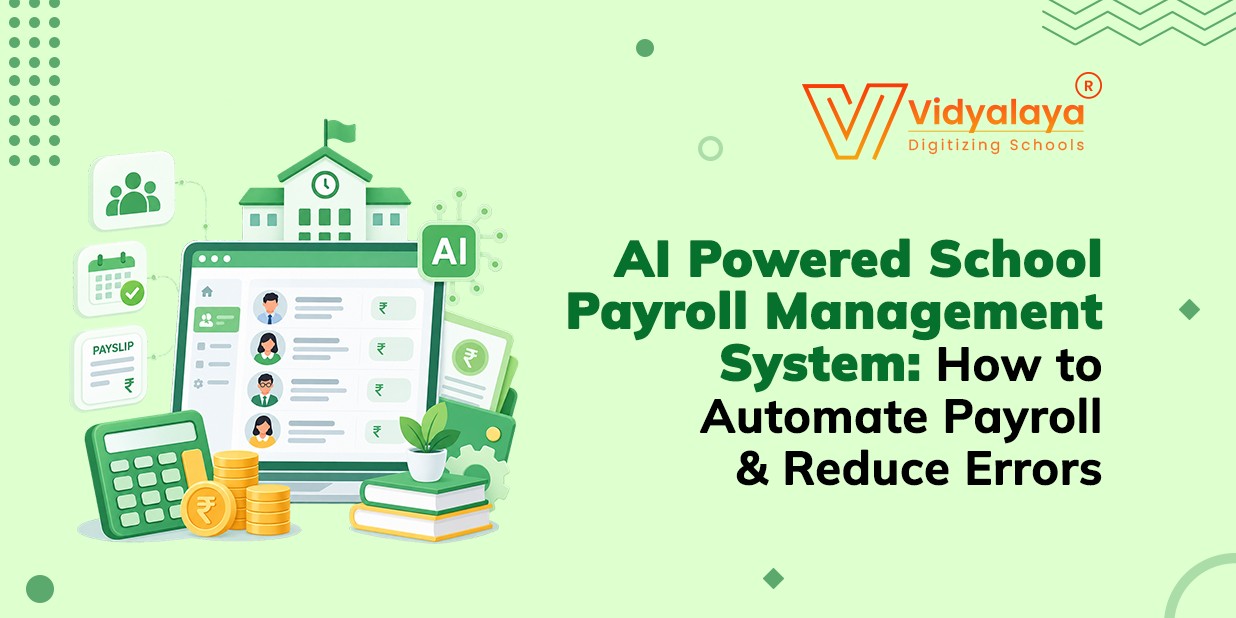
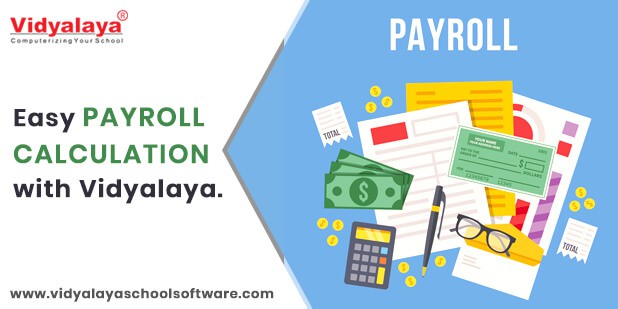
Managing payroll in a school involves far more than simply calculating monthly salaries. From tracking employee attendance and leave to handling salary adjustments, substitute staff, provident fund contributions, tax deductions, and payslip generation, even a small discrepancy can create unnecessary administrative work and employee concerns. When these processes rely on spreadsheets and manual calculations, schools are more likely to encounter data inconsistencies, calculation errors, delayed payroll processing, and compliance-related challenges.
An AI Powered School Payroll Management System helps schools streamline and automate these complex payroll processes from a centralized platform. By automatically processing attendance, leave, salary adjustments, deductions, and payroll calculations, the system can significantly reduce manual effort and minimize human errors. For schools looking to improve payroll accuracy, save administrative time, enhance employee satisfaction, and manage salary processing more efficiently, adopting a reliable School Payroll Management Software can transform payroll from a time-consuming task into a more accurate, automated, and organized process.
Why School Payroll Is Messier Than It Looks
Payroll sounds like a fixed calculation. Multiply salary by days worked, subtract deductions, done. In a school, it rarely stays that simple. Teaching staff, non-teaching staff, and contractual or visiting faculty often sit on different pay structures. Leave policies vary by role. Attendance affects pay directly — a half-day, an unpaid leave, an extra substitution — and all of that must be tracked accurately before a single number gets calculated.
Do this by hand across fifty or a hundred staff members every month, and errors aren’t a possibility. They’re a near-certainty, and they usually surface as an upset employee pointing at a payslip rather than someone catching the mistake beforehand
What an AI Powered School Payroll Management System Actually Automates
Pulls attendance directly instead of asking someone to re-enter it.
An Attendance Payroll Management System connects attendance records straight to salary calculation. Leave, half-days, and extra duty already exist in the attendance data — payroll just reads it, instead of a staff member manually transcribing attendance into a separate payroll sheet every month.
Calculates deductions and compliance items automatically.
Provident fund, professional tax, TDS — these change with slabs and rules that shift periodically. Payroll Management Software that keeps these updated calculates them correctly by default, rather than relying on someone remembering the current rate.
Flags anomalies before payslips go out.
This is where the AI layer earns its place — not by making payroll decisions, but by catching what a manual process would miss. A salary that jumped 40% month over month with no corresponding change gets flagged for review instead of quietly going through. A staff member marked present in attendance but absent in the leave register gets caught before payment, not after a complaint.
Runs from anywhere, without a server to maintain.
A Cloud Based Payroll Management System means the finance team isn’t tied to one desktop running one installed application. Payroll can be reviewed, approved, and processed from wherever the person responsible for it happens to be — useful during a month when the accountant is out and someone else needs to step in.
Keeps a running, auditable record.
An Online Payroll Management System logs every calculation, adjustment, and approval automatically. When a school must produce salary records for an audit or a compliance check, that history already exists in reportable form, instead of someone reconstructing it from old files.
Where the Errors Actually Disappear
It’s worth being precise about this, because “reduces errors” can sound vague. The errors that go away are specific: attendance data that doesn’t match the payroll register because it was re-typed by hand. Deduction rates that are out of date because nobody updated a formula after a policy change. Duplicate or missed payments because two people were both handling parts of the same process without a shared source of truth.
None of these are exotic failures. They’re the ordinary, boring mistakes that happen whenever a repetitive calculation depends on a person doing it correctly, every time, without exception — a bar manual processes eventually fail to clear, no matter how careful the person running them is.
What Schools Get Wrong When Adopting This
The most common mistake is choosing a Payroll Management System Software purely on cost, without checking whether it integrates with the school’s existing attendance and HR records. A payroll tool that can’t pull attendance automatically just becomes another place to manually re-enter the same data — the error risk doesn’t go away, it just moves.
The second mistake is assuming automation removes the need for review entirely. It doesn’t. What changes is what gets reviewed — instead of manually calculating every salary from scratch, someone reviews a system-generated payroll run and the anomalies it flagged. That’s a faster, more accurate check than building the numbers by hand every month.
Where This Is Heading
The next stage for school payroll isn’t just faster processing — most systems already handle the basic calculation quickly. It’s more predictive flagging: anomaly detection that improves as it sees more months of a school’s actual payroll patterns, compliance updates that apply automatically the moment a tax slab changes, and staff cost forecasting that helps a school plan ahead rather than just settle last month’s numbers.
Schools that get the most value start by connecting payroll to attendance first — the single biggest source of manual error — and expand into compliance automation and reporting from there.
Conclusion:
Efficient payroll management is essential for maintaining accurate, transparent, and well-organized school administration. By bringing attendance, leave, salary calculations, deductions, approvals, compliance, and reporting together in one centralized platform, schools can reduce repetitive administrative work, minimize calculation errors, and gain better visibility into their payroll operations. Automation also allows finance and administrative teams to spend less time on routine calculations and more time on important institutional responsibilities.
With Vidyalaya School Software, educational institutions can replace spreadsheet-based processes with a smarter and more structured approach to managing employee salaries. The solution helps simplify routine payroll activities while maintaining accurate records and improving operational efficiency. Contact Vidyalaya School Software today for a free demo and discover how you can streamline your school’s payroll process.