










 /
5.0
Rating
/
5.0
Rating

 /
4.9
Rating
/
4.9
Rating









 Lets Talk Ai


“The library is the heart of the school, it’s the hub.”- Ron Black.
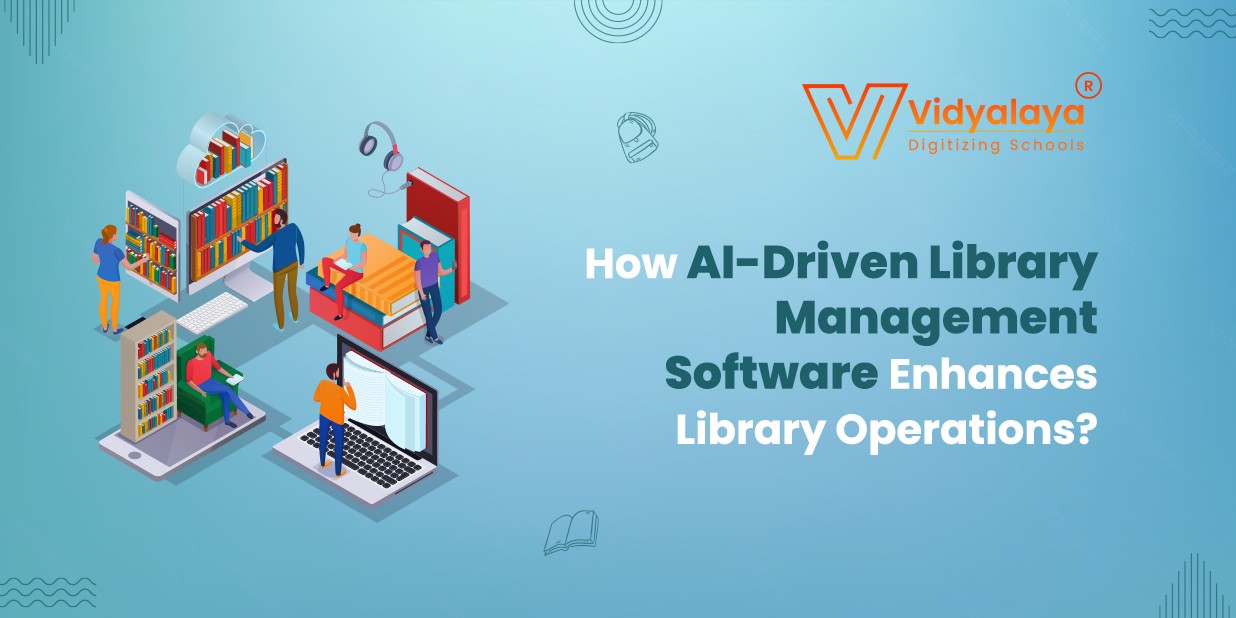
The quote underlines the importance of a school library very well. The entire environment at the library fascinates everyone; the walls are full of books, organized sections of books, the silence fills the rooms, and it’s a studious environment! But this all-well scenario is not always the case. Manual management of the library yields several flaws that make the entire system inefficient and less productive. To address this problem, Vidyalaya has launched a library management software. The feature-rich software overcomes the flaws of the manual system and enhances the workflows. Let’s learn how this transition can change your library management in this blog!
Why manual library management is not suitable today?
As said earlier, manual library management generates various flaws that make the entire system less efficient. Today’s data-driven era is fast-paced and generates massive amounts of data every day. There are certain limitations to the manual handling of the data-oriented systems. So, the following are the reasons why manual library management is not feasible today:
- Slow results and the occurrence of human intervention errors
- Inefficient data handling
- Can’t contribute to the decision-making process
- Manual inventory management
- Less productive staff due to the major workload
How to Automate Library Management Systems?
Till here, we have understood why manual library management fails. Now, let’s see the solution for this. Leading EdTech software companies like Vidyalaya come with solutions such as Library Management Software. This software works like magic over the flaws and converts the system into an efficient one. Let’s see what and how it brings changes to the library workflows:
- Vidyalaya’s library management software helps to boot rack library, every transaction of book issue, return, and due. It also keeps track of every book in the library- issued, returned, or in missing states.
- The software generates unique serial numbers for every book and registers it in the system. This makes it easy to identify the book and track it in the system.
- It also registers the accounts of students who are entitled to enroll in the library. The complete record of the student, along with grade, year, and contact details.
- Not only students, but the library management software keeps track of teachers also, who have borrowed which book, for how many days, etc.
- It also keeps track of fine fee management, library fees, and coordinates with the central fee management process.
- An advanced library management system integrates with the school payroll system and manages the library staff management, their payroll, and working hours.
- It also facilitates the administrators to access the system from smartphones. This freedom to use the system remotely offers great flexibility.
- Vidyalaya’s library management system also sends notifications about the status and every transaction regarding the book. Administrators can reach out to the submitted questions by students and inform them through SMS or email.
What are the features of library management software?
Vidyalaya’s Software is equipped with major key features that make day-to-day working easy and efficient. Here are the top features of the software:
1. Acquisition Management:
Management of a complete inventory system, including placing orders, checking the quality of resources received, invoice processing, vendor payment processing, acquisition record update, and auto allocation of book IDs to the latest acquisition.
2. Catalogue Management:
Creation of metadata, rack numbers, and location identifiers to catalogue the library resources. It makes locating the books easy.
3. User Management:
Creation and management of user profiles, including students, teachers, and library staff. Ensuring multi-user system efficiency.
4. Circulation Management:
Stock verification, scanning the books based on unique serial numbers, searching the books based on different criteria like author, subject, name, serial number, year of publishing, etc.
5. Online Public Access Catalogue (OPAC):
Students can search for books and other e-resources after validating their login credentials.
6. Fee Management:
To keep track of membership fees and manage individual student records. Automatic calculation of fines and raising the restrictions on students until the fine is paid.
Why should Educational Institutes invest in Library Management Software?
The above-mentioned features automatically reveal the reasons why educational institutes invest in library management software. Here is the list of what they get:
1. Data Management:
Library management generates massive data through daily transactions. Integration with RFID or barcode systems will improve the accuracy of data entry and accessibility. The system also boosts the speed required for operations like book issues, returns, and registrations. The built-in data security features also tighten data security and keep it protected.
2. Time-saving:
Library management software reduces the waiting time for students to get/return the books. During peak exam duration, this time becomes significant. Using the software, library staff can quickly locate and lend the books. Students can also check whether the preferred book is currently available or not, and can save time visiting the library.
3. Improved Productivity:
Library management requires plenty of resources. Using the library management system, all resources like manpower, energy, and cost are utilized optimally. Accessing the system within a few clicks, real-time dashboard analytics improve the productivity of the staff.
4. Streamlined Fine Management:
The fine collection is an important process of library management. Students get automated SMS notifications about due dates, late fees, and calculated fines. A librarian can keep track of the fine while returning the book. Students can also log in to their accounts and can check the status of the books.
Conclusion:
The library is an integral part of every educational institute. It is the knowledge repositories that cover various operations like the exchange of books, organizing them, dissemination of information sources, maintaining the inventory, etc. The knowledge storehouse acts as a guide for students to gain new knowledge and widen their exposure. Looking at the immense significance of the asset of any school, Vidyalaya has launched tailor-made library management software.
With top-notch features, the librarian can manage the library workflows with improved efficiency and accuracy. The software is very user-friendly, quick to adopt, and requires less maintenance compared to other software. If you are also seeking a productive library management system, then drop a message for a free demo. For more details, visit our website: vidyalayaschoolsoftware.com.