










 /
5.0
Rating
/
5.0
Rating

 /
4.9
Rating
/
4.9
Rating









 Lets Talk Ai


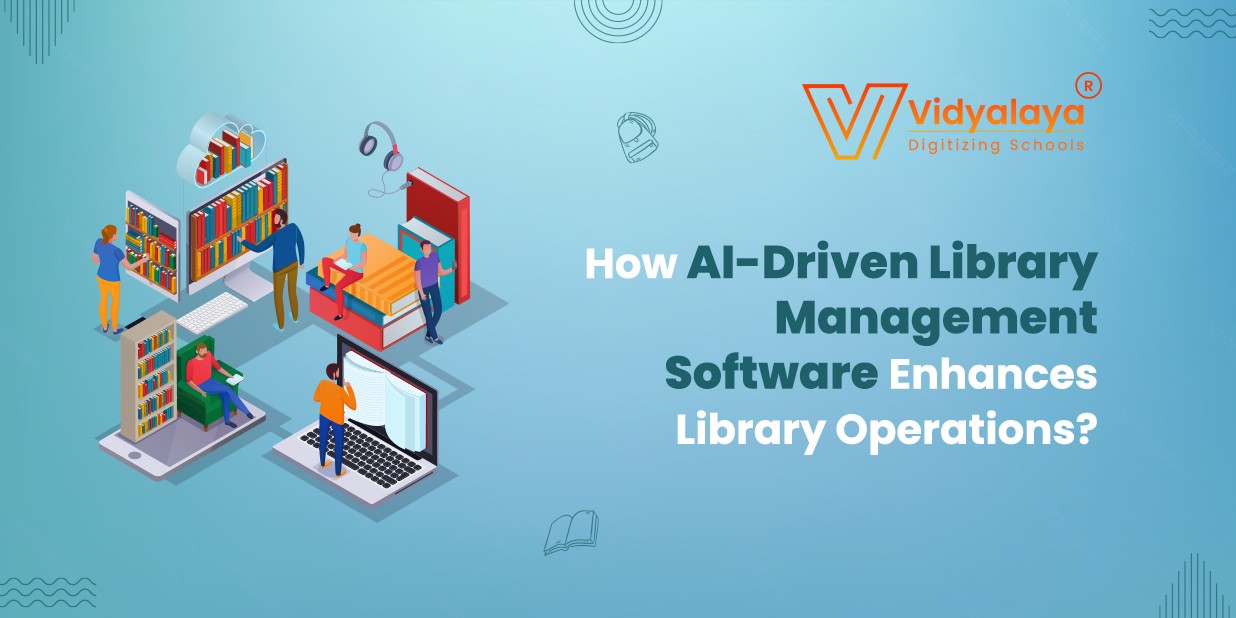
Behind every well-run library is a team managing hundreds of daily tasks—cataloguing new books, tracking circulation, handling memberships, maintaining records, generating reports, and responding to user requests. While these responsibilities are essential, many libraries still depend on manual processes or disconnected systems that slow operations, increase administrative workload, and leave little time for staff to focus on improving patron services and engagement.
AI-driven Library Management Software is changing the way modern libraries operate by bringing intelligence and automation into everyday workflows. From automating routine tasks and delivering real-time insights to improving resource management and user experiences, AI helps libraries work smarter, faster, and more efficiently. As libraries continue to adapt to growing expectations and digital transformation, AI-powered solutions are becoming a strategic tool for enhancing operational efficiency, accuracy, and service excellence.
Why the Old Way Is Showing Its Age?
Nobody designed the traditional Library Management System to be frustrating. When most of these platforms were built, libraries were simpler to manage. Physical books, predictable borrowing cycles, and a patron base that came in person. The software was adequate for that world.
That world changed. The software, in most cases, didn’t follow.
Today’s library manages physical stacks alongside digital databases, e-book platforms with their own expiry rules, community programmes, and patron accounts that interact across multiple devices at all hours. It is designed around a much narrower set of tasks, fills the gaps awkwardly, and librarians fill the rest with spreadsheets, workarounds, and informal systems that one person understands completely and nobody else does at all.
Manual management has a ceiling. AI-Powered Library Solutions exist precisely at that ceiling — not replacing libraries or the people in them, just removing the unnecessary load that’s been sitting on top. A modern library automation system can help streamline these operations, while library management software for schools can support efficient management of resources, circulation, and user services.
What Actually Shifts When AI Enters the Picture?
Vendors talk about features. Librarians, after six months with a well-built AI Library Management Software, tend to talk about something harder to quantify — the strange experience of knowing what’s happening in your collection without going looking for it.
A conventional Library Management System holds a tremendous amount of information and mostly just sits on it. An AI-driven system surfaces patterns without being asked — a section quietly ignored for two years, a title requested six times that the collection doesn’t hold. That reshapes how a library makes decisions.
The timepiece is equally real. Tasks that eat up a librarian’s morning happen automatically or take a fraction of the time they used to. What comes back isn’t just hours. It’s mental space that goes back to patrons and the actual work of running a library.
What Good Smart Library Software Actually Does?
Every platform claims to be intelligent and seamlessly integrated. The ones that hold up handle a specific set of problems well — in ways that feel like relief rather than added complexity.
1. The Cataloguing Backlog:
Most libraries have one. AI Library Management Software takes most of it off the plate — classifying new items, generating metadata, flagging duplicates, catching catalogue errors before they compound. The backlog stops growing. For libraries where cataloguing has been the persistent headache that never quite goes away, this lands harder than any other feature.
2. Knowing Where Things Are:
Inventory records and actual inventory drift apart in most libraries eventually. Library Automation Software built on AI tracks physical and digital collections continuously — discrepancies surface before they pile up, overdue reminders go out before anyone must think about it, and the picture the system shows matches reality on the shelves.
3. Recommendations beyond the front desk:
The reference librarian’s recommendation is irreplaceable. What AI-powered library solutions do is extend that reach to the times when no librarian is available — late evening, the online catalogue at midnight, the patron too shy to ask at the desk. Not perfect. But genuinely useful.
4. Watching the collection so you don’t have to:
Library collections go stale gradually, and the signs are nearly invisible in real time. Digital Library Management tools powered by AI watch continuously — flagging when a subject area keeps generating searches that can’t be met, or when a section’s borrowing rate has been declining for eighteen months. Collection decisions stop being gut calls.
5. Reports that don’t eat the week:
Usage statistics, collection utilization rates, and budget justifications — important, necessary, and almost entirely without satisfaction to produce manually.
6. One coherent system instead of five awkward ones:
A platform for physical circulation. A separate interface for e-books. Another login for databases. None of them shares data. Library Automation Software that genuinely unifies physical and Digital Library Management into a single environment makes a difference that’s hard to appreciate until you’ve experienced the alternative.
Conclusion:
Libraries are no longer just repositories of books—they are dynamic knowledge hubs that require efficient, data-driven management. As collections grow and user expectations evolve, relying on manual processes and disconnected systems can limit operational efficiency and service quality. AI-driven Library Management Software, including an automated library management system, empowers libraries to automate routine tasks, gain actionable insights, optimize resource utilization, and deliver a more seamless experience for both staff and patrons. The result is a smarter, more responsive library environment that can adapt to changing educational and technological demands.
Investing in AI-powered library automation is not just a technology upgrade; it is a strategic step toward building a future-ready library. Whether you manage a school, college, university, or public library, the right solution, such as an AI library management system, can help reduce administrative burden, improve decision-making, and maximize the value of your library resources. Looking to modernize your library operations? Contact us today for a free demo and discover how our AI-driven Library Management Software can transform the way your library works.