









 /
5.0
Rating
/
5.0
Rating

 /
4.9
Rating
/
4.9
Rating








 Lets Talk Ai


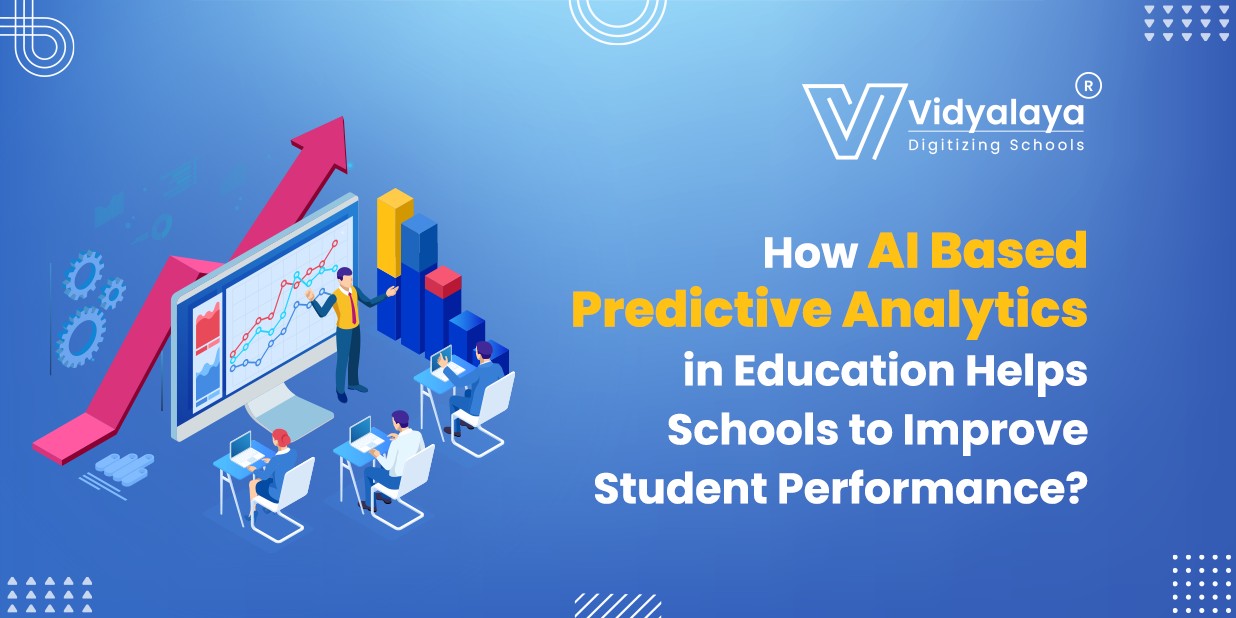
Education systems today face a common challenge: identifying student problems before they become serious academic issues. Traditionally, schools would only recognize performance problems after exam results were released.
Employing advanced Predictive Analytics enables institutions to evaluate a student’s academic potential and pinpoint gaps in learning at an earlier stage. Furthermore, by incorporating additional software tools to help manage the data — i.e., Student Result Management Software, Student Records Management Software, and Student CRM Systems — schools can aggregate the collected student data and provide reports that have real value.
This shift toward Predictive Analytics in Education is helping schools move from reactive decision-making to proactive academic support.
Growing Role of Data in Modern Schools:
Schools generate large amounts of data every day — from attendance and assignments to exam results and student engagement.
Without proper systems, this information often remains scattered across different platforms. But when schools implement Student Records Management Software, all student data becomes organized and accessible.
This structured data becomes the foundation for Predictive Analytics in Education, allowing institutions to detect trends and predict future outcomes.
How Predictive Analytics Works in the Education Sector?
At its core, Predictive Analytics works by analysing historical data and identifying patterns that indicate future behaviour.
For example, the system may analyse:
- Attendance patterns
- Assignment submission frequency
- Exam scores
- Classroom participation
- Communication history through a Student CRM System
Using this information, Predictive Analytics in Education can estimate the probability of academic success or failure.
Data Sources Used in Predictive Analytics:
| Data Source | Purpose |
| Student Result Management Software |
|
| Student Records Management Software |
|
| Student CRM System |
|
| Learning Platforms |
|
| Assessment Tools |
|
Each of these systems contributes valuable data that strengthens the accuracy of Predictive Analytics models.
Detecting Learning Gaps Before Exams:
One of the biggest advantages of Predictive Analytics in Education is the ability to detect learning gaps early.
Instead of waiting until the final exam results, schools can analyse ongoing student performance through Student Result Management Software.
Early Detection of Academic Risk:
| Month | Students At Risk |
| January | 5 |
| February | 8 |
| March | 14 |
| April | 10 |
| May | 4 |
With Predictive Analytics, teachers can intervene when risk levels start increasing rather than waiting until it is too late.
Improving Communication with Student CRM Systems:
Academic performance is not only influenced by classroom learning. Communication between teachers, students, and parents also plays a major role.
This is where a Student CRM System becomes extremely useful.
A Student CRM System helps schools:
- Track parent-teacher communication
- Send academic alerts
- Notify parents about attendance issues
- Provide performance reports
When integrated with Predictive Analytics in Education, the Student CRM System can automatically trigger notifications when a student’s predicted performance drops.
Data Management as the Backbone of Predictive Analytics:
For Predictive Analytics to work effectively, schools must maintain accurate and organized student records.
A Student Records Management Software helps institutions centralize:
- Academic records
- Attendance logs
- Behavioural reports
- Extracurricular activities
- Health and demographic data
Benefits of Centralized Student Data:
| Benefit | Description |
| Data Accuracy |
|
| Faster Decision Making |
|
| Better Analytics |
|
| Improved Reporting |
|
| Enhanced Transparency |
|
When all student data is centralized through Student Records Management Software, Predictive Analytics in Education becomes significantly more effective.
Conclusion:
Predictive Analytics in education is no longer a luxury — it’s a necessity for schools that aim to proactively support students and improve academic outcomes. By leveraging integrated tools like Student Result Management Software, Student Records Management Software, and Student CRM Systems, schools can not only detect learning gaps early but also enhance communication with students and parents, making interventions timely and effective.
At Vidyalaya School Software, we empower educational institutions with AI-driven solutions that turn raw student data into actionable insights, helping teachers make informed decisions and improve overall student performance. Don’t wait until exam results reveal the issues — stay ahead with predictive insights. Contact us today for a free demo and see how our school management software can transform your institution’s academic success.