









 /
5.0
Rating
/
5.0
Rating

 /
4.9
Rating
/
4.9
Rating









 Lets Talk Ai


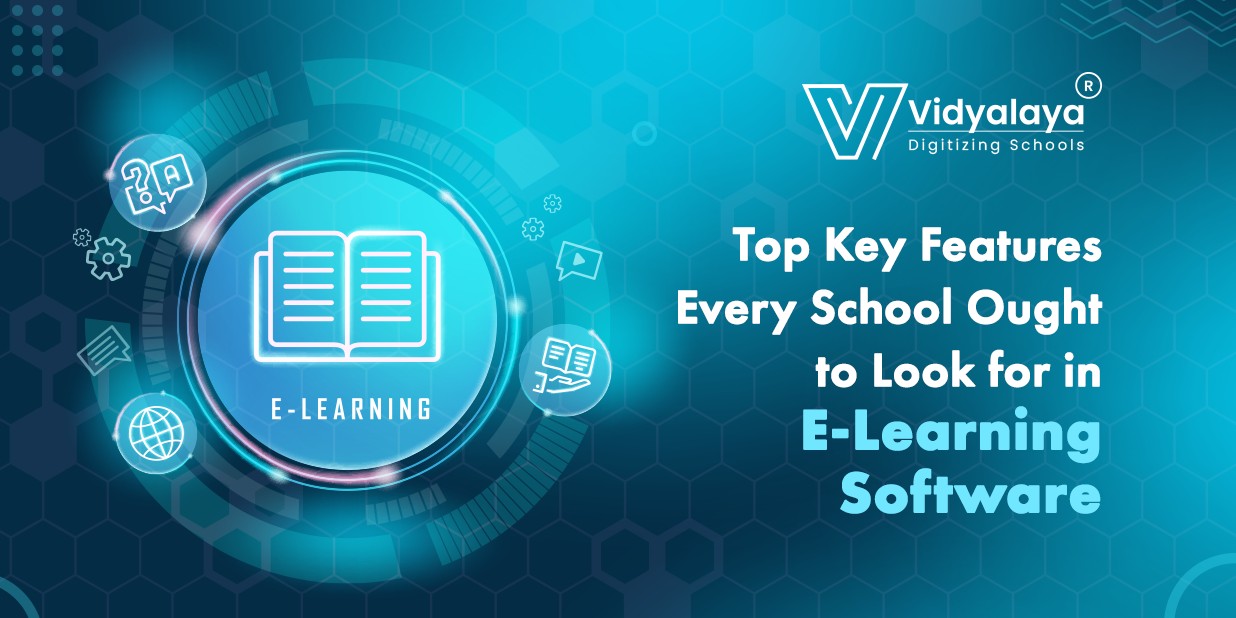
The education sector is changing at a historical pace, and E-Learning Software is an integral component of schools today. Selecting the ideal E-Learning Solution can be a do-or-die consideration for distance or blended learning initiatives, keeping children interested and teachers operating optimally. A properly designed E-Learning Management System does not merely copy learning—it inspires participation, monitors progress with accuracy, and distinguishes teaching approach.
For those with multiple options, the proper platform must be combined with learning goals, accommodate blended learning requirements, and provide an integrated experience for students, educators, and administrators.
1. Robust Content Management System (CMS):
Any e-learning system has a strong Content Management System behind it, an internet library where all the content to be learned is warehoused, categorized, and retrievable. It is difficult to plan and distribute lessons without a systematic CMS.
- Simple content uploading and creation: It must be easy for the students to create quizzes, assignments, and discussions, and upload resources like videos, PDFs, and presentations.
- Reasonable structure and classification: The site would possess properly defined course structures, tagging, and instant search features so that content can be easily accessed.
- Multi-format support: Text, audio, video, and interactive media support maintain lessons interactive and inclusive.
2. Interactive learning aids and engagement elements:
In order to facilitate student interaction, the site should promote cooperative activity and participative work.
Live session facilities:
With screen sharing, virtual whiteboards, and the option to record sessions, online courses have fostered more interaction and engagement. Breakout rooms provide that ‘real classroom’ experience where students may divide into small groups in order to brainstorm, discuss ideas, and collaborate as if they were shoulder-to-shoulder in a classroom.
Collaborate Made Simple:
Regardless of how it happens, whether through passionate discussion boards, active live chat, or dedicated peer-to-peer project rooms, students get ample opportunity to interact. They can share ideas, collaborate as a team, and team-debug—with or without geography.
Gamified Progress Monitoring:
Learning is more fun if students are able to see and enjoy their progress. Badges, progress bars, and leaderboards turn lessons into a pleasant competition, encouraging students to go that extra bit, achieve small wins, and keep going with enthusiasm.
3. Progress Monitoring and Assessment Tools:
Learning results must be measured in order to provide effective teaching.
- Test combination: From multiple-choice tests to essays and project submissions, the site must be capable of handling more than one. Grading rubrics make clear tests and maintain fairness.
- Automated Feedback and Grading: Automated grading of some assignments at the system level frees up teachers and provides immediate feedback to the students.
- Reporting and Analytics: Educators can monitor students’ performance, identify areas where there are knowledge gaps, and make corresponding adjustments to lesson plans using performance dashboards.
4. Usability and Accessibility:
Even the greatest tools are useless if no one can operate them.
- User-friendly interface: Simple to use design, easy to understand menus, and uncomplicated workflows allow the website to be employed by all, independent of technical expertise.
- Mobile Responsive: Learners can study anywhere, anytime, on any device, from a smartphone to a desktop.
5. Integration Capabilities and Scalability:
The top platforms aren’t silos—they operate together within a school’s existing systems and scale with the school.
- Integration with Student Information Systems (SIS): Automatically synchronizing grades, attendance, and student profiles, the system saves staff work hours and eliminates errors.
- Compatibility with third-party tools: From plagiarism detectors to educational games, the capability to integrate with a variety of learning tools provides teachers and students with more freedom and creativity in the classroom.
6. Data Privacy and Security:
The confidentiality of individual student information is of the utmost importance.
- Encryption of data: Encrypts data both in transit and at rest.
- Privacy Law Compliance: Compliance with laws like FERPA and GDPR demonstrates a school’s commitment to data protection.
- Authentication and Access Control: Multi-factor authentication and role-based access control prevent unauthorized access to data.
Conclusion:
An Education Investment – Making the best E-Learning Solution is not a technology decision—it’s an education investment in pedagogic excellence, student engagement, and business success. Highlighting capabilities like robust content tools, interactive objects, adaptive testing, ease of use, system integration, and robust security, schools can build a robust online learning environment that can meet short-term and long-term requirements.
Vidyalaya School Software’s E-Learning Module adheres to these principles with an accessible, user-centered platform for the schools.