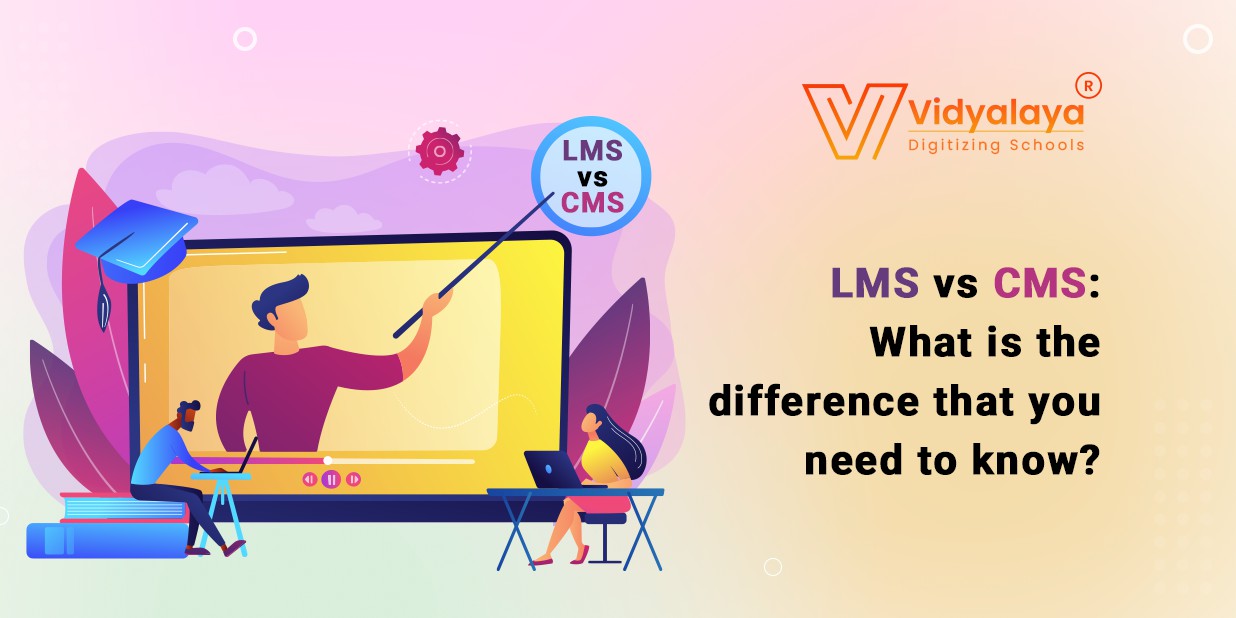








LMS vs CMS: What is the difference that you need to know?

Learning Management System

4 min read
vidyalaya

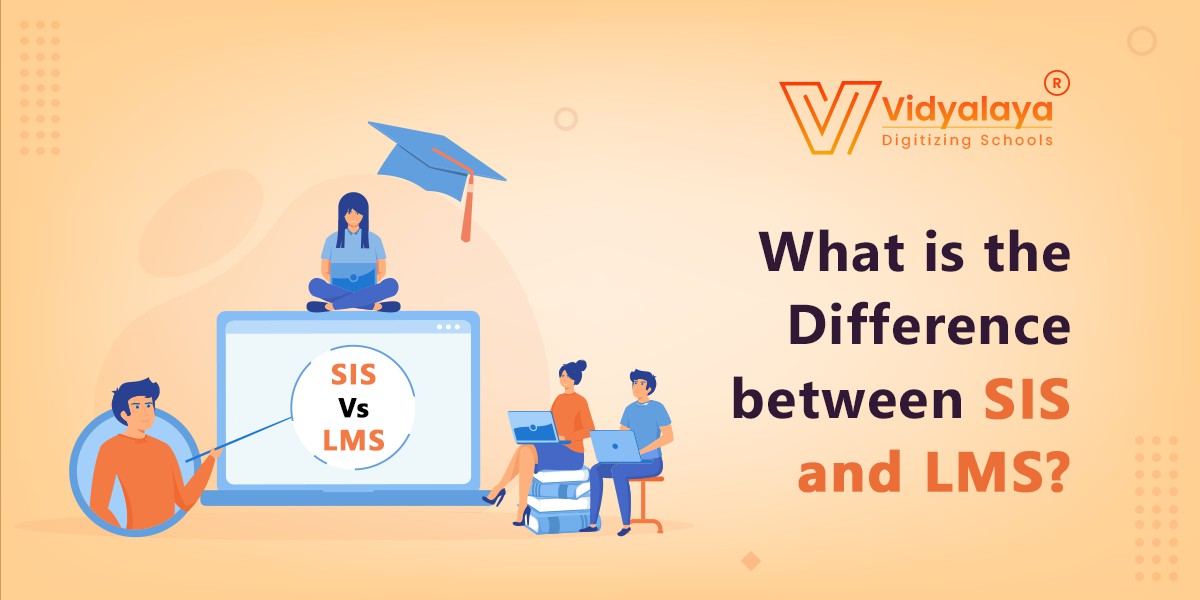
While reading educational blogs, one may come across terms like Learning Management System, CMS, and ERP often. However, their importance for the education industry is undeniable; one who is unaware may get confused between them. Both LMS and CMS have become integral parts of today’s education system; unless you are a technophile, you may remain in a state of confusion about both terms sounding similar. Online learning has spread its wings so well that no one has remained untouched by this term. If your institute is also starting its journey into online learning, it is imperative for you to identify whether LMS or CMS will make a perfect fit for your requirements. To do this, one must understand the difference between these two.

What is a Learning Management System?

A Learning Management System is a software application that handles, plans, implements, and evaluates online learning strategies and processes. Thus, this platform identifies the teaching gaps and can help in rectifying the learning methodologies. Learning management systems make learning seamless as they design personalized learning paths and self-paced microlearning. Generally, a learning management system software has two elements: a server that serves the functionality and an easy user interface to establish communication between the user and the server.

What is a Content Management System?

Content Management System, commonly referred to as CMS, is a software that manages various types of content and offers centralized control over all aspects of content. A content management system has two components: the interface, which allows users to manage content, and CDA, or a content delivery application, which looks after the compilation and update of the website. Generally, a school management system consists of a good content management system to serve the users. As education resources can be effectively presented in various forms like images, text, audio, video, and graphics, educational institutes insist on an integrated CMS in the school ERP.

LMS and CMS: How are they different?

A Learning management system and CMS share some similarities that may overlap each other’s functionality. The similarities may cover the following aspects:

  • Ability to create and manage online content
  • Multiple user support
  • Ability to grow or shrink as per requirements
  • Feature to user login and course management

But along with these, there are some major differences between these two software. Here they:

Learning Management System (LMS)

Content Management System (CMS)

  • LMS primarily focuses on creating, managing, administering, and tracking online courses and evaluations. 
  • CMS mainly focuses on creating, organizing, and publishing educational content.
  • The core aim of any LMS is to offer seamless eLearning end-user experiences by creating personalized learning paths.
  • CMS is intended to help users create, alter, publish, and manage digital educational content.
  • An LMS is more suitable for delivering organized and interactive courses.
  • A CMS is more suitable for creating and sharing dynamic online content. 
  • Users can encounter several interactive modes like quizzes, live sessions, games, and social forums in a learning management system.
  • CMS is a static content depository that is for viewing purposes only.
  • In LMS, learners are the end users.
  • In CMS, content managers become the end users.
  • The reporting module of a learning management system generates detailed reports on student activities, courses, and instructions.
  • The reporting module in CMS does not do much apart from simple activity reports.
  • LMS is generally accessed by students, teachers, and administrators of the system.
  • A CMS is accessed by a content manager or relevant authority.
  • One can schedule events using LMS, which thus offers a flexible approach.
  • One cannot schedule events using CMS. 

LMS or CMS: Which one is the Best for you?

It is a little tricky to choose between LMS and CMS, but your clear understanding of what to do with your online content hides the answer to the question. Both learning management systems and CMS help to create, store, and manage digital content in a structured way. But the core purpose of both systems can help you to make decisions. If your requirements deal with academic training and interactive activities, then LMS is the best option for you. And, if your requirements deal with organizing a large volume of data and making it available for multiple users, then you should go with CMS.

Summing up!

Learning Management systems and CMS may share a few similarities and differ in different aspects. Based on your requirements, one can go further with any of these. Whichever option you choose, ensure you have all the must-have features in your kitty so that you get all the needed content or LMS at one stop.

Vidyalaya, a leading EdTech provider which served for more than a decade, facilitates both products. Learning management systems and CMS both hit the most-demanding education software list. Once you know what LMS and CMS can do for you, it will become easy for you to pick the right one. Our Education ERP software contains both modules, so you don’t have to look for other third-party vendors to fulfill your requirements. Just draft an email or dial our contact number to get connected with us!

Frequently Asked Questions

1. What is the main difference between LMS and CMS in schools?

An LMS is designed to manage teaching, learning activities, and student progress tracking, while a CMS focuses on creating and managing digital content. Schools use LMS for learning delivery and CMS for organizing academic resources.

2. Why do educational institutions need an LMS instead of only a CMS?

An LMS supports structured learning with assessments, tracking, and interactive lessons, which a CMS does not provide. It helps schools improve engagement and measure student learning outcomes effectively.

3. Can LMS and CMS work together in a school environment?

Yes, both systems can complement each other effectively. CMS handles content publishing, while LMS manages learning delivery, assessments, and performance tracking.

4. How does choosing between LMS and CMS impact school operations?

The choice impacts how effectively digital education is delivered. LMS focuses on academic engagement and learning outcomes, while CMS mainly supports content organization and communication.

5. What features should schools look for in an LMS solution?

Schools should look for features like online classes, assessments, student tracking, reporting, and personalized learning paths. These ensure a complete and structured digital learning experience.

6. How does Vidyalaya School Software help in LMS and CMS integration?

Vidyalaya School Software provides integrated school ERP solutions that combine learning management and content management capabilities. This helps schools manage academics and digital operations from a single platform.

7. Which system is better for modern digital classrooms?

An LMS is more suitable for modern classrooms as it supports interactive learning, assessments, and student progress tracking. A CMS alone cannot deliver structured academic engagement.

8. How does LMS improve student learning outcomes compared to CMS?

LMS improves learning outcomes through personalized learning paths, real-time feedback, and performance tracking. CMS mainly provides static content without measuring learning effectiveness.

author

The Author

Kumaril Patel

CEO & Co-Founder

LinkedIn Icon

Kumaril Patel is the CEO & Co-Founder of Sapphire Software Solutions, a global technology company specializing in software, mobile app, and web development. With over 20 years of diverse IT leadership, he has built international business operations from the ground up and led the leading flagship digital platforms such as Vidyalaya School Management System and OccuCare Occupational Health Management System.

Kumaril is known for transforming ideas into high-impact technology solutions—leading cross-functional global teams and building innovation-driven ecosystems. His strategic vision has enabled long-standing collaborations with global enterprises including American Express, Bayer, TATA Group, Adani Group, Larsen & Toubro, Honda, Toyota and Vedanta Limited.

Passionate about innovation, AI, and cloud technologies, Kumaril focuses on empowering organizations to scale globally while solving real-world challenges through transformative digital solutions.

Related Post