










 /
5.0
Rating
/
5.0
Rating

 /
4.9
Rating
/
4.9
Rating









 Lets Talk Ai


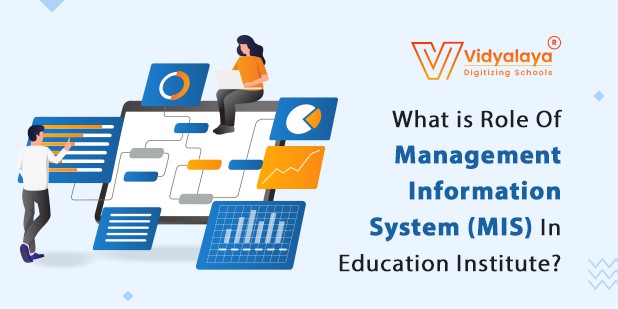
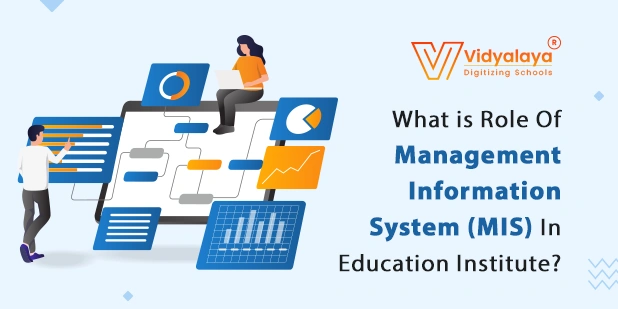
We are used to quotes that underline the importance of data, like ‘Data is new fuel’ or ‘data is the new raw material of business’. All businesses are becoming data-centric and are reshaping their methodologies to make a futuristic fit. In the education industry, massive data is generated through the accomplishment of daily operations. Every institute, irrespective of size, faces the challenge of organizing this data and implementing it for fruitful purposes. The government compliance bodies also encourage educational institutions to maintain a streamlined approach to data management, which must be easily accessible and lead to transparency in processes. A right management information system or MIS can pull it off and propel the progress track in the right direction.
What is MIS software?
A management information system is a centralized data repository that enables different core functionalities like storing, managing, and student data. Additionally, it processes the data and generates various reports so that stakeholders can make fruitful decisions based on it. An MIS system works as a tool for school admins as it supports a range of administrative activities, like attendance monitoring, account management, resource management, and more. With the successful implementation of the system, teachers and school administrators will get base data for planning, decision-making, human resource management, and student evaluation.
What factors need to be taken into consideration while investing in management information system software?
A well-designed and feature-rich management information system boosts the performance of the educational institute. Selecting the right MIS for your school is a big decision, so dig more, explore various platforms, and ask a plethora of questions until you get the utmost satisfaction. Here is a sample of a comprehensive questionnaire that will help you to zero in on a desired MIS system:
1. Does the MIS system fulfill my requirements?
This is a fundamental question, but one might be lost in the attraction of the top features of various MIS systems available in the market. But it might also happen that their simple yet sound amazing features are not at all needed as per your requirements. So, never divert from your requirement list items!
2. What is the hosting location of the MIS?
Management information systems can be web-based or hosted online. Both methods have their own plus points. Consult with your IT team and choose the best method for you.
3. What about support?
Customer support service plays a significant role in any software purchase. Your vendor must be ready to provide you with exclusive support over different mediums like chat, phone call, conference call, or in-person.
4. Does the system make smooth integration with existing systems?
Management information systems software must streamline the workflows and should enable a frictionless integration with other systems. Ensure this happens, or else you will regret it later.
Checkout – Best School Management Software
What are the benefits of a management information system for modern educational institutes?
After understanding the contributing factors, let us discuss the key elements that can assist you in understanding how a management information system is beneficial for your modern educational institutes:
1. Reduction in Workload:
Reduced workload is one of the core benefits of having a management information system. School admins and staff will have a relaxed breath through segregation and systemizing data related to core processes like attendance, performance, timetables, and others. By cutting the manual work to almost zero or minimum, staff can get rid of the stress and anxiety at the workplace.
2. Effective Time Management:
Manual work is always time-consuming and does not guarantee accuracy. On the other hand, the MIS system manages the data within a few clicks. Storing and fetching records becomes a task of a few clicks, so there is a significant saving in time spent. This saved time can be saved for accomplishing fruitful and accountable tasks.
3. Improved Quality Reports:
A management information system software strongly focuses on raw data, trends, and various data patterns that make data analysis easier. Accurate predictions and comparisons can contribute to improving the quality of reports. Also, the elimination of human intervention in the entire process will cut down on the possibility of errors caused by it.
4. Supported Decision Making:
Decisions in the education sector leave an everlasting impact on the entire institution, students’ academic life, and other stakeholders, too. So, the decision-making process in the education sector is considered a life-changing activity and thus must be supported by solid sets of accurate data. The accuracy achieved through management information system software is incomparable, and role-specific access to data enables school admins to make informed and strategically fuelled decisions.
Facility of Alternative Solutions for Several Problems:
A management information system is a platform not only intended for storing student information and connecting the core processes, but it also offers indirect benefits like reduced workload, time-saving approach, accuracy, and a feasible solution for data-related problems. While all core processes and data management activities are automated, admin staff can focus their energy on more pressing issues. With full concentration and efficient resources, they can even develop a better learning experience and provide alternative solutions to several academic and non-academic problems.
Improved Student Performance:
An MIS system provides a platform where student information is stored, managed, organized, and analyzed. This organized data prepares a base for student data, such as attendance, grades, assessments, and others. Teachers and school admins can fetch standard and customized reports based on this data that will better present the student performance. This depiction of students’ learning curves may help teachers to identify the learning gap, students’ weaknesses and strengths, and areas of improvement.
Improved Communication between Stakeholders:
Healthy communication between teachers, parents, and students always benefits students to lead the path of success. A management information system drives communication most easily, either in one-to-one or in groups. Timely notification sent by the system keeps the parents on the right track regarding their ward’s performance, attendance, and other disciplinary behavior.
Security of data:
Data storage is a simple task when you adopt an education management information system. As student data is highly confidential, the MIS system cuts down the paperwork and risks to the data by storing it in digital form. A paperless environment created with an advanced MIS system is always secure and safe as compared to manual ones.
Today’s age is data-driven, and educational institutions need to explore and invest in various technological tools that can enrich the entire learning experience. Vidyalaya, a pioneer in the education software industry, steps further with innovation and provides a unique tool that will connect all the operations in a single system, providing access to all operations. A management information system is a new-age tool that connects all core operations and becomes the backbone of daily processes. Speed up the decision-making processes by shifting gears from manual to automation in every way. Develop a new and bright perspective that will shine your education brand with the help of Vidyalaya’s management information system software!