









 /
5.0
Rating

 /
4.9
Rating




 Lets Talk Ai


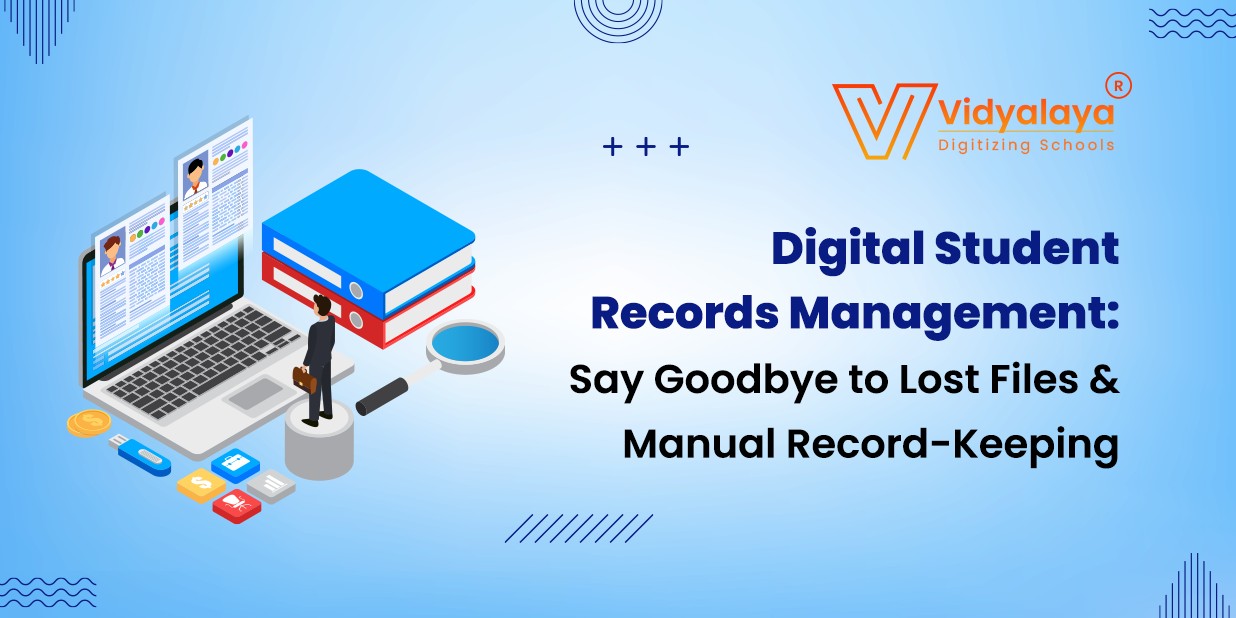
Managing student information efficiently is essential for every educational institution to ensure smooth administrative operations and informed decision-making. From admission forms and attendance records to academic performance and personal details, schools handle large volumes of data that require accurate organization, secure storage, and easy accessibility. Traditional paper-based record-keeping and spreadsheets often lead to misplaced documents, data entry errors, and time-consuming administrative tasks, making digital student records management a necessity for modern schools.
Digital student records management enables educational institutions to streamline data handling, improve accuracy, and ensure quick access to information for authorized staff. By replacing manual processes with a centralized digital system, schools can enhance data security, reduce administrative workload, and improve overall operational efficiency. In this blog, we explore the key challenges of traditional record management, the benefits of digital transformation, and the essential features to consider when choosing a solution, along with how Vidyalaya School ERP helps schools simplify student information management and build a more organized, efficient, and technology-driven educational environment.
The Importance of Managing Student Information
Every school collects information concerning admission, attendance, tests, payments, allocation to classes, and academic performance. Maintaining this information is essential in ensuring the smooth running of administration in the school.
Effective student records management enables schools to ensure that the same information is consistently maintained about each student. This makes it easy for the administrators and teachers to get the necessary information when making reports or communicating with the parents.
Managing student information effectively has the following benefits to the school:
- Improved organization:
The information of the students will be systematically managed. - Timesaving:
Getting access to the needed information becomes easy. - High level of accuracy:
Data entry and updating procedures will help in avoiding any unnecessary mistakes. - Efficient report writing:
The systematic management of the records will help in writing administrative reports. - Improved coordination:
It becomes easier for authorized staff to coordinate information.
Common Challenges of Manual Record-Keeping
Paper-based record keeping seems easy at first, but it gets complicated with increasing student enrollments and increasing number of records.
1. Loss of Documents
Admission forms, transfer certificates, past records of studies, and other vital documents may get hard to find if kept in multiple files or cabinets. This will cause delays in administrative processes and cause inconvenience.
2. Time-consuming Searching
To look for a certain student’s records, one may have to go through registers, file or even multiple spreadsheets. These processes become difficult especially during admission, examination, auditing, and year-end processes.
3. Redundant Data Entry
When the same data must be filled up in various registers or files, extra time is spent on this process. Redundant data entry can lead to discrepancies in different documents.
4. Difficulty Updating Information
Students may change addresses, contact numbers, classes, or other details during their time at school. Updating information manually across several records increases the risk of outdated information remaining in use.
5. Limited Reporting Abilities
Creating student registers, attendance records, and academic reports through manual processes can be demanding. It may be difficult for the administration to get a full picture of the situation as information is scattered in various places.
How Digital Technology Simplifies Record Management?
Digital systems allow the institutions to manage the students’ information digitally as opposed to using only paper-based documents. The authorized personnel will be able to search for records, update the information and create reports from the central system.
Use of Digital Student Records Management Software allows organizations to manage student profiles and any administrative information that is attached to it. Depending on the kind of software used, it may include other functions like attendance, academics, documents, reporting, among others related to students.
Benefits of using the process include:
- Centralized information
- Speedy search
- Update process
- Reduced paperwork
- Creation of reports
- Continuity of information
This method does not address all problems related to administration but makes the process of information management easier.
Important Features to Consider when Selecting a Student Record Management System
The choice of technology should be based on the considerations of administrative needs of the institution, the number of students and future needs. An effective Student Record Management System should provide several features that facilitate information management.
Centralized Student Profiles
The system should allow schools to maintain essential information such as student names, admission details, contact information, class assignments, and other relevant particulars. A structured profile reduces the need to search through multiple sources.
Admission and Enrollment Management
Admission processes generate considerable documentation. Digital admission workflows can help schools organize applications, maintain enrollment details, and move student information into the appropriate records.
Attendance and Academic Records
Attendance information and examination results help teachers and administrators understand student progress. Keeping these records organized makes it easier to review historical information and prepare reports.
Document Management
Schools should evaluate whether the system supports storing or linking relevant digital documents. Appropriate file organization and access permissions help staff retrieve documents while protecting confidential information.
Reporting and Search
Searchable documents and report generation make day-to-day management much easier. School authorities need to consider whether the software can generate those reports which are regularly needed.
Security and Access Control
It is necessary that student’s personal information should remain safe from any unauthorized access. There are many factors which must be kept in mind while selecting a digital tool.
Student Management System in Supporting School Administration
The Student Management System would assist the integration of student information with other administrative processes depending on the modules in the chosen software program.
For instance, admissions information could be integrated with student information while attendance and examinations information assist in academic reporting. Integration of related functions assists in reducing the effort of maintaining individual records for all the administrative processes.
In this way, the school administrators will be able to plan efficiently, access information whenever necessary and avoid repeating activities. The teachers might also find it easier to access student information for attendance checking, preparation of academic reports, and communication with parents.
Conclusion:
As schools grow, managing student records through manual processes can limit administrative efficiency and make it harder to maintain consistent information across departments. Investing in the right digital solution is not just about reducing paperwork; it is about building a scalable administrative system that supports better coordination, simplifies reporting, and helps school management make informed decisions. Choosing a Student Record Management System that aligns with your institution’s requirements can be an important step toward long-term operational improvement.
With Vidyalaya School ERP, your institution can move beyond fragmented record-keeping and adopt a more streamlined approach to managing essential school operations. Whether you want to simplify student data management, improve access to academic records, or reduce repetitive administrative tasks, Vidyalaya offers a practical solution to support your school’s digital transformation journey. Ready to see the difference for your institution? Contact Vidyalaya School Software today to book your free demo and explore how our school management solution can meet your administrative needs.