










 /
5.0
Rating
/
5.0
Rating

 /
4.9
Rating
/
4.9
Rating









 Lets Talk Ai


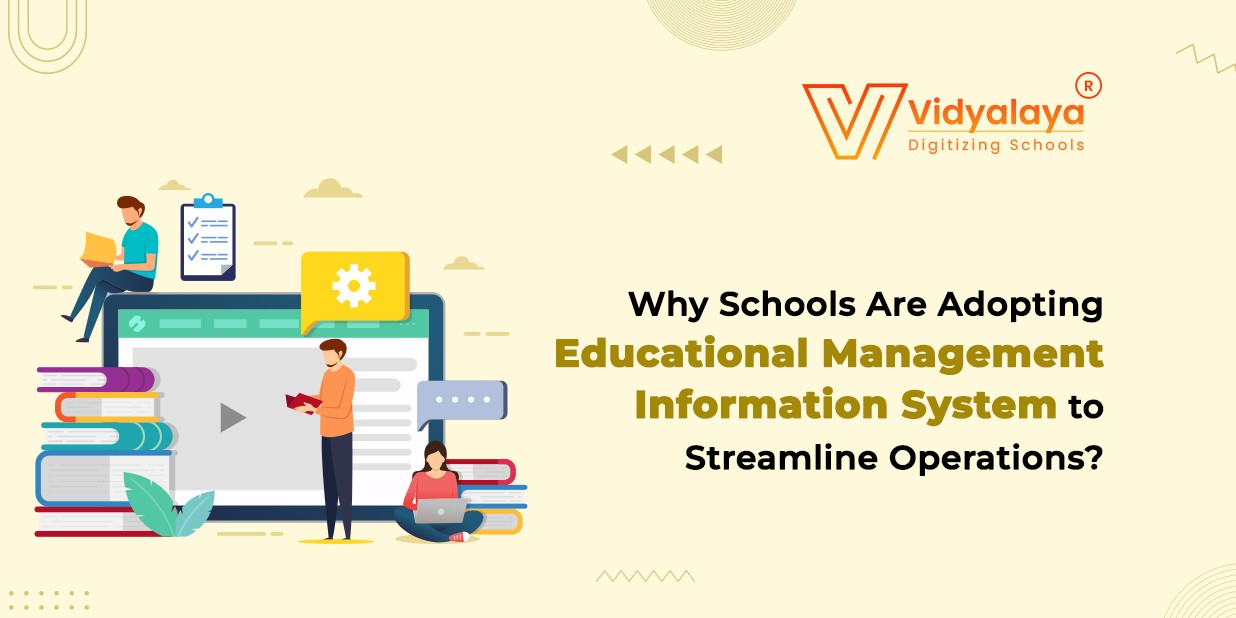
There was a time when a school’s efficiency depended a lot on how the school staff could manage the school registers, the school files, and all the school paperwork. Now, if we think about it, that same approach to running a school feels old. It does not work anymore. The school paperwork and the school files are too much for the school staff to handle.
Schools are not where we learn anymore. They are like societies with different things to do at the same time and in coordination. Student enrolment, assimilation, administration, accounting, professional and non-professional communications, and all-effective interaction with the rules of the system… The school must do all these things at the same time efficiently. This is where an educational management information system, a school management system, or an advanced education ERP system comes in.
This shift isn’t about following a trend. It’s about solving real, everyday problems that schools face.
The Real Problem: Too Many Moving Parts
Running a school involves hundreds of small processes happening at the same time. When these processes aren’t connected, things start to fall through the cracks.
For example:
- A teacher updates attendance, but the office doesn’t see it immediately
- Fee records don’t match the student data
- Parents miss important updates because communication is scattered
These may seem like small issues, but over time, they create inefficiency, frustration, and even mistrust.
What Makes EMIS Different from Regular Software?
Unlike standalone tools that handle just one task, EMIS connects multiple functions into a unified workflow. It doesn’t just store information—it ensures that information flows where it needs to go.
So instead of:
- Separate tools for fees, exams, and attendance
You get:
- One integrated school administration platform where all modules interact seamlessly
Key Drivers Behind EMIS Adoption:-
1. The Need for Real-Time Operations:
Schools can no longer afford delays in information. Whether it’s attendance, exam results, or fee updates—stakeholders expect instant access.
An educational management information system enables real-time updates, ensuring that everyone stays on the same page.
2. Reducing Administrative Burnout:
Administrative staff often spend hours on repetitive tasks—data entry, report preparation, and cross-checking records.
With a school data management software:
- Data is entered once and used everywhere
- Reports are generated automatically
- Errors are minimized
This significantly reduces workload and stress.
3. Standardization Across Processes:
Without a system, different departments may follow different processes, leading to inconsistency.
A school management system introduces standard workflows for:
- Admissions
- Attendance
- Examination management
- Fee collection
This consistency improves overall efficiency and accountability.
4. Stronger Parent Engagement:
Parents today expect transparency and accessibility. They want updates without having to visit the school or wait for meetings.
A school administration platform often includes parent portals or apps where they can:
- Track attendance
- View academic progress
- Receive announcements
This creates a more connected school community.
5. Easier Compliance and Record Keeping:
Schools are required to maintain accurate records for audits, inspections, and regulatory bodies.
With an education ERP system:
- Records are organized and easy to retrieve
- Reports can be generated instantly
- Compliance becomes less stressful
6. Data-Backed Planning:
Instead of relying on assumptions, schools can use actual data to plan.
For example:
- Identifying subjects where students struggle
- Monitoring attendance patterns
- Planning resource allocation
A school data management software makes this possible, leading to smarter, more strategic decisions.
A Practical Comparison: Daily School Operations:
Function Area
Without EMIS | With EMIS
- Student Records: Stored in files or scattered systems | Unified and instantly accessible
- Fee Management: Manual tracking, prone to mismatch | Automated tracking with alerts
- Exam Processing: Time-consuming and error-prone | Quick, structured, and accurate
- Staff Coordination: Dependent on meetings and calls | System-based updates and dashboards
- Parent Interaction: Limited and delayed | Continuous and real-time
A Simple Workflow Transformation:
Before EMIS:
Multiple Entries → Cross-Checking → Delays → Confusion → Rework
After EMIS:
Single Entry → System Sync → Instant Updates → Clear Visibility → Smooth Execution
Is EMIS Only About Technology? Not Really.
One common misconception is that an educational management information system is just a technical upgrade. It’s more of an operational shift.
It changes:
- How information is handled
- How teams collaborate
- How decisions are made
What Schools Often Notice After Implementation?
Once EMIS becomes part of daily operations, schools typically observe:
- Faster administrative processes
- Better coordination between departments
- Fewer errors in records
- Increased satisfaction among parents and staff
It’s not an overnight transformation—but the impact becomes clear over time.
Final Thoughts:
In modern school operations, efficiency is no longer defined by how much work is managed, but by how intelligently it is coordinated. Schools today function as complex ecosystems where academics, administration, finance, communication, and compliance must move in sync without delays or data gaps. This is where a structured digital approach through an Educational Management Information System becomes a practical necessity rather than an optional upgrade. It brings clarity to scattered processes, reduces dependency on manual coordination, and ensures that every stakeholder—from administrators to teachers and parents—works on the same, updated information flow.
From a business and operational standpoint, schools that embrace integrated systems position themselves for long-term scalability and a stronger institutional reputation. Instead of reacting to daily administrative challenges, they gain the ability to plan proactively using accurate, real-time data. This shift leads to better decision-making, improved accountability, and a significantly smoother school experience overall. If your institution is looking to modernize operations and improve efficiency across all departments, contact us for a free demo and see how Vidyalaya School Software can transform the way your school is managed.