










 /
5.0
Rating
/
5.0
Rating

 /
4.9
Rating
/
4.9
Rating









 Lets Talk Ai


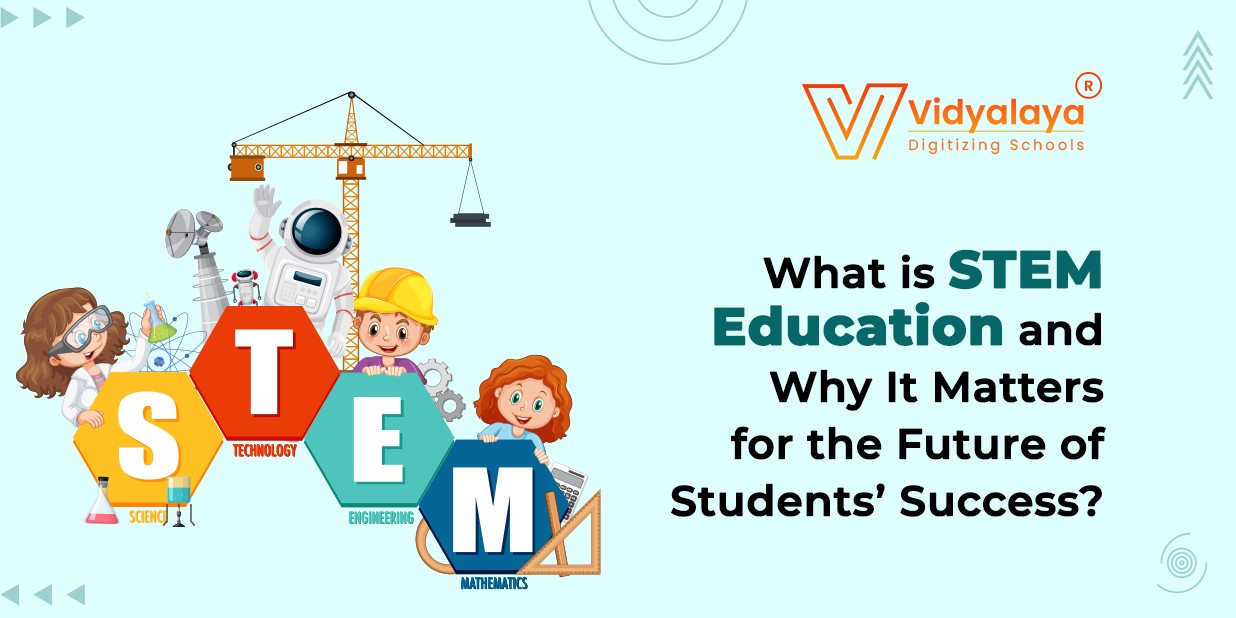
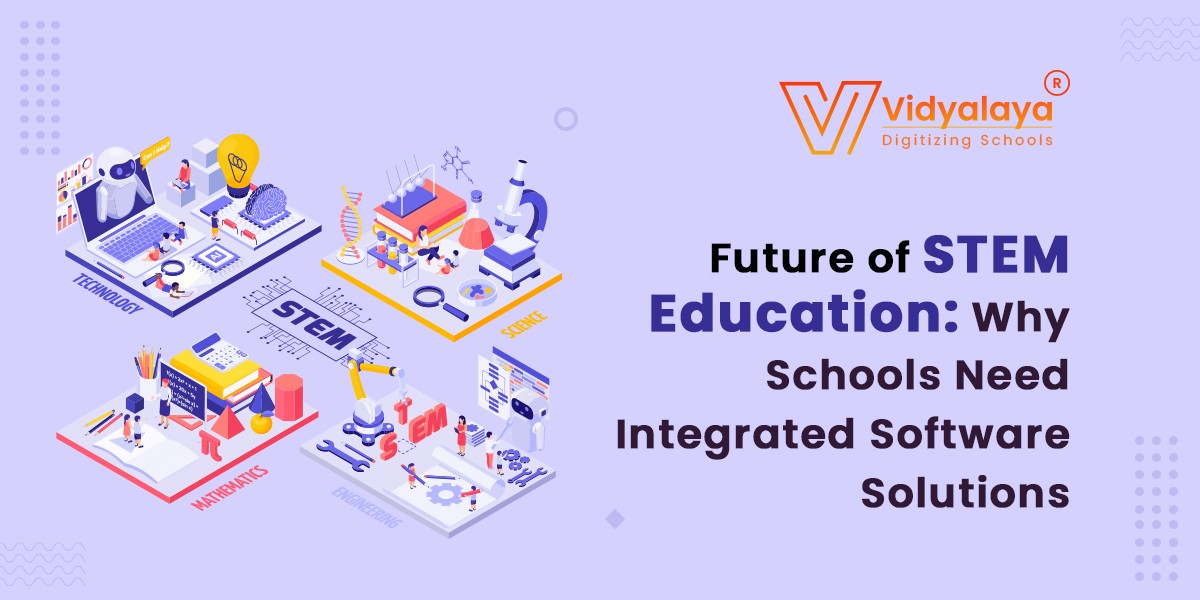
STEM education prepares students to learn and prepare for the new world. By combining science, technology, engineering, and mathematics in an attractive learning process, VOT students provide problem-solving, important thinking, and analytical skills so that they are ready for tomorrow’s workforce.
STEM education is a hallmark of 21st-century learning. Schools and educational institutions emphasize science, technology, engineering, and mathematics to develop students’ analytical or creative thinking skills. Within 100 words, it is important to acknowledge that STEM education is not about memorizing formulas or running experiments; rather, it is about cultivating curiosity, innovation, and the applied practice of problem-solving. As industries continue to evolve dependent on technology, the demand for STEM-educated professionals is on the rise, creating an essential educational approach for students to be successful and to develop into long-term careers.
Why STEM Education is Gaining Popularity?
STEM Education has emerged at the forefront of attention worldwide during the past ten years because it shapes the future workforce. With EdTech resources for STEM education that include digital puzzles, simulations, and coding, and interactive modules, students are more engaged. A U.S. Department of Education (USDOE) report states students exposed to STEM-based education are 17% more likely to pursue careers in science and technology. For more, employers are now looking for strong STEM experience in potential employees, making it more important for students to be introduced to STEM-based concepts early.
Primary reasons for growth:
- Encourages students to apply analytical thinking and problem-solving
- Builds students’ creativity and innovation skills
- Prepares students for jobs in growing STEM fields
- Encourages a lifelong learning habit of science and technology
Understanding STEM Education:
STEM Education combines the learning of Science, Technology, Engineering, and Mathematics through an interdisciplinary approach where students become active participants in using these subjects to approach a real-world problem. Unlike traditional education, where subjects are taught independently, STEM education allows students to integrate concepts across multiple subjects to assist in the problem-solving process. Students complete projects that emulate problems they may potentially encounter in life. The intent is to provide students with opportunities to develop a deeper understanding of concepts, as well as practice a plan of action to complete the work.
STEM Concept:
At the core of STEM concepts is the concept of practice showing theory. For instance, in an engineering project, the math a student would use to calculate building structures, or the coding students might apply to develop a tech-solution, illustrates the practice proficiency that aligns back to science theory on those concepts. An emphasis on engagement and chronicled practice enhances retention, as students relate the theories across a continuum of experiences through applying practice to theory in a variety of disciplines, commonly in the professions.
Benefits of STEM Education:
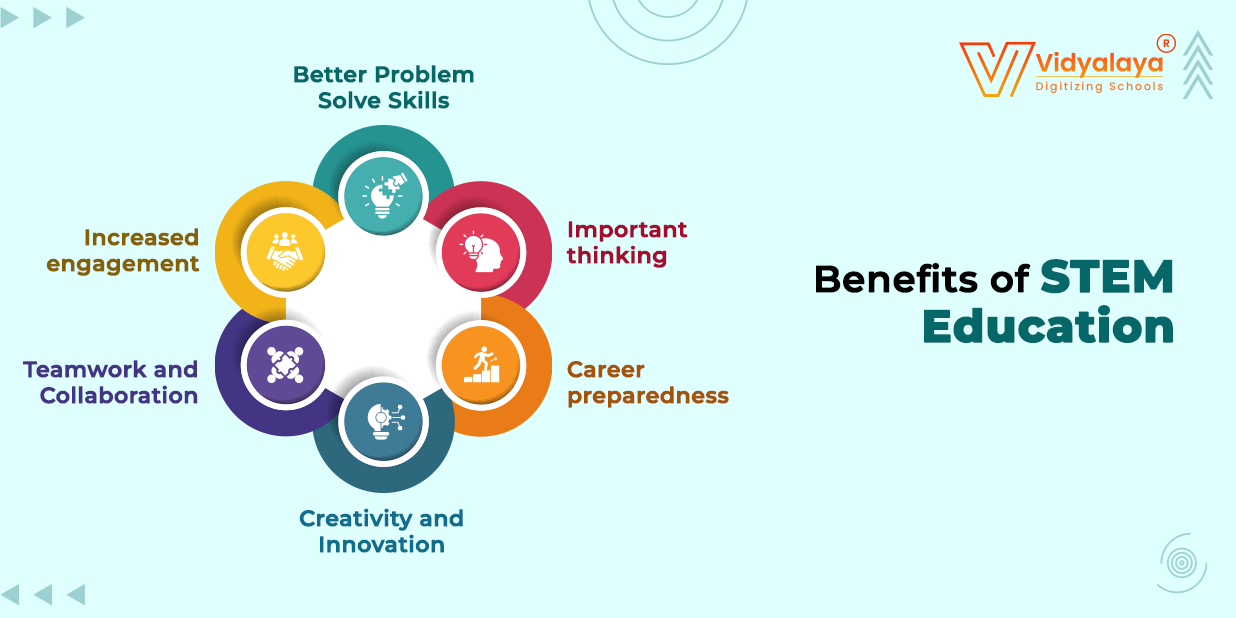
STEM education offers a lot of benefits beyond the results of academics, including:
- Better Problem-Solving Skills: Students learn to think carefully about problems.
- Important thinking: It encourages students’ analytical thinking and good decision-making skills.
- Career preparedness: STEM sectors are among the fastest-growing industries in the world.
- Creativity and Innovation: They also learn to think creatively and innovatively.
- Teamwork and Collaboration: Most classes’ VOT projects are group-based; For example, students learn to do better work with others.
- Increased engagement: VOT is an experienced learning of interactive and project -based and can help students be interested in learning.
The National Science Foundation published a report in 2022 to indicate that schools that implemented the STEM programs reported an increase of 23% in the search for STEM education after leaving secondary school. This data is a sign of the benefits of this type of voice learning method.
Project-Based STEM Learning:
Project-based STEM learning gives students an opportunity to participate in practical applications of theoretical knowledge. Through work on projects such as creating robots, designing apps, or completing scientific experiments, students can participate in applications with real hands-on experience.
Some of the key benefits:
- Increases active engagement versus passive learning
- Encourages collaboration and leadership skill development
- Connects the gap between classroom learning and to real world
- Improves student confidence and self-efficacy
This pedagogical model, combined with EdTech for STEM, also allows students to simulate complex projects digitally, before implementation in real life. The use of simulations makes learning safer and more effective.
Role of EdTech in STEM Education:
Due to recent technological development, STEM education has changed.
- Interactive simulation helps students understand and imagine hard scientific concepts.
- Coding platforms promote logical thoughts and problem-solving.
- Virtual laboratories allow use in a safe place without the requirements for expensive laboratory equipment.
- AI-operated equipment helps students optimize learning experiences.
Ed tech offers teachers the opportunity to design more attractive, used, and effective lessons for students who can also meet different learning styles.
Conclusion:
As STEM education reshapes the future of learning, schools must equip themselves with the right digital infrastructure to support this transformation. From managing project-based learning modules to integrating EdTech tools seamlessly into the classroom, a robust school management system like Vidyalaya School Software can streamline academic operations while supporting modern pedagogies.
Our platform enables schools to efficiently manage curriculum planning, student performance tracking, resource allocation, and digital content integration—making it easier to adopt and manage STEM-focused initiatives.
Empower your institution to lead in the 21st-century education landscape. Contact us today to see how Vidyalaya can support your STEM education goals!