










 /
5.0
Rating
/
5.0
Rating

 /
4.9
Rating
/
4.9
Rating









 Lets Talk Ai



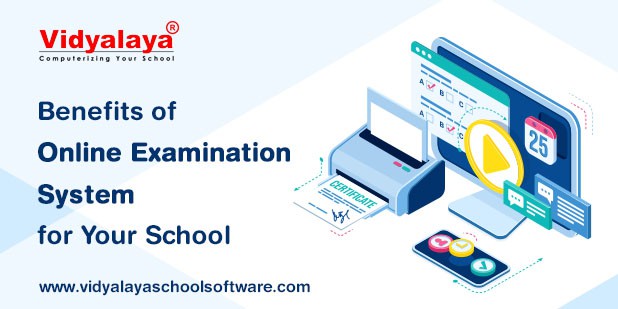
Paper-based exams have become old school, online exams are trending and so is Online Examination Software! After the global pandemic, everyone has understood the significance of online exams and has admitted that online exams are the future of education. If numbers are to be believed from the market, the online education market is expected to grow to 14.33 billion$ by 2024. If you look at the Indian education system, almost all competitive exams are conducted online and NEP 2020 also promotes the integration of innovative approaches to learning. So, if you are habitual to old-fashioned paper-based exams, it’s the right time for you to get an upgrade with Online Examination Software!
Traditional Exams Vs Online Exams:
|
Traditional Exams |
Online Exams |
|
|
|
|
|
|
|
|
|
|
What’s New in Online Examination Software?
After understanding the difference between manual and online exams, let’s learn what are the new features introduced in online examination software that make the option futuristic and luring for today’s educational institute.
Automated Process:
Looking at the flaws of manual exam conduction, educational institutes prefer the automatic process of examination. This option is highly accurate and useful. An Online examination software conducts various functionalities that are otherwise need to be done manually like:
- Creating exam papers, answer sheets, seating arrangements, and timetables.
- Creating hall tickets and distributing them to students.
- Prepare multiple sets of question papers along with varying levels of difficulty based on the requirement.
- Verifying students, exam venue search portal, and online proctoring.
- Assessing the exams and generating detailed reports for candidates, preparing customized reports like subject-wise, class-wise, teacher-wise, etc.
Remote Proctoring:
One fear regarding preferring online exams was how to invigilate the exam, and who will monitor it? But this is also ruled out by the virtual examination software. Although students are appearing from any corner of the world for the exam, the exam administrator can proctor the exams through the in-built camera. This will eliminate the need for moderators, invigilators, etc. and apparently eliminate the possibility of bias. To improve the proctoring process, AI integration comes into use as it can detect several behavioural factors like eye movements, keyboard clicking, hand movement, facial expressions, etc.
Rapid Result Processing:
One of the biggest advantages of choosing online exams over traditional pen-paper-based ones is that it generates the results faster. As the online examination system does the evaluation and assessment automatically, the results are prepared faster and shared with the respective students. In pen-paper based exams, this process is accomplished manually and prone to human error.
Trends and Innovations in Online Exam conduction:-
An online examination software has gone through several upgrades to incorporate new features and the process continues. Let’s see what are the upcoming trends and innovations are happening in this sector:
1. On-screen Marking System:
Along with regular features, the onscreen marking system is going to hit online examination software demand in a positive way. This feature will digitalize and streamline the grading system to make it more transparent and reliable. As it is available for both pen-paper and online mode, it is going to be more popular. This system extracts the relevant response areas from scanned images of answer sheets submitted by students and can present to remote examiners for clerical marking in a secured environment.
2. AI-based Feedback:
One major aspect missing in manual pen-paper based exams is personalized feedback, which brings more overhead on teachers as they need to understand the unique requirements and understanding level of each student and provide the respective feedback. AI-powered online examination software identifies this gap and provides comprehensive insights into student performance and learning requirements. Through in-built analysis feature, it analyses the results obtained and learning patterns through which it facilitates personalized feedback to students. This can also help teachers to make the necessary changes in their teaching styles so that they can meet student’s requirements.
3. Facial and voice recognition:
Virtual examination software provides another approach of authenticating the candidates through biometric authentication. This includes fingerprint, facial and voice recognition, and after verification only, the students are allowed to proceed further. This enhances the integrity and privacy of the exam.
4. Dual Camera Proctoring:
One may question about the online examination system and how invigilation can be 100% sure. But camera proctoring is the solution for this. Dual camera proctoring enables institutes to get a comprehensive view of the test environment. They need to invest some initial amount to establish this setup which can provide enhanced monitoring capabilities.
5. Secure browser Lockdown:
Inventions are continuously going on to improve the online exam process. As the entire exam is digitalized, a secure browser plays an important role in preventing cheating when the process is going on. Creating a secure browser lockdown minimizes the risk of cheating and controls over the test environment. It restricts access to unauthorized websites, applications, and system functions to ensure exam integrity.
How AI is improving the online examinations?
Artificial Intelligence (AI) is playing a significant role in shaping the future of online exams. It is providing solutions to the logistical and integral challenges through the in-built features. AI-integrated Online examination system accomplish regular features that every online exam software performs, additionally, it can also facilitate new features like remote proctoring, AI-powered grading, personalized feedback, etc. These advanced features promote continuous improvement and customize learning experience.
- AI integration improves the security of online examinations. It can be used to prevent cheating, such as impersonation and plagiarism.
- AI-powered online examination software can create personalized tests based on the student’s performance and learning pace.
- Multi-factor authentication and regular security audits can keep student data more secure in online examination software.
- Behaviour analysis feature of AI-powered virtual examination software can detect suspicious activities like eye movement and keyboard clicks to alert potential cheating.
Conclusion:
As technology advancements are getting headlines every day, no wonder we will come across the news one day that every single school in India has been digitalized and embraced technology as a medium for progress. With the same aim as vision, Vidyalaya has already launched an online examination system as a technological aspect of assessment. Educational institutes are rapidly choosing this way as it simplifies the process for them, adding the above-mentioned benefits as a cherry on top. Be the beneficiary of it too, and get connected with us over a simple call or email!