










 /
5.0
Rating
/
5.0
Rating

 /
4.9
Rating
/
4.9
Rating









 Lets Talk Ai


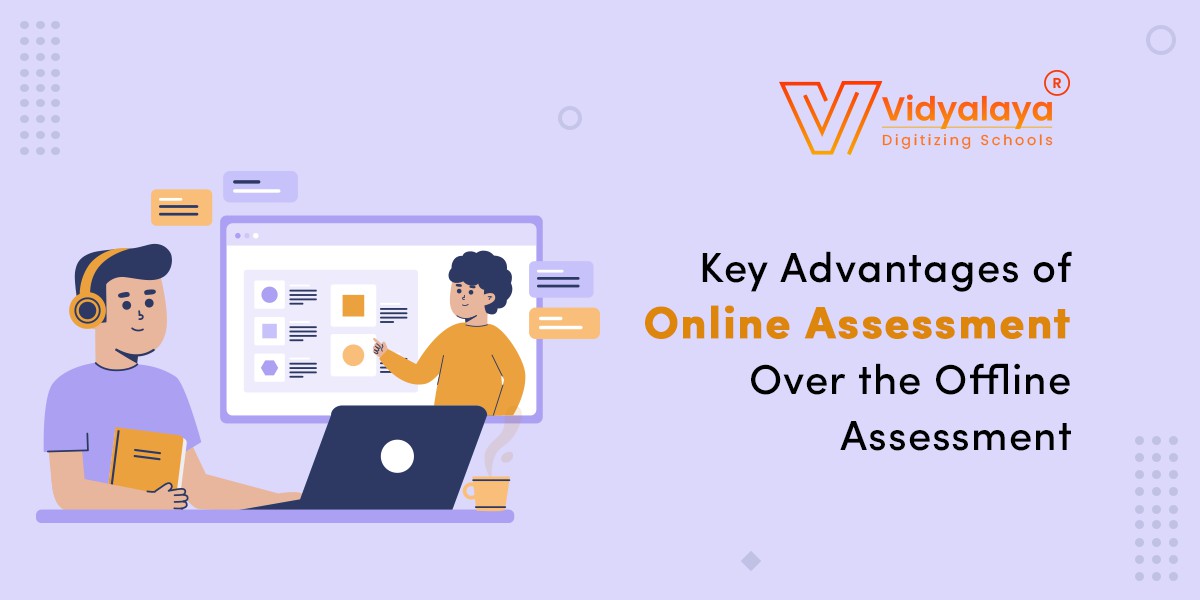
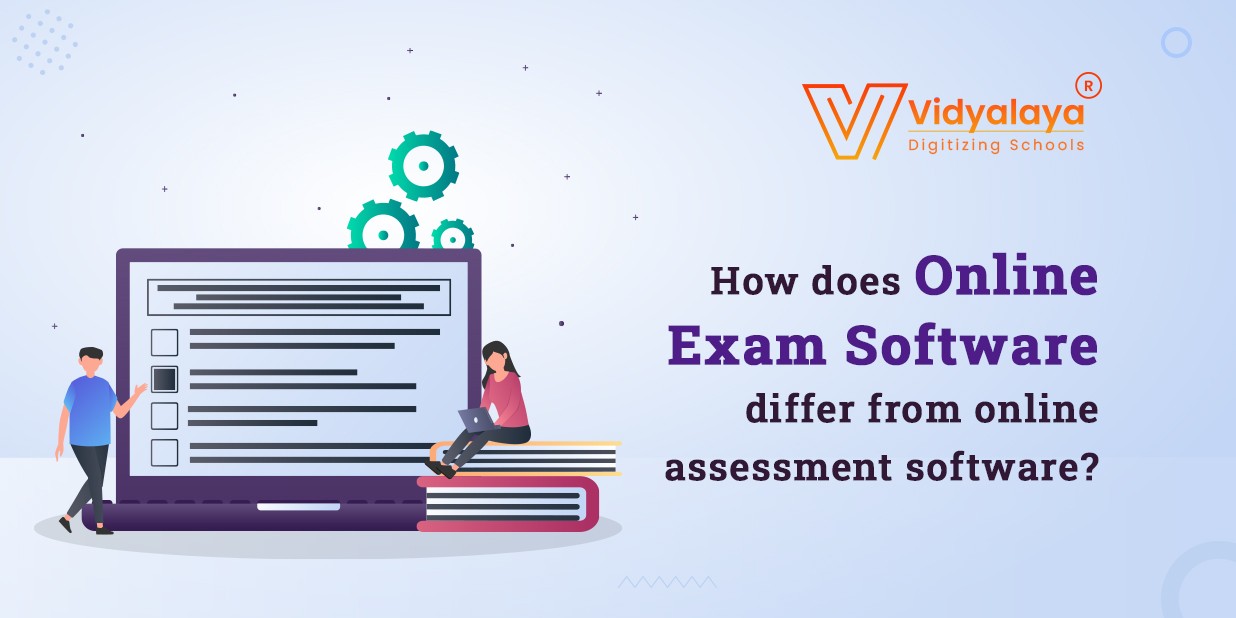
Remember the classic scenario of assessments? Students verify the material, look for notice boards for space allocation, find the right classrooms, wait for invigilators, and face biased situations sometimes, and the long wait after the exam. Now, many educational institutes also follow the same scene during their academic journey. But now it’s time to change! Technology has played a pivotal role in transforming educational standards. After the pandemic, we have witnessed a significant change in educational workflows. Shifting from offline assessments to an online assessment system is one of the futuristic approaches adopted by many educational institutions.
What is an online assessment in Academics?
In academics, online assessment can be defined as an evaluation of students for their skills, competencies, and behavioural aspects using a digital platform and with a reliable internet connection. Educational institutes employ digital tools as online assessment software to analyse student learning. Features of online assessments are as follows:
- Enhanced exam security
- User-friendly and error-free solution
- Cost-effective option
- Question bank management
- Data management
- Quick feedback
- Location and time flexibility
- Performance analysis
As offline assessments possess various flaws and there is a rise in technology integration in education, educational institutes are finding online assessment tests as the best option. Looking at the inviting features, one will be lured to have one on the premises.
How are online assessments superior to offline Assessments?
Although offline assessments come with affirmative benefits like familiarity, personalization, no technical dependency, etc., they also feature some flaws. Compared to offline assessments, online assessments always score better in terms of efficiency, productivity, and cost.
Let’s learn how an online assessment test is a better option than an offline assessment:
1. Automatic Evaluation:
School or college administrators bear the workload of arranging moderators and asking teachers for extra duty for the evaluation of the assessment answer sheets. This overhead can be eliminated with the online assessment software. It prepares a question bank, designs question papers based on the type of question provided, evaluates the answer sheets, prepares the scorecards, and shares them with the students. All this automation is handled by the software without any human intervention. It provides the utmost accuracy in results. For multiple-choice type questions, the system can correctly check the answer sheets based on the answers fed into it. For descriptive assessments, the system evaluates the answers and allocates scores accordingly. This will be a fair situation for the students as it eliminates the human role in the assessment evaluation workflow.
2. Cost-effective Solution:
As compared to offline assessments, online assessment tests are the best cost-effective option for schools and colleges. Surprisingly, a lot of money is invested in paper, manpower, and space. The online assessment method saves this cost as it conducts the assessment digitally. Although you need gadgets like a mobile or computer and a reliable internet connection, it serves as a one-time investment. Once purchased, it can be reused for several years. Also, traditional assessment takes up much space for keeping the question papers and answer sheets. Online assessment software stores all data in one centralized database or in a cloud server; it doesn’t require any physical space. It refrains from the possibilities of alteration, deletion, or misplacement of question papers.
Another factor where the online assessment test surpasses its offline counterpart is that it is scalable. Unlike offline assessment, this doesn’t restrict the number of students who can appear for the test. So, understanding the scalability aspect, online assessment is effective for schools or colleges.
3. Improved Security:
Do you notice the paper leak news during the exam period? If yes, you will understand what exactly the problem is. Yes, the manual assessment method yields the biggest drawback in that it is bound by poor security. As assessments decide the future of the students, they must be non-biased and secure.
Additionally, the cloud-based online assessment system provides improved security along with access rights. So, it reduces the chances of unauthorized access and vulnerabilities to the system. While appearing for the assessment, every student needs to provide credentials for verification. This will reduce the chances of proxy attendance, and only authentic students can appear for the assessment. The camera-based invigilation monitors the students’ behaviour throughout the exam, which overcomes the bias factor and lets students genuinely appear for the exam with fair play.
4. Reduced Workload:
School or college administration bears its peak workload during the assessment period. They need to deal with several things, like timetables, stationery, moderators, seating arrangements, paper checking, result distribution, etc. This overhead involves a lot of manpower, cost, and effort. Despite this huge investment, sometimes the outcome may result in dissatisfaction.
This software can handle all these hassles easily, and your administration staff can have a relaxed breath. It can design question papers, invigilate students, evaluate the answer sheets, and share scorecards with the respective students automatically. This saved time and effort can help teachers in allocating their resources to offer better outcomes for the students. The Vidyalaya software displays the results immediately after the exam, and thus, students can work on their weak areas.
5. Eco-friendly Option:
Finally, an online assessment system is an eco-friendly option for us that has a significant impact on the environment. Unlike offline assessments, it eliminates paper usage and energy consumption and reduces carbon footprints. As exams are conducted online, there is less paper usage and a reduced risk of tree cutting. The electricity used for exams is significant, but it shows less impact than cutting a tree on Mother Earth.
Closing words!
Online and offline assessments both come with their own advantages and disadvantages. So, one needs to be clear about the requirements. However, with the advancement of time, educational institutes are looking for more efficiency in the online assessment method, as it offers greater convenience, instant feedback, data analysis, etc. But for now, there are certain areas where online assessment software finds a gap for improvement, like questions related to drawing, dependency on typing abilities, the need for a reliable internet connection, etc.
Vidyalaya, a pioneer in the EdTech software Online Assessment industry, is constantly proving its expertise through its wide range of product portfolios. Our experts are working on the above-mentioned areas to make our online assessment system perfect for today’s and tomorrow’s requirements. In the future, we may expect AI-driven assessment tools or VR exams to take advantage of the features of the technology. If you are excited to make a launch for your institute and evaluate your students in tech-oriented ways, then drop us a message for a free demo!