










 /
5.0
Rating
/
5.0
Rating

 /
4.9
Rating
/
4.9
Rating










 Lets Talk Ai


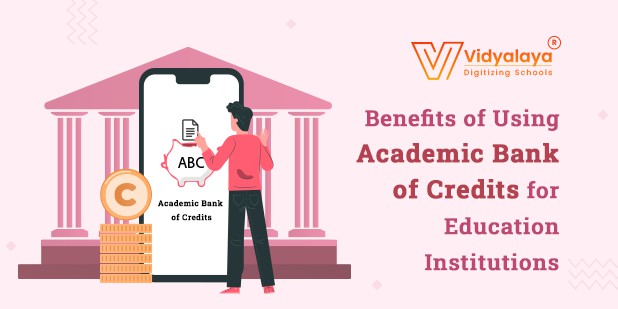
Heard the news from UGC about over 1 crore students registered in ABC or making ABC ID mandatory for university admissions in 2023? Wondered what is this ABC? Education across the globe is going through several revisions and upgrades, and ABC, or the academic bank of credits, is one of such advanced concepts. The University Grants Commission (UGC) is implementing several new-age practices in the Indian education sector to maintain the quality of education. This time, UGC has introduced an Academic Credit Bank for managing and evaluating credits earned by students. New to this concept? Know more about it and its benefits in this blog!
What is the Academic Bank of Credits?
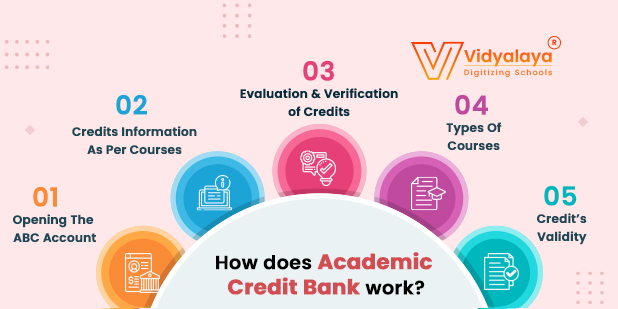
Analogous to a bank account, an academic credit bank is also an online repository that stores and accumulates credits earned by students during their academic years based on their performance in classwork and tutorials. This is extremely important for achieving mobility between or within degree-granting HEIs through a formal system. This system is comprised of four underlying aspects:
- Credit accumulation: This facility is created by the Academic Bank of Credits so that students can open their accounts and transfer and consolidate their credits.
- Credit Recognition: Higher education institutes transfer earned credits to ABC after a valid registration.
- Credit transfers: Through this, registered higher education institutes receive or provide prescribed credits to students to Academic Bank Accounts under UGC credit norms after being requested by a student who is enrolled in any registered HEI in India.
- Credit redemption: Student requests to commute the accrued credits in the ABC of the student account for fulfillment of credits required for an award of Degree/ Diploma/ Certificate/ Coursework/ Ph.D.
What are the features and functions of an Academic Credit Bank?
- This platform of credit management is eligible for all types of courses registered under UGC- graduation, postgraduate, diploma, certificate, or Ph.D.
- Irrespective of the medium, it offers cover to all courses, be it regular, distance, or online courses.
- There is a validity of 7 years or a duration specified for the particular course to redeem or transfer the credits earned. After that, the credits will expire.
- Students do not need to submit any type of document. Only the institute where the student is enrolled will regularly deposit the credits into the ABC account.
Why UGC has adopted the concept of Academic Credit Bank?
UGC is introducing a more flexible approach in the education sector, and an academic bank of credit is the latest addition. We are unleashing its benefits that underline its importance in the Indian education sector:
1. Flexible Approach with Mobility:
Students can now deposit their credits into the Academic Bank of Credits, and the same are transferred through a systematic process when the student joins another college/course within seven years, provided the new institute or course is also registered under UGC. This highly empowers students so that they can complete their education even in different institutes, bridging a gap. Even with adherence to their eligibility, students can exchange the credits earned so far for a certificate after dropping out.
2. Digital Ecosystem for Credit Management:
Through the Academic Credit Bank, UGC enables a complete digital ecosystem for credit management. Higher education institutes need to register themselves on the portal, and the rest of the things are smooth like butter. Just an automatic credit transfer or redemption can make it work with zero or less overhead. It also gives features of a paperless office and cuts down the risk of handling various documents, both for students and institutes.
3. Supports Multi-disciplinary Approach:
UGC is insistent on bringing a flexible approach to education with the Choice-Based Credit System. HEIs who are registering themselves for ABC are expected to have smooth functioning of credits with its in-built features. As credits are stored in a central repository and can be redeemed when students rejoin the course or opt for a different course registered under UGC. This enables multiple entries and exits to complete the course.
4. A Complete Bliss for Students:
Academic Bank of Credits offers several benefits to students, and one of the major benefits is horizontal mobility for students, such that they can move from one institute to another. With the help of this system, it is easy for students to keep track of their credits earned. It offers freedom to students to choose the courses of their interests, and they can pursue their education in any HEI they want. This principle is a gift of a choice-based credit system. Students can learn at their own pace and time, as this policy offers lifelong learning in both full-time and part-time modes.
Conclusion:
Credit systems in the educational sector have become the new face of assessment and results. Along with modern approaches adopted by UGC, academic credit banks are gaining the title of news in recent days. It deals with credits earned by students pursuing higher education and helps in the seamless integration of skills and experiences. As this facilitates both students and educational institutes, the exceptional concept is trending nowadays. Even though educational institutes use their respective ERPs or depend on manual systems, this unified platform enables them to access credit information. Vidyalaya is molding its products to create a student-centric ecosystem and preparing students to be future-ready. Contact us for more product offerings, and you will also be ready for tomorrow’s pathway to higher education!