










 /
5.0
Rating
/
5.0
Rating

 /
4.9
Rating
/
4.9
Rating









 Lets Talk Ai


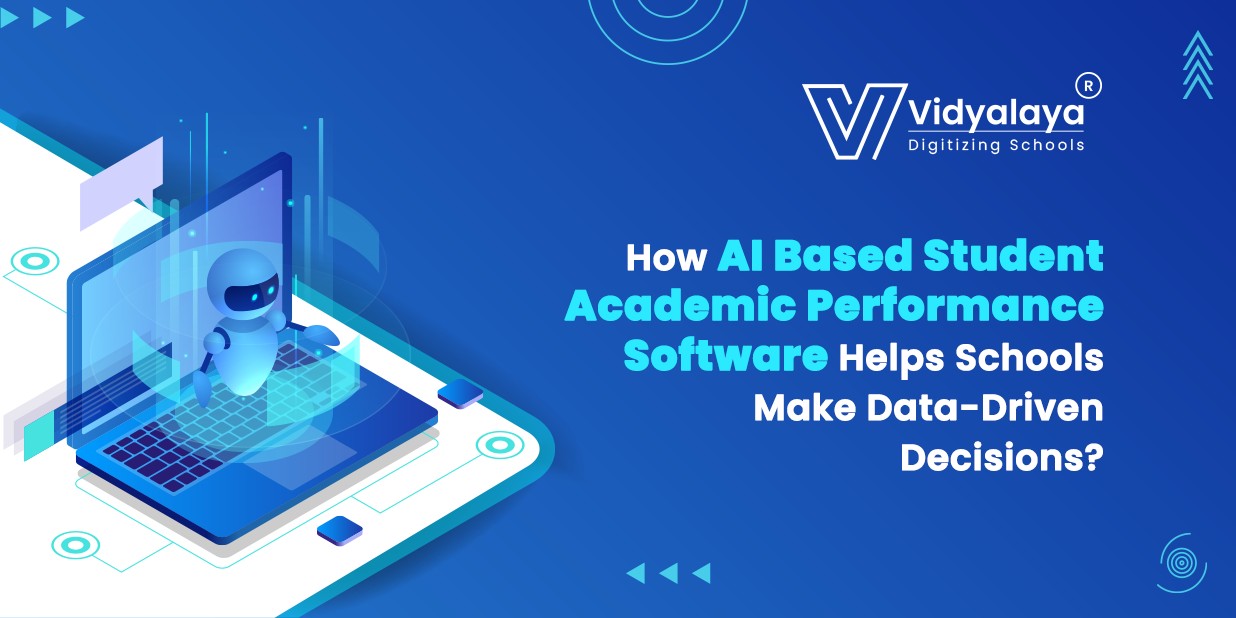
Today’s schools collect more academic data than ever. Examinations, attendance registers, course assignments, assessments, classroom activities, and student progress reports create plenty of data. Nevertheless, the collection of data becomes only effective when educational institutions can transform data into information.
This is where Student Academic Performance Software plays an important role.
The AI-enabled Student Academic Performance Software has the capability to help schools interpret several levels of student-related data, identify knowledge gaps, track progress, and take quick decisions in terms of academics. In other words, instead of being reliant on manual reports and spreadsheets, schools can employ performance software to know what is going on in their institutions on time.
What Is Student Academic Performance Software?
It is a digital platform that helps schools record, monitor, analyze, and manage student academic performance. Traditional systems mainly focus on recording marks and generating reports.
For example, the software can help schools understand:
- Which students are improving or declining
- Which subjects need additional attention
- Which students may require academic intervention
- How attendance affects performance
- Which topics create learning difficulties
- Whether academic interventions are producing results
With AI capabilities, Academic Analytics Software can process this information quickly and present useful insights to teachers and school administrators.
Why Student Academic Performance Matters?
Student Academic Performance is not determined by a single examination result. A student’s performance can change throughout the academic year because of attendance, learning difficulties, assignments, assessment results, classroom participation, and other factors.
For example, a student who scores 60% in the final examination may have improved from 45% earlier in the year. Another student who scores 75% may have declined from 90%.
This is why schools need to monitor Student Academic Performance continuously instead of looking only at final results.
An effective Academic Performance Management Software system allows schools to compare historical and current data, helping educators identify meaningful performance trends.
How AI Student Performance Software Supports Schools?
1. Identifies At-Risk Students Early
The system can analyze examination scores, attendance, assignment completion, and previous academic records. If multiple indicators show a decline, the software can flag the student for teacher review.
For example:
Previous average: 78%
Current average: 66%
Attendance: Declining
Assignments: Frequently incomplete
Instead of waiting until the final examination, teachers can investigate the situation and provide support earlier.
2. Finds Subject-Wise Learning Gaps
Overall, it may be noted that grades indicate whether a student is having problems in any area or not. There are analytical software tools available that provide data about different subjects or topics, thereby helping teachers ascertain where a student might be having difficulty.
For example, a student can perform excellently in one subject like science but may have difficulties in another subject like mathematics. Further analysis might show that the student has particular difficulties in fractions, algebra, or other areas of mathematics. This information is regarding student academic performance that helps teachers in coming up with specific learning strategies.
3. Helps Teachers Make Better Decisions
Teachers have limited time to analyze hundreds of student records manually.
Student Performance Software reduces this workload by organizing information into dashboards and reports.
Teachers can quickly identify:
- Students requiring additional support
- Students showing improvement
- Subjects with low performance
- Assessment trends
- Students ready for advanced learning
This allows teachers to spend less time preparing spreadsheets and more time focusing on teaching.
4. Supports Data-Driven School Management
Data on performance is of utmost importance to heads of schools, as it allows them to make informed decisions about school’s curriculum and teacher-support plans, additional classes, and teaching materials. Academics Performance Management Software effectively provides academic insights for schools.
For example, low level of performance in math among Grade VIII students can make officials research whether a particular curriculum or teaching material plays a role in students’ poor results.
Thus, this software allows schools administrators to make a shift from making decisions based on their own intuition and assumptions to evidence-based decision-making.
How AI-Based Academic Analytics Works
The basic process can be represented as:
Student Data
↓
Data Collection
↓
AI-Based Analysis
↓
Performance Patterns
↓
Actionable Insights
↓
Teacher Intervention
↓
Progress Monitorin
The purpose of Academic Analytics Software is not simply to produce more reports. Its real purpose is to help schools convert academic information into practical action.
5. Measures the Success of Academic Interventions
Schools often provide remedial classes, additional assignments, tutoring, or personalized support. But how do they know whether these interventions are working?
For example:
| Stage | Average Performance |
| Before Intervention | 54% |
| During Intervention | 62% |
| After Intervention | 71% |
This gives teachers and administrators measurable evidence of progress.
If performance improves, the school can continue or expand its strategy. If there is little improvement, educators can review the approach and make changes.
6. Improves Parent Communication
Parents wish to know more than that of their kids’ results in exams.
Student Performance Software can give more detailed insights into the development of the kids over time, Rather than just providing parents with information that their kids did achieve 65% in this exam, teachers might discuss the dynamics of the results and where extra help is needed.
7. Enables Personalized Learning
Every student has different strengths and weaknesses. It can help teachers identify individual learning patterns and create more personalized academic strategies.
For example:
- One student may need additional mathematics practice.
- Another may need support with reading comprehension.
- A high-performing student may need advanced assignments.
- Another student may require closer monitoring of attendance and assignments.
This makes Student Academic Performance management more student-centered.
8. Reduces Manual Reporting
Academic Performance Management Software can automate many reporting activities and provide centralized dashboards.
Schools can generate:
- Student performance reports
- Class-wise reports
- Subject-wise reports
- Progress reports
- Academic trend reports
- Intervention reports
By reducing repetitive administrative work, schools can focus more on academic improvement.
The major benefits include:
| School Requirement | AI-Based Solution |
| Student monitoring | Continuous performance tracking |
| Learning gap detection | AI-based pattern analysis |
| Academic reporting | Automated dashboards |
| Risk identification | Early warning indicators |
| Teacher support | Actionable student insights |
| Intervention tracking | Before-and-after analysis |
| School planning | Data-driven decisions |
These capabilities make Academic Analytics Software useful for both classroom-level and school-level decision-making.
What Should Schools Look for Academic Performance Management Software?
The platform should provide easy data management, clear dashboards, automated reports, performance tracking, analytics, and strong data security.
Schools should also consider whether the system can integrate with existing school management platforms and whether teachers can use it without extensive technical training.
Most importantly, AI recommendations should be understandable. Teachers should know why a student has been identified as requiring attention. AI should support professional judgment rather than replace it.
The Future of AI Student Performance Software
Instead of waiting for final examination results, schools can monitor performance throughout the academic year. AI can identify changes, highlight potential concerns, and help educators respond earlier.
The future model is simple:
Collect Data → Analyze Data → Identify Gaps → Act → Measure Results
This continuous cycle can help schools improve teaching strategies, support students earlier, and make academic planning more effective.
Conclusion:
AI-based Student Academic Performance Software is becoming an essential tool for schools that want to move beyond traditional reporting and make faster, more informed academic decisions. By bringing student performance, attendance, assessments, learning gaps, and progress data together, schools can identify areas of concern earlier, support personalized learning, measure the effectiveness of interventions, and improve overall academic planning. The right Academic Performance Management Software not only reduces manual reporting but also enables teachers and administrators to turn everyday academic data into meaningful, actionable insights.
With Vidyalaya School Software, schools can leverage smart technology to simplify academic performance management and make data-driven decisions with greater confidence. Our comprehensive school management solution helps educational institutions manage and monitor their academic processes more efficiently while keeping student progress at the center. Contact us today for a free demo of Vidyalaya School Software and discover how our solution can help your school improve academic management, save administrative time, and make better data-driven decisions.