










 /
5.0
Rating
/
5.0
Rating

 /
4.9
Rating
/
4.9
Rating










 Lets Talk Ai


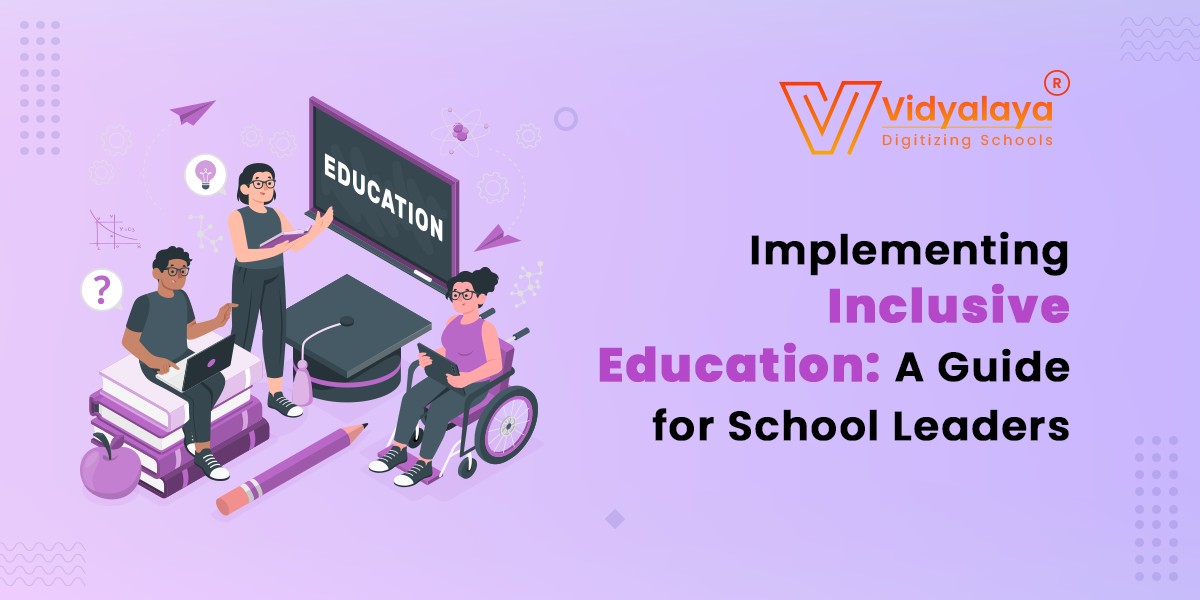
Inclusive education has become a critical focus for modern schools, as institutions aim to provide equitable learning opportunities for every student. By embracing diversity and designing learning experiences that accommodate different abilities and learning styles, schools can foster engagement, academic success, and a positive classroom culture. Approaches like the Universal Design for Learning (UDL) equip educators with practical strategies to meet the needs of all learners, while school management software helps administrators efficiently plan, monitor, and support inclusive initiatives.
For school leaders, implementing inclusive education goes beyond compliance—it requires strategic leadership, collaboration, and the integration of technology into daily operations. A culture of inclusivity benefits not only students with disabilities but also enhances learning outcomes for every child. By prioritizing inclusive practices, leveraging digital tools, and empowering teachers, schools can create adaptable, equitable, and future-ready learning environments that support every student’s success.
What Is Inclusive Education?
Inclusive education is an approach where all students—regardless of physical, intellectual, social, emotional, linguistic, or cultural differences—learn together in the same educational environment.
Key principles include:
- Equal access to learning opportunities
- Respect for individual differences
- Flexible teaching strategies
- Supportive learning environments
- Collaboration among educators, families, and administrators
Inclusive education focuses on ability rather than disability and encourages schools to adapt to learners, not the other way around.
Why Diversity and Inclusion Matter in Schools
Diversity and inclusion in education create classrooms that reflect real-world communities. When students learn in inclusive environments, they develop empathy, social awareness, and respect for differences.
Benefits of inclusive schools include:
- Improved academic outcomes
- Stronger social and emotional development
- Better peer relationships
- Reduced discrimination and stigma
- Increased student confidence and participation
Inclusive schools foster a sense of belonging, ensuring every student feels valued and supported.
Universal Design for Learning: Foundation for Inclusion
Universal design for learning (UDL) refers to a teaching practice that assists a teacher in planning lessons for all students from day one.
UDL concentrates on:
- Varied modes of data representation
- Different approaches for expression by students
- Methods of engaging students
Through the development of lessons that meet all learning styles, barriers are eliminated, and flexibility is created in learning for all learners.
Developing an Inclusive Learning Environment in Schools:
The role of administrators at institutions of learning in creating a more inclusive education system cannot be overstated. Inclusion in a classroom is a matter of course; full inclusion in the education system is what is required.
Major steps required are:
- Development of inclusive policies and guidelines
- Providing training and professional development for teachers
- Provision of Infrastructure and Resources
- Involving parents and communities
An effective vision in leadership spreads responsibility regarding inclusivity within an organization.
Challenges in Implementing Inclusive Education:
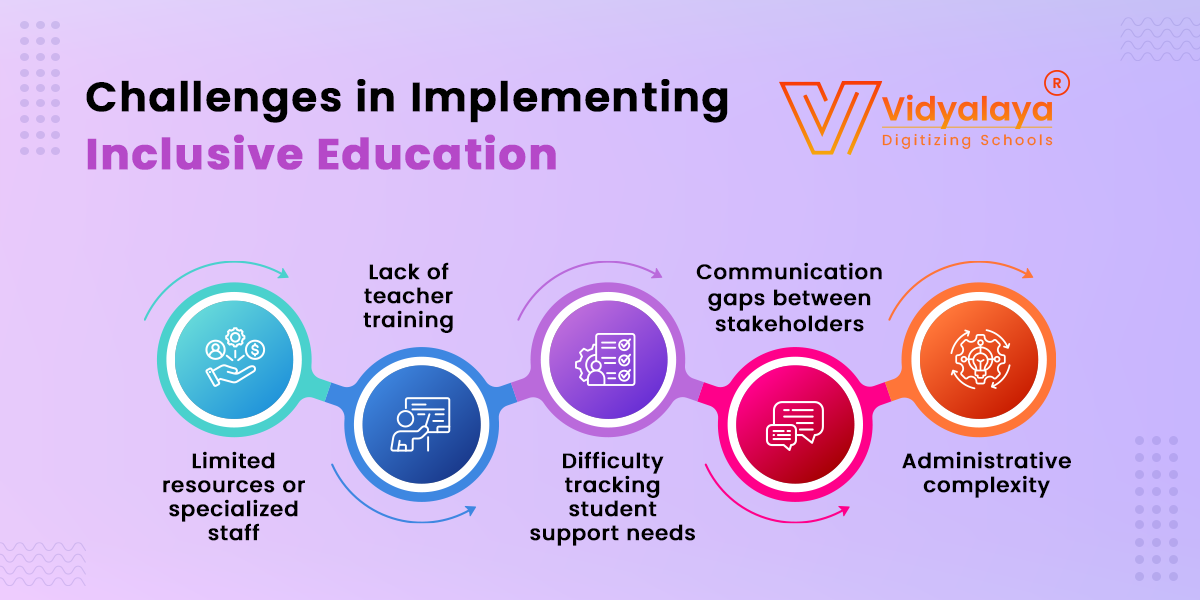
Despite its importance, schools often face challenges such as:
- Limited resources or specialized staff
- Lack of teacher training
- Difficulty tracking student support needs
- Communication gaps between stakeholders
- Administrative complexity
Without structured systems, managing inclusive education efforts can become overwhelming.
How do Education Management Systems Support Inclusive Education?
An Education Management System helps schools plan, implement, and monitor inclusive practices efficiently.
Key advantages include:
- Centralized student data and learning profiles
- Tracking individual support plans and progress
- Streamlined communication with teachers and parents
- Digital documentation of accommodations and interventions
- Data-driven insights for better decision-making
By reducing manual work, school leaders can focus more on student support and instructional quality.
Role of School Leaders in Driving Inclusion:
School leaders set the tone for inclusion. Their commitment influences policies, teaching practices, and school culture.
Effective leaders:
- Promote inclusive values across the school
- Encourage collaboration among staff
- Invest in training and digital tools
- Monitorprogress and outcomes
- Create safe, welcoming learning environments
Leadership involvement ensures inclusion is not just a concept but a daily practice.
Conclusion:
Implementing inclusive education is not just an educational priority—it’s a strategic decision that can enhance your school’s reputation, student outcomes, and operational efficiency. By integrating inclusive practices with the support of a reliable Education Management Software, school leaders can streamline administrative tasks, track student progress, and ensure every learner receives the attention they need to succeed. Investing in the right technology empowers your staff to focus on teaching and fosters a culture of equity and excellence across your institution.
Take the next step in transforming your school into a truly inclusive learning environment. Contact us today for a free demo of our Vidyalaya School Software and see how our solutions can simplify management, support diverse learners, and drive meaningful results for your school.