










 /
5.0
Rating
/
5.0
Rating

 /
4.9
Rating
/
4.9
Rating









 Lets Talk Ai


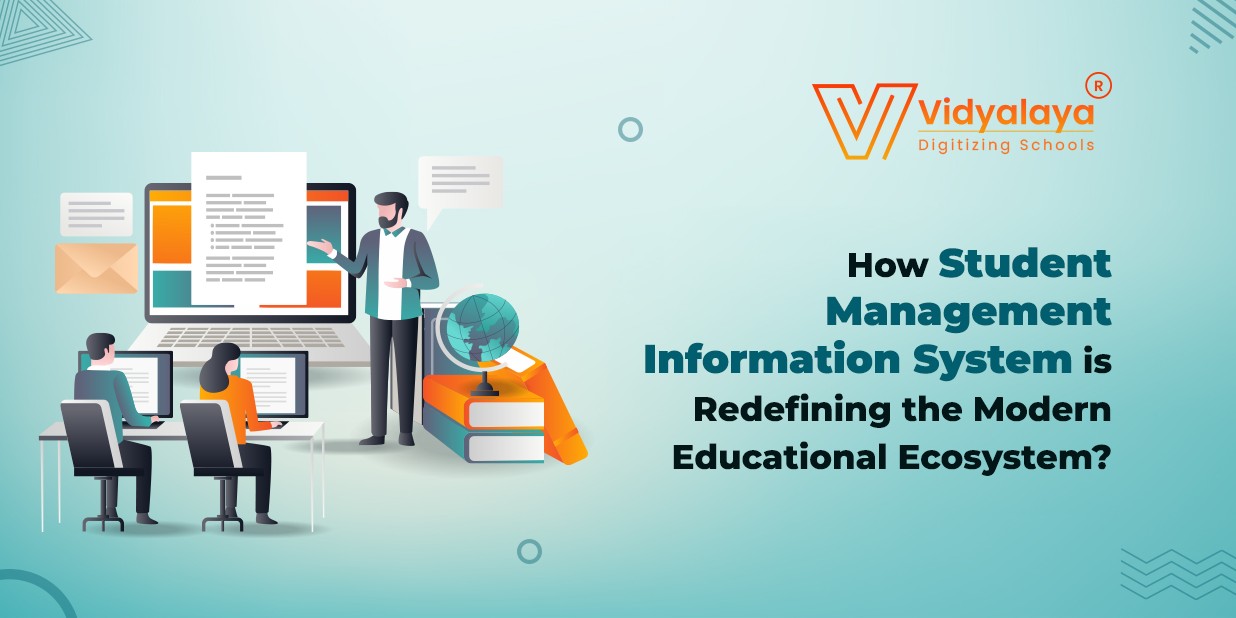
In the rapidly changing environment of 21st-century learning, the Student Management Information System (SIS) has risen to prominence as an essential element of academic success. No longer is School Management Software merely an automated data repository for storing student records; today’s Student Management Information System has evolved into an all-encompassing platform that connects all key stakeholders—from academic staff to students. In this blog, we will delve into the evolution of School Management Software to reinvent the learning experience itself.
The popularity of School Management Software has seen exponential growth as institutions face increasing pressure to provide student-centric learning while operating lean themselves. By the time you finish reading this article, you will have grasped the strategic significance of a Management Information System for achieving academic excellence, the role of a Student CRM System in managing student lifecycles, and the role of data-driven intelligence in preventing student dropout.
Why it matters: In an age where 72% of all new SIS implementations are cloud-based, the ability to access data anywhere is no longer a luxury but an imperative for survival itself.
State of the Industry: Facts and Statistics
The digital transformation of governance in education is also underpinned by substantial investment worldwide, along with quantified success:
- Explosive Market Growth: The Student Management Information System market is expected to grow to $12.13 billion by 2026, registering a CAGR of 15.5%.
- Power of Personalization: AI-powered student CRM systems can enable responses to inquiries up to 70% faster, resulting in increased enrolments.
- Retention Resilience: With an average of almost 33% of undergrads dropping out, institutions utilizing predictive analytics in their SIS can increase retention rates by pinpointing “at-risk” students.
- Cloud Dominance: More than 70% of educational institutions are adopting cloud-based architectures for scalability and remote access.
Beyond Administration: The Strategic Role of MIS
At its core, a Management Information System is designed to process and store data for informed decision-making. In a school setting, this means moving past “clerical load” and toward strategic leadership.
Traditional management often relied on fragmented spreadsheets and manual entry, leading to a “data silo” problem. Today’s School Management Information System integrates attendance, timetabling, and health records into a single source of truth. This allows principals to view the “big picture” of school health, from financial ROI on new programs to teacher performance metrics, all in one dashboard.
Personalizing the Student Journey with CRM:
Today’s student is a ‘customer’ who wants a seamless experience. This is where the Student CRM System (Customer Relationship Management) comes in to fill the gap from recruitment to graduation.
- Enrolment Automation: The automation of the student journey from lead to enrolment helps to minimize the enrolment process.
- Lifecycle Engagement: The system helps ensure that engagement is personalized to students’ interests rather than sending a ‘bulk’ email with the same message.
- Alumni Relations: After the student graduates, the relationship is still managed by the system, which could result in networking opportunities.
Enhancing Teaching and Learning Through Data:
The primary beneficiary of a first-rate School Management Software is the teacher. This is because the software frees up the educator from “the boring tasks,” such as attendance and grading.
Moreover, integrating Learning Management Systems (LMS) with the SIS enables Data-Driven Pedagogy. This is because a teacher can determine exactly which concept a student is having trouble with on a quiz. This allows the teacher to make changes to the next day’s lesson. This is something that could never be done with a piece of paper and a pen.
Strengthening the Parent-Teacher-Student Triad
Communication has historically been a bottleneck in education. Modern systems replace paper circulars with mobile-first portals. Parents receive instant notifications regarding:
- Real-time attendance alerts.
- Behavioral remarks and positive reinforcement.
- Upcoming fee deadlines and digital receipting.
- Homework assignments and exam schedules.
This transparency fosters a collaborative environment where parents are partners in the child’s development, not just observers.
Future-Proofing with AI and Predictive Analytics:
As we look toward the remainder of 2026 and beyond, the most significant shift is the move from reactive to proactive management.
Advanced Student Management Information Systems now utilize machine learning to flag “at-risk” students before they fail a course. By analyzing patterns in attendance, library usage, and internal assessments, the software can alert an advisor to intervene weeks before a crisis occurs. This predictive capability is transforming the modern educational ecosystem from a rigid structure into a dynamic, supportive network.
Conclusion:
The modern education system demands smarter, faster, and more efficient ways to manage academic and administrative operations. A powerful Student Management Information System helps schools streamline daily tasks, improve communication, and make better data-driven decisions. From simplifying admissions and attendance tracking to strengthening parent-teacher collaboration and enhancing student engagement, the right School Management Software plays a vital role in building a future-ready educational institution.
At Vidyalaya School Software, we help schools and educational institutions transform their management processes with a reliable and user-friendly School Management System designed for today’s digital learning environment. If your institution is looking to improve efficiency, transparency, and overall academic performance, contact us today for a free demo and see how our solution can simplify your school management.